The honest question — answered not just with specs, but with how it actually feels to live with
I want to answer this question properly. Not in the way that most standing desk reviews answer it — with a comparison table and a score out of ten and a verdict that reads like a product description — but in the way that actually matters to someone standing in their spare room, looking at a price tag and asking: will I be glad I bought this?
Because that is the real question, is it not? Not is this desk technically impressive. Not does it have the best motor noise rating in its category. But will I walk into my study on a grey Tuesday morning three months from now and feel — even quietly, even briefly — glad that I made this choice?
I have been using the Julia for long enough to answer that honestly. And the answer is yes. But the yes comes with a specific shape, and understanding that shape is what will tell you whether it is the right yes for you.
What ‘Worth It’ Actually Means to Me
Worth it, for me, has never been purely financial. I am not the kind of person who divides the cost of a purchase by the number of days I expect to use it and arrives at a daily rate that justifies the spend. That kind of accounting leaves out the most important variable: how does it feel to use it? How does it feel to look at it?
The objects in my home that have been most worth it are the ones that made the room they live in better — not by being impressive, but by being right. The lamp that was expensive and that I have never once regretted. The chair that cost more than I was comfortable spending and that I would buy again tomorrow without hesitation. These are worth it because they improved the quality of daily life in a way I feel rather than measure.
By that measure — which is the one that matters to me — the Julia is worth it. It improved the room. It improved the working day. It improved the quality of the space I spend a significant portion of my life in. None of those improvements are measurable. All of them are real.
The Morning Test
There is a test I apply to objects in my home that I think of as the morning test. It is not scientific. It does not involve measurements or scores. It is simply this: when you walk into the room first thing in the morning, before the day has started and before you have any particular reason to notice the furniture, does the room feel like somewhere you want to be?
My study failed the morning test for four years. I would walk in, open the laptop, sit down, and immediately be somewhere I was tolerating rather than inhabiting. The desk — a flat-pack table I had bought in a hurry and never quite got around to replacing — was the main reason. It did not look wrong, exactly. It just did not look chosen. It had the faint quality of all temporary things that became permanent: the quality of a decision deferred.
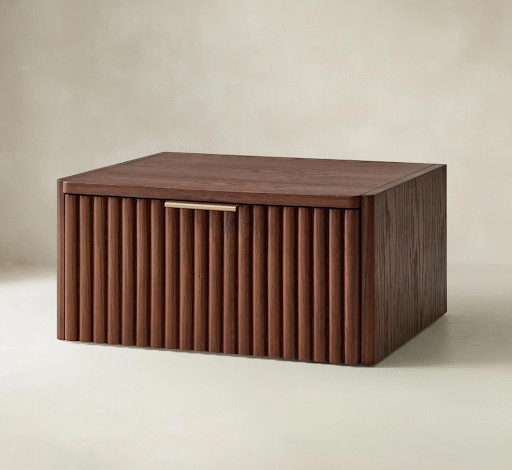
The Julia passes the morning test. I walk into the study now and the room feels different — settled, considered, like a room where the furniture was chosen for it rather than installed in it. The Cocoa Walnut surface in the early light has a warmth I find genuinely pleasing. The clean square edges of the tabletop catch the light in a way that reads as quality craftsmanship. The drawer is closed. The surface is clear. The room is ready. That feeling — that readiness — is worth a great deal to me, and I had not expected it when I was considering whether to spend the money.
What Changed in Daily Life
The standing function surprised me. I had expected to use it dutifully — to stand because I knew I should, the way I eat vegetables because I know I should, with more discipline than pleasure. What actually happened was different. Standing up at the desk became something I looked forward to in a mild but genuine way. The motor rises in four seconds, quiet enough that my upstairs neighbour has never once mentioned it. I press the button and stand and something in my body says: yes, this is better.
I stand when I am writing things that need full attention. I sit when I am reading or replying to emails. The transition marks the shift between modes in a way that feels, over time, like a small daily ritual rather than an ergonomic intervention. I had not expected to feel this way about a piece of office furniture. I do.
The drawer changed something too. This will sound trivial and is not: having a place to put my phone during working hours — out of sight, easily accessible, not on the surface competing for my attention — has improved my focus in a way I had not anticipated. The surface stays clear. The clear surface feels calm. The calm feels productive. These are not things I can prove. They are things I experience every day.
The Honest Answer to the Worth It Question
Let me be specific about who the Julia is worth it for, and honest about who it is not.
It is worth it if you work from home three or more days a week and expect to continue doing so. If the quality of the space you work in affects how you feel about the work — and for most people, it does, even those who insist it does not. If you have spent time and care on the rest of your home and find yourself wanting that same care to extend to the room you actually spend most of your waking hours in. If you live in a home with warmth in it — wooden floors, period walls, the accumulated texture of a real living space — and you want your desk to belong in that home rather than contradict it.
The Julia is specifically made for rooms like that. Solid wood surface with genuine grain. Clean square edges — the kind of precise craftsmanship that reads as furniture rather than equipment. Available in Cocoa Walnut or Light Oak to sit alongside whatever wood tones already exist in your room. A built-in drawer that keeps the surface honest. Built-in cable management that keeps the room honest. A quiet motor — 40 to 45 decibels, which is to say: quieter than your kettle, quieter than your boiler, quiet enough for a terrace house at seven in the morning.
It is not worth it if budget is the main constraint — there are cheaper standing desks, and some of them are functional. It is not the right desk for a very contemporary minimal room, where the Baggio — with its rounded corners and grooved edge design — would be a better match. And it is not worth it if you work from home fewer than three days a week, because the investment compounds with use and dissipates without it. The full range is at Julia standing desk on Hulala Home.
The Part Nobody Puts in a Review
There is something that happens with objects you genuinely love that does not make it into most reviews. A kind of quiet relief. The relief of not having to think about the thing anymore — of not catching the desk in your peripheral vision and feeling the low hum of dissatisfaction that an unchosen object produces. The relief of the decision being finished, and being right.
I feel that with the Julia. I do not notice it on most days — which is, I think, the highest compliment you can pay a piece of furniture. It has receded into the room in the way that the right things do. It is there. It is right. I am glad it is there.
Is it worth it? For the person I described — the one working from home in a room they care about, in a home they have put thought into, who wants the desk to finally reflect the same level of care as everything else — yes. Unambiguously, warmly, specifically: yes.