Skip Hire in Harrow: A Practical Guide to Managing Construction Waste on Residential Projects

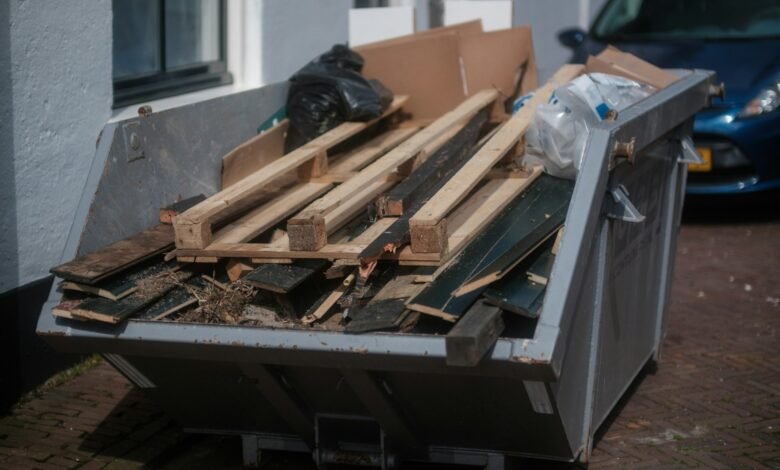
There’s a moment on almost every residential building project when the waste gets out of hand. It usually happens around day three — rubble in the hallway, timber stacked against the fence, a skip that’s already half full and the main demolition phase hasn’t even finished. Managing construction waste on a residential site in Harrow takes more planning than most people allow for, and the decisions made before work starts tend to define how smoothly the whole project runs from that point on.
Whether you’re managing a rear extension, a full loft conversion or a straightforward kitchen refit, arranging reliable skip hire services in Harrow before the first wall comes down makes a measurable difference to how smoothly the job runs.
Why construction waste is harder to manage than most people expect
The volume surprises people every time. A single room strip-out — tiles off the walls, old units out, flooring up — can fill a skip faster than most homeowners anticipate. Scale that up to a full extension or a whole-house refurbishment and the waste management challenge becomes genuinely significant. Different materials arrive at different project phases, some require separate handling and the whole thing needs to be documented to meet legal obligations.
There’s also the practical side. A site cluttered with rubble, timber and packaging slows trades down, creates trip hazards and makes deliveries of new materials more complicated than they need to be. Good waste management isn’t just about compliance — it directly affects how efficiently the project runs day to day.
Know your waste streams before work begins
Before booking a skip, it’s worth thinking through what the project will actually produce and when. Residential construction waste broadly falls into a few categories, and understanding them helps with both skip sizing and scheduling.
Inert materials — broken concrete, bricks, hardcore, excavated soil and masonry — tend to dominate the early demolition and groundwork phases. These are heavy, dense and fill a skip quickly. Timber from studwork, joists and formwork comes next, followed by plasterboard, insulation offcuts and the packaging from new materials as the build progresses. The finishing phase produces lighter but often bulkier waste: old fittings, sanitary ware, flooring, tiles and general site debris.
A loft conversion in Harrow, for example, will typically generate roof tiles, old joists, insulation, accumulated loft contents and packaging from new structural materials — all within a relatively short window. Planning for that volume before the first skip arrives prevents the mid-project scramble of arranging an emergency collection.
Choosing the right skip size for your Harrow project
Skip size selection is where many homeowners either over-spend or under-order. B&K Environmental Services Ltd offers three standard skip sizes for residential projects, each suited to a different scale of work.
8yd skip — contained jobs and single-room refurbs
The 8yd skip handles single-room projects well: a bathroom strip-out, a modest kitchen refit, a garage clearout or a small garden clearance. It’s the right choice when the waste stream is predictable and contained, and when driveway or street space is limited. On the tighter residential streets found across parts of Harrow, the smaller footprint of an 8yd skip is often a practical advantage as much as a cost one.
12yd skip — the go-to for most residential renovations
For the majority of domestic renovation projects, the 12yd skip is the sensible default. Multi-room refurbishments, loft conversions, larger kitchen and bathroom renovations and medium-scale landscaping jobs all sit comfortably within its capacity — with enough buffer for the unexpected. And the unexpected is almost guaranteed on any renovation project. A wall that turns out to be load-bearing and needs more work than planned. Flooring that hides another layer beneath. Old pipework that has to come out before new work can go in. The 12yd skip absorbs those surprises without requiring an unplanned second delivery.
16yd skip — extensions, full clearances and larger works
A full rear extension on a Harrow semi-detached property will generate substantial volumes of excavated soil, broken concrete, hardcore and general site waste in the groundwork phase alone — often enough to fill a 16yd skip before the superstructure is even started. For full-house clearances, significant extensions or major landscaping projects, the 16yd is the most cost-effective single-container option. Fewer collections mean less disruption to the site and lower overall logistics costs across the project.
For projects generating very large or continuous waste volumes — commercial works, larger residential developments or long-running contracts — B&K also provides roll-on/roll-off containers in 20yd and 40yd sizes.
Matching skip hire to your build phases
This is the detail that separates a well-managed site from a chaotic one. Different build phases produce different waste types and volumes, and treating the whole project as a single waste event leads to either an overfull skip sitting on site for weeks or a series of expensive emergency collections.
The demolition and groundwork phase generates the heaviest, densest waste. This is the phase where load capacity is most likely to be tested and where grab hire is often a more practical and cost-effective option than a standard skip — particularly for soil, hardcore and rubble. A grab lorry arrives, loads directly using a hydraulic arm and departs without leaving a container on site, which is a significant advantage on tighter Harrow streets.
The mid-build phase shifts to lighter but bulkier materials: timber, plasterboard, insulation and packaging. Collections here need to be timed around deliveries of new materials to avoid the site becoming congested. The finishing phase produces smaller volumes of mixed waste — tiles, old fittings, flooring, general debris — which a single well-timed collection usually handles comfortably.
For projects running over several weeks or months, B&K offers rolling collection arrangements with scheduled swaps at agreed intervals. This removes the need to monitor fill levels and chase collections mid-project — trades can focus on the work rather than the waste.
Access, permits and placement on Harrow’s residential streets
Harrow covers a wide range of residential street types — from broader roads with generous off-street parking to tighter Victorian terraces and older semi-detached streets where frontage is limited and parking is competitive. Access planning matters here more than in some areas.
Where a skip can be placed entirely on private property, no permit is required. The moment it extends onto the public highway — pavement, verge or carriageway — a permit from Harrow Council’s highways department is needed. Allow at least five to seven working days for permit processing and confirm any requirements for signage, reflective markers or overnight lighting with the council or your skip provider.
B&K assists customers with permit applications and can advise on whether a permit is required for a specific address before booking. It’s a straightforward step that prevents the far more disruptive scenario of a delivery being refused or a skip being removed by the council.
Always place protective boards under the skip, particularly on block paving, new tarmac or any surface that’s been recently laid. And on streets where neighbours share limited parking, a brief note explaining delivery and collection dates prevents the kind of friction that can escalate into formal complaints.
When grab hire or wait & load works better than a skip
Two alternatives to standard skip hire are worth understanding before committing to a booking — because for certain project types and site conditions, they’re genuinely the better option.
Grab hire suits projects generating large volumes of heavy or loose material. The lorry arrives, loads using a hydraulic grab arm and departs without leaving anything on site. No permit, no overnight footprint, no manual loading. For groundwork phases involving significant excavation, or for garden renovation projects with large amounts of soil and hardcore to remove, grab hire saves both time and physical effort.
Wait & load is different in character. B&K’s vehicle arrives at the property, waits while operatives load the waste and then departs immediately. Because no container is left on the highway, no permit is required — which makes it particularly useful on narrow Harrow streets where on-street skip placement would cause problems, or for short-term clearances where a static skip would be disproportionate. It’s also worth considering for the final sweep at the end of a project, when the remaining waste is manageable but needs to go quickly.
Hazardous materials and what cannot go in a standard skip
Residential construction sites in Harrow — particularly those involving older properties — regularly encounter materials that cannot go into a standard skip. Knowing what they are before work begins avoids compliance issues and potentially serious safety risks.
Asbestos is the most significant concern. Many Harrow properties built before the 1980s contain asbestos in floor tiles, artex ceiling coatings, pipe lagging, roof materials or partition walls — sometimes in locations that only become visible once renovation work starts. Asbestos must be removed by licensed contractors and disposed of through licensed channels. It cannot go in a general skip under any circumstances. B&K offers a specialist asbestos removal service and can advise on the correct approach if asbestos is identified during works — do not attempt removal without professional guidance.
Other materials that require separate disposal routes include large batteries, gas cylinders, electrical appliances, medical waste, tyres and hazardous chemicals including fuels, solvents and paints. If there’s any uncertainty about whether a specific material can go in the skip, contact B&K before loading. A brief call is considerably simpler than dealing with a refused collection.
Working with contractors: keeping waste under control on site
On a site with multiple trades working simultaneously, waste management can quickly become a shared problem that nobody owns. A brief conversation with contractors before work begins — covering what goes in the skip, what doesn’t and when collections are scheduled — prevents the most common on-site waste mistakes.
Agree on waste segregation from the start. Keeping timber separate from plasterboard, and both separate from heavy inert materials, improves recycling rates and can reduce disposal costs. Brief all trades on banned items and make sure the skip provider’s contact number is visible on site in case of queries.
Schedule collections around the project’s busiest phases rather than reacting to an overfull skip. And if the project is long-running, consider a rolling arrangement with B&K — it removes the logistical overhead and keeps the site consistently clear without requiring constant coordination.