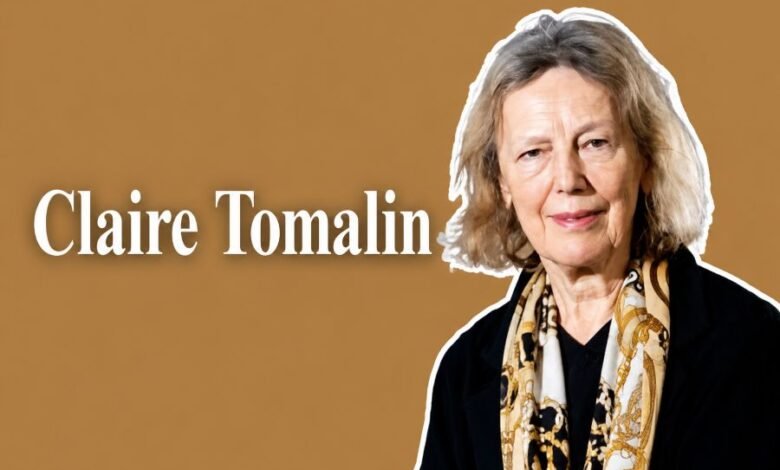
Claire Tomalin: Renowned English Journalist and Biographer
Illuminating Literary Lives Through Insightful Biography Writing

Introduction
Claire Tomalin is a towering figure in the literary world, celebrated for her profound contributions as an English journalist and biographer. Born in London in 1933, she has spent decades unearthing the intimate details of literary giants’ lives, delivering biographies that blend meticulous research with compelling narrative. Her work reveals both the brilliance and human flaws of her subjects, earning her international acclaim. Tomalin’s career reflects resilience, intellectual rigor, and an unwavering passion for storytelling, positioning her as one of the most influential biographers of the 20th and 21st centuries.
Quick Bio
| Attribute | Information |
|---|---|
| Full Name | Claire Tomalin (née Claire Delavenay) |
| Date of Birth | 20 June 1933 |
| Birthplace | London, England, United Kingdom |
| Nationality | British |
| Ethnicity | English-French descent |
| Education | Dartington Hall School, Newnham College, Cambridge (English Literature) |
| Profession | Journalist, Literary Editor, Biographer |
| Spouses | Nicholas Tomalin (m. 1955–1973), Michael Frayn (m. 1993–present) |
| Children | Five children (three daughters, two sons) |
| Awards | James Tait Black Memorial Prize, Hawthornden Prize, Whitbread Book Award, Bodley Medal |
| Known For | Literary biographies of Mary Wollstonecraft, Charles Dickens, Jane Austen, and others |
Early Life and Education
Claire Tomalin was born to Émile Delavenay, a French academic, and Muriel Herbert, an English composer. Growing up in a home filled with intellectual debate and artistic influence, she developed a keen sense of curiosity and a love for literature. Despite family difficulties, including her parents’ separation, she excelled academically, attending Dartington Hall School, a progressive institution fostering creativity.
At Newnham College, Cambridge, Tomalin studied English literature, a foundation that would shape her career. She honed critical thinking and analytical skills, preparing her for the rigorous research that would later define her biographical work. Her education instilled a discipline that allowed her to merge literary insight with historical accuracy.
Early Career in Journalism
After graduating, Tomalin began her professional life in publishing and journalism. Her early experiences included working as an editorial assistant, exposing her to the workings of newspapers and literary magazines. She quickly gained recognition for her sharp editorial judgment and insight into contemporary literature.
Her first major role was at the New Statesman, where she advanced to literary editor. There, she curated essays, reviews, and features, showcasing emerging writers and established voices alike. Her ability to identify literary talent and her dedication to accuracy set her apart. Tomalin later became the literary editor of The Sunday Times, further cementing her reputation as a respected journalist.
Transition to Biographical Writing
The shift to full-time biographical writing marked a new phase in Tomalin’s career. Her first major biography, The Life and Death of Mary Wollstonecraft (1974), received critical acclaim for its detailed research and empathetic portrayal of the feminist pioneer. This work demonstrated her talent for combining historical context with narrative storytelling, a hallmark of her style.
Over the years, Tomalin wrote biographies of many prominent literary figures, including Percy Bysshe Shelley, Katherine Mansfield, Charles Dickens, Jane Austen, Thomas Hardy, and H.G. Wells. Each work is characterized by exhaustive archival research, personal letters, and contemporary accounts, bringing the subjects to life with nuance and depth. Her biography of Dickens, The Invisible Woman, inspired a major film adaptation, reflecting her cultural impact.
Writing Style and Impact
Tomalin’s writing style blends scholarly rigor with readability. She emphasizes the human side of her subjects, highlighting flaws alongside accomplishments. This approach has led to both praise and criticism: while some admire her honesty and depth, others have noted the occasional dramatic interpretation. Nevertheless, her work has reshaped modern biography, setting high standards for research and narrative.
Her influence extends beyond books; she has nurtured new talent in journalism and literary circles, mentoring writers and fostering appreciation for careful biographical study. Tomalin’s contributions have made significant impacts on the understanding of literary history and cultural heritage.
Major Works and Achievements
- Mary Wollstonecraft (1974) — First major biography, Whitbread First Book Prize.
- Shelley and His World (1980) — Explored Shelley’s personal and literary life.
- Katherine Mansfield: A Secret Life (1987) — Illuminated Mansfield’s personal struggles and literary achievements.
- The Invisible Woman: The Story of Nelly Ternan and Charles Dickens (1990) — Acclaimed and adapted into a film.
- Jane Austen: A Life (1997) — Comprehensive look at Austen’s private and public life.
- Samuel Pepys: The Unequalled Self (2002) — Award-winning study of the diarist.
- Thomas Hardy: The Time‑Torn Man (2006) — Detailed exploration of Hardy’s career and personal life.
- Charles Dickens: A Life (2011) — Definitive biography of the novelist.
- The Young H.G. Wells: Changing the World (2021) — Focus on Wells’ early years and literary ambitions.
- A Life of My Own (2017) — Memoir reflecting on personal and professional experiences.
Career Timeline
| Year | Milestone |
|---|---|
| 1950s | Early editorial and publishing work |
| 1968 | Literary editor, New Statesman |
| 1974 | First major biography published (Mary Wollstonecraft) |
| 1977–1986 | Literary editor, The Sunday Times |
| 1980s–2010s | Prolific biographical publications |
| 1990 | The Invisible Woman published |
| 2002 | Samuel Pepys: The Unequalled Self wins major awards |
| 2011 | Charles Dickens: A Life published |
| 2017 | Memoir A Life of My Own published |
| 2021 | The Young H.G. Wells: Changing the World published |
Personal Life
Claire Tomalin married journalist Nicholas Tomalin in 1955. After his untimely death in 1973, she married novelist Michael Frayn in 1993. She has five children and continues to be a respected figure in literary circles. Her personal experiences have informed her empathetic approach to biography, allowing her to capture both triumphs and struggles in her subjects’ lives.
Conclusion
Claire Tomalin’s work as an English journalist and biographer has left an indelible mark on literary culture. Her meticulous research, insightful storytelling, and dedication to uncovering the truths of her subjects’ lives have established her as a model for modern biography. Through decades of writing, editing, and mentoring, she has shaped the literary world, ensuring that the lives of iconic writers are understood in their full complexity. Her legacy continues to inspire both readers and emerging writers.
FAQ
Q1: Who is Claire Tomalin?
A1: She is an English journalist and biographer known for literary biographies.
Q2: When was Claire Tomalin born?
A2: She was born on 20 June 1933.
Q3: Where was she born?
A3: Claire Tomalin was born in London, England.
Q4: What is her educational background?
A4: She studied English Literature at Newnham College, Cambridge.
Q5: Who were her parents?
A5: Her father was Émile Delavenay, and her mother was Muriel Herbert.
Q6: Who are her spouses?
A6: She married Nicholas Tomalin and later Michael Frayn.
Q7: How many children does she have?
A7: She has five children.
Q8: What are some of her most famous works?
A8: Her notable works include biographies of Mary Wollstonecraft, Charles Dickens, and Jane Austen.
Q9: What awards has she received?
A9: She won the James Tait Black Memorial Prize, Whitbread Book Award, and Bodley Medal.
Q10: Why is she significant?
A10: Claire Tomalin is renowned for her insightful, detailed literary biographies.