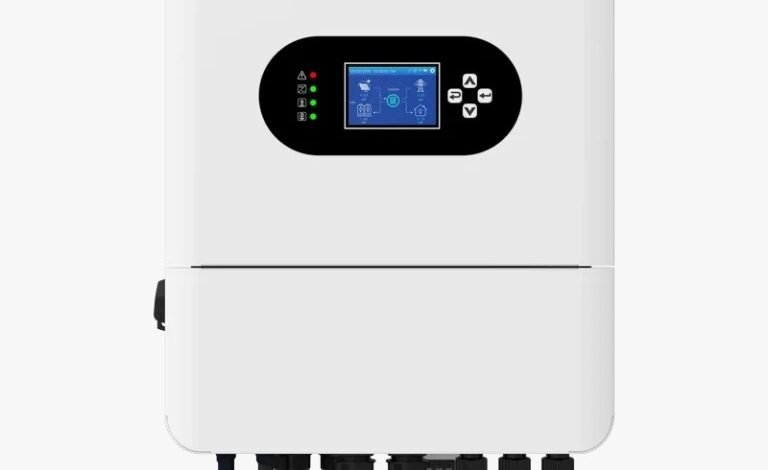
You bought solar panels to save money. Then a storm hit. The grid went down at 3 p.m. Your panels were producing power. But your lights stayed off. Your refrigerator stopped. Your freezer full of six months of meat began to thaw. Why? Because a standard grid-tied solar system shuts down during a blackout. It is designed to protect line workers from backfeed. That safety feature means your panels become useless exactly when you need them most. The solution is not more panels. It is a different type of brain for your system. A hybrid solar inverter keeps your panels running during an outage. It disconnects from the grid, creates its own microgrid, and powers your critical loads from the sun. No gas generator. No extension cords. No panicked trip to the store for bags of ice. Just your panels doing what you thought they would do all along. Keep your food cold and your lights on.
The Battery Or No Battery Question That Confuses Everyone
Hybrid means flexible. Some people think hybrid requires batteries. It does not. A hybrid inverter can work without batteries, sending excess solar to the grid just like a standard inverter. The difference is what happens when you add batteries later. A standard inverter cannot accept batteries at all. You would rip it out and start over. A hybrid solar inverter accepts batteries whenever you are ready. This year. Next year. Never. The choice stays open. That matters because battery prices are dropping fast. Buying a hybrid inverter today means you can add storage next year without rewiring your whole system or throwing away a perfectly good inverter. Ask your installer if the inverter they are quoting is hybrid-ready. If they say “you do not need batteries,” they are missing the point. You may not need them today. You want the option for tomorrow. That option costs very little upfront and saves thousands in rework later.
The AC Coupling Trap That Wastes Your Existing System
You already have solar. Standard grid-tied inverter. Works fine. Now you want backup power during outages. Your installer says you need a new hybrid inverter. They want to replace everything. That is expensive. There is another way. AC coupling. Your existing inverter connects to the AC side of a hybrid inverter. During a blackout, the hybrid inverter creates a microgrid. Your old inverter sees that microgrid as “the grid” and keeps producing power. The hybrid inverter manages battery charging and discharging. You keep your existing equipment. You add only what you need. Not every hybrid solar inverter supports AC coupling. Ask before you buy. The ones that do cost more upfront but save you from scrapping a perfectly functional existing system. That saving often exceeds the price difference. Your old inverter is not trash. It is a resource. Choose a hybrid that treats it that way.
The Load Shedding Feature That Prevents Dead Batteries
Your battery is full at 2 p.m. The sun is strong. You are running the air conditioner, the well pump, and the pool filter. Then a cloud passes. The battery starts draining. If it drains completely, your system shuts down. You wake up in the dark. A smart hybrid solar inverter prevents this through load shedding. It monitors battery state of charge. When the battery drops below a set threshold, the inverter automatically turns off non-essential loads. The pool pump stops. The air conditioner cycles off. The well pump runs only when needed. Your lights, refrigerator, and internet modem stay on. You never wake up to a dead battery and a dark house. Ask your inverter supplier about programmable load shedding. If they do not offer it, your battery will drain completely during the first extended cloud cover. That first time will be the last time you trust that system.
The Generator Input That Saves You During Winter Storms
Solar works great in summer. Winter is different. Short days, low sun angle, snow on panels. Your batteries may drain faster than your panels can recharge. You need a backup for your backup. A gas or propane generator. But you cannot just plug a generator into your solar system. The voltages and frequencies must match. The generator must play nice with the inverter’s microgrid. A fully featured hybrid solar inverter includes a dedicated generator input. When battery charge drops too low and solar production is weak, the inverter starts the generator automatically. The generator powers your loads and recharges the batteries. When the sun returns, the generator shuts off. You never touch a pull cord or smell exhaust fumes. Ask your inverter vendor if their hybrid includes automatic generator start. Many do not. The ones that do cost more. During a three-day winter storm with no sun, that feature is priceless. Your family stays warm and your pipes stay flowing.
The One Setting That Saves You From Time-Of-Use Rates
Your utility charges different rates at different times. High rates from 4 p.m. to 9 p.m. Low rates overnight. A standard inverter cannot use that difference to save you money. A hybrid can. You program the inverter to charge your batteries from solar during the day. Then from 4 p.m. to 9 p.m., the inverter powers your home from the batteries instead of the grid. You buy no expensive electricity during peak hours. You shift your consumption to your own stored solar energy. This feature is called time-of-use shifting or peak shaving. Ask your hybrid solar inverter supplier if their product includes it. Many do. But some lock it behind a premium software subscription. Others omit it entirely. Time-of-use shifting alone can cut your electric bill by thirty percent without adding a single solar panel. That saving pays for the hybrid upgrade within two or three years. After that, the saving is pure profit. Your utility’s peak rates are not going down. Your inverter should help you avoid them.