John Carey: Powerful Legacy of a Fearless British Literary Critic Who Changed Literary Debate
The inspiring life, sharp criticism, academic journey, and lasting influence of Professor John Carey

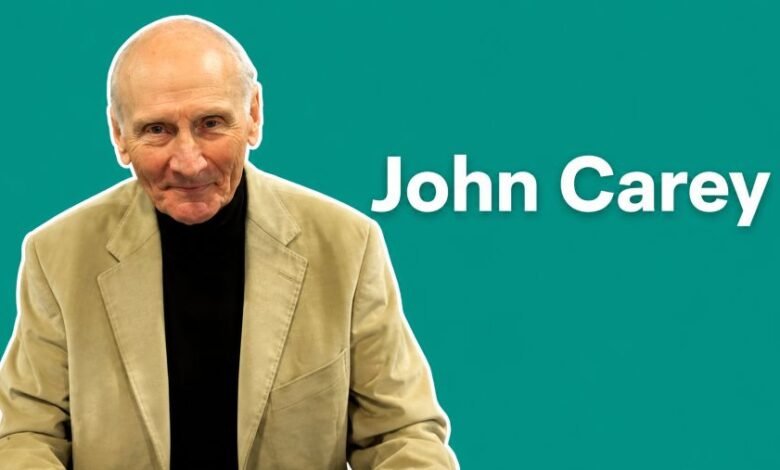
Table of Contents
ToggleIntroduction
John Carey was a respected British literary critic, academic, author, editor, and broadcaster whose voice became important in the world of English literature. He was widely known for his clear writing, strong opinions, and ability to explain literature without making it feel distant from ordinary readers. His work connected the serious world of Oxford scholarship with the wider public world of book reviews, essays, and cultural debate.
As a British literary critic, John Carey earned both admiration and criticism. Many readers praised him for making literature understandable, direct, and alive. At the same time, some disagreed with his sharp attacks on literary elitism and his strong judgments about famous writers. This mix of respect and debate made him one of the most memorable literary voices of his generation. His career showed that criticism could be scholarly, powerful, readable, and sometimes controversial at the same time.
Quick Bio
| Field | Details |
|---|---|
| Full Name | John Carey |
| Public Title | Professor John Carey FBA FRSL |
| Date of Birth | 5 April 1934 |
| Birthplace | Barnes, south-west London, England |
| Nationality | British |
| Gender | Male |
| Profession | Literary critic, academic, author, editor, broadcaster |
| Education | St John’s College, University of Oxford |
| Main Role | Merton Professor of English Literature, University of Oxford |
| Famous For | Literary criticism, Oxford scholarship, Sunday Times book reviewing, and anti-elitist views on culture |
| Spouse | Gillian Mary Florence Booth, also known as Gill Booth |
| Children | Two sons, Leo and Thomas |
| Death Date | 11 December 2025 |
| Age at Death | 91 |
Early Life of John Carey
John Carey was born on 5 April 1934 in Barnes, south-west London. He grew up in a middle-class family and was the youngest child in his family. His early life was shaped by education, discipline, reading, and the social atmosphere of Britain during the mid-twentieth century. These early experiences later helped shape his views about class, culture, literature, and public taste.
His childhood gave him a strong awareness of how education could change a person’s life. Carey was not born into literary fame, but his intelligence and hard work opened the door to one of Britain’s most respected universities. This background also helps explain why he later challenged cultural snobbery and defended the importance of ordinary readers in literary life.
Education and Academic Foundation
John Carey studied at Richmond and East Sheen Grammar School before winning a scholarship to St John’s College, Oxford. Before beginning his university studies, he completed National Service with the East Surrey Regiment. This period came before his long academic connection with Oxford and added another serious chapter to his early life.
At Oxford, he studied English literature and achieved excellent academic results. He received a first-class degree and later continued his scholarly work. His education gave him a strong foundation in English literature, especially in writers such as John Milton, John Donne, Charles Dickens, and William Makepeace Thackeray. These authors later became important subjects in his books and criticism.
Family Background and Personal Life
John Carey’s father was Charles William Carey, and his mother was Winifred Ethel Carey. Publicly available information confirms that he was the youngest of four children. His family background was not presented as glamorous or celebrity-like, but it was important in forming his understanding of class, education, and ambition.
In 1960, John Carey married Gillian Mary Florence Booth, also known as Gill Booth. The couple had two sons, Leo and Thomas. His personal life was generally private, and he was not known for using fame to promote his family life. Instead, his public identity remained strongly connected to books, teaching, criticism, and literary scholarship.
Career Start and Oxford Journey
John Carey began his academic career through Oxford, where he moved from student life into teaching and scholarship. He became a Junior Research Fellow at Balliol College, then worked as a Tutorial Fellow at Keble College and later at St John’s College. These roles helped him develop as a teacher, researcher, and literary thinker.
His major academic achievement came when he became Merton Professor of English Literature at the University of Oxford. This position placed him among the most respected figures in English literary studies. His Oxford career gave him authority, but his writing style kept him connected to readers outside the university world as well.
Career Timeline
| Year | Career Event |
|---|---|
| 1934 | John Carey was born in Barnes, south-west London |
| 1950s | Completed National Service with the East Surrey Regiment |
| 1957 | Received a first-class degree in English literature from Oxford |
| 1959–1960 | Served as Junior Research Fellow at Balliol College |
| 1960s | Worked as Tutorial Fellow at Keble College |
| 1960s–1975 | Served as Tutorial Fellow at St John’s College, Oxford |
| 1976–2001 | Served as Merton Professor of English Literature at Oxford |
| 1977 | Became principal book reviewer for The Sunday Times |
| 1982 | Elected Fellow of the Royal Society of Literature |
| 1982 | Chaired the Booker Prize committee |
| 1991 | Elected Honorary Fellow of St John’s College |
| 1996 | Elected Fellow of the British Academy |
| 2003 | Chaired the Booker or Man Booker Prize committee |
| 2005 | Chaired the first Man Booker International Prize judging panel |
| 2009 | Published his major biography of William Golding |
| 2014 | Published his memoir, The Unexpected Professor |
| 2025 | Died on 11 December at the age of 91 |
John Carey as a British Literary Critic
John Carey became famous as a British literary critic because he wrote with strength, clarity, and confidence. His reviews were direct and readable, avoiding the complicated style often associated with academic criticism. He believed criticism should speak to readers, not just to specialists. This made his writing useful for students, general readers, and serious book lovers.
His public criticism was sometimes sharp. He did not simply praise famous writers because they were already respected. He questioned reputation, challenged accepted opinions, and argued against cultural elitism. This made him powerful, but it also made him controversial. His career proves that honest criticism can create both respect and disagreement.
Major Books and Publications
John Carey wrote and edited many important books during his career. His known works include Milton, The Violent Effigy: A Study of Dickens’ Imagination, Thackeray: Prodigal Genius, John Donne: Life, Mind and Art, The Intellectuals and the Masses, What Good Are the Arts?, William Golding: The Man Who Wrote Lord of the Flies, and The Unexpected Professor: An Oxford Life in Books.
Among these, The Intellectuals and the Masses became especially important because it showed his strong opposition to literary elitism. What Good Are the Arts? also reflected his interest in the value of art and culture. His biography of William Golding showed his skill in literary biography, while The Unexpected Professor gave readers a personal view of his life in books and Oxford.
Public Image and Critical Style
The public image of John Carey was intelligent, sharp, readable, and fearless. He was not the kind of critic who hid behind vague language. His sentences were clear, and his opinions were often strong. This helped him stand out in a field where academic writing can sometimes feel difficult for ordinary readers.
A positive side of his style was that he made literature feel open and approachable. A negative side, according to some critics, was that his judgments could feel severe or provocative. Even so, his strong voice made his work memorable. Readers may agree or disagree with him, but his writing rarely felt dull or empty.
Awards and Honors
John Carey received several important honors during his life. He was elected a Fellow of the Royal Society of Literature in 1982. He was also elected an Honorary Fellow of St John’s College in 1991 and a Fellow of the British Academy in 1996. These honors showed the high level of respect he earned in literary and academic circles.
He also played a major role in prize judging. He chaired the Booker Prize committee in 1982 and again in 2003. In 2005, he chaired the judging panel for the first Man Booker International Prize. These roles showed that his judgment was valued beyond the classroom and beyond his published books.
Biggest Career Success
One of John Carey’s biggest career successes was his ability to work at the highest academic level while also writing for the general public. Many scholars remain known mainly inside universities, but Carey reached wider audiences through book reviews, essays, broadcasts, and public criticism. He helped readers understand literature without making them feel excluded.
Another major success was his long influence on literary debate. His books on Dickens, Donne, Thackeray, Golding, and modern culture continued to attract attention because they were written with intelligence and energy. He proved that a British literary critic could be scholarly and popular, serious and readable, traditional and challenging.
Challenges and Controversial Side
John Carey’s career was not without criticism. His strong views against cultural elitism sometimes placed him in conflict with defenders of high modernist writers and traditional literary authority. Some readers admired his courage, while others felt his arguments could be too sharp or too dismissive.
This controversial side did not weaken his importance. Instead, it made his work part of a larger debate about who literature is for. Carey believed literature and art should not be treated as private property for intellectual elites. That belief became a central part of his identity and helped define his place in modern literary criticism.
Legacy and Impact
John Carey’s legacy is built on scholarship, public criticism, teaching, and cultural argument. He helped bridge the gap between university literature departments and ordinary readers. His writing showed that difficult books could be discussed in clear language without losing seriousness.
His impact on the industry of literary criticism remains strong because he changed expectations about how critics could write. He showed that criticism could be brave, direct, and human. For students, he remains an example of intellectual discipline. For readers, he remains a guide to literature that is lively, honest, and accessible.
Death Details
John Carey died on 11 December 2025 at the age of 91. His death marked the end of a long and influential life in English literature. He was remembered as an Oxford professor, a major reviewer, a respected author, and a fearless critic.
His passing was widely noted because his career had touched several parts of literary culture. He was not only an academic figure but also a public voice. His books, reviews, and arguments continue to represent a major chapter in the history of British literary criticism.
Conclusion
John Carey was a powerful figure in English literary life because he combined academic knowledge with public clarity. He was a British literary critic who respected serious literature but rejected the idea that literature should belong only to an elite group. His life story moved from Barnes to Oxford, from scholarship to public criticism, and from university teaching to national literary influence.
His positive legacy lies in his clear writing, deep reading, and defense of ordinary readers. His negative side, for some, was the sharpness of his criticism and the force of his disagreements. Yet that same force made him unforgettable. John Carey remains an important name for anyone interested in literature, criticism, Oxford scholarship, and the changing relationship between books and the public.
FAQs
Who was John Carey?
John Carey was a British literary critic, academic, author, editor, and broadcaster known for his Oxford career and literary reviews.
When was John Carey born?
He was born on 5 April 1934 in Barnes, south-west London, England.
What was John Carey famous for?
He was famous for literary criticism, Oxford scholarship, Sunday Times book reviewing, and his anti-elitist views on culture.
Was John Carey married?
Yes, he was married to Gillian Mary Florence Booth, also known as Gill Booth.
Did John Carey have children?
Yes, he had two sons named Leo and Thomas.
Where did John Carey study?
He studied at St John’s College, University of Oxford.
What was John Carey’s main academic position?
He served as Merton Professor of English Literature at the University of Oxford.
What are John Carey’s famous books?
His famous books include The Intellectuals and the Masses, What Good Are the Arts?, John Donne: Life, Mind and Art, and William Golding.
When did John Carey die?
He died on 11 December 2025 at the age of 91.