David Mearns: The Shipwreck Hunter Who Changed Deep-Sea Exploration

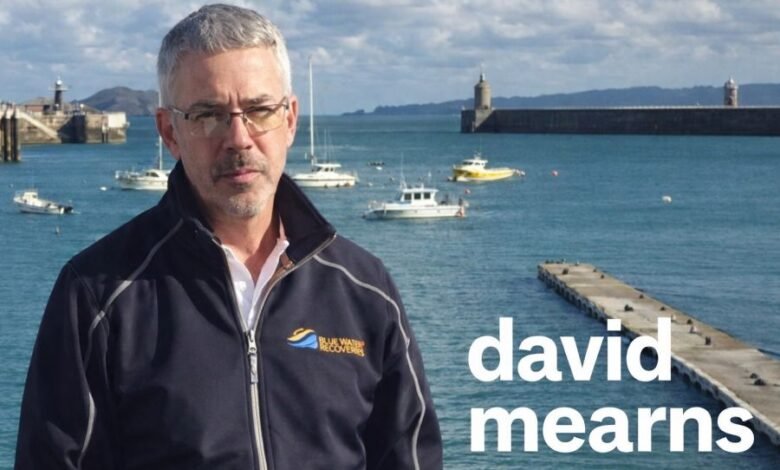
Table of Contents
ToggleIntroduction
David Mearns, often referred to as “The Shipwreck Hunter,” has spent decades pioneering deep-sea exploration and uncovering historical mysteries hidden beneath the ocean. His work, which has revolutionized the way we think about lost ships and maritime disasters, combines cutting-edge technology with extensive historical research. From locating World War II wrecks to discovering centuries-old vessels, Mearns has dedicated his life to uncovering the secrets of the sea.
Quick Bio
| Attribute | Details |
|---|---|
| Full Name | David Louis Mearns |
| Date of Birth | August 10, 1958 |
| Age | 67 (as of 2026) |
| Birthplace | Weehawken, New Jersey, USA |
| Nationality | American-born, UK-based |
| Profession | Marine Scientist, Shipwreck Hunter |
| Notable Achievements | Discoveries of HMS Hood, Bismarck, Musashi, and Shackleton’s Quest |
| Company | Founder of Blue Water Recoveries Ltd |
| Spouse | Sarah Mearns |
| Children | Sam, Alexandra, Isabella |
David Mearns: A Pioneer in Shipwreck Exploration
David Mearns’ career as a marine scientist and shipwreck hunter has reshaped the field of underwater archaeology. His journey began with a passion for the ocean, leading him to study marine biology at Fairleigh Dickinson University and later pursue a master’s degree in geological oceanography. After earning his M.Sc. in 1986, Mearns’ expertise and interest in the deep sea led him to explore underwater wrecks.
Early Life and Education
Born in Weehawken, New Jersey, Mearns was drawn to the sea from an early age. His educational background in marine biology and oceanography laid the foundation for his future career as a leading figure in underwater archaeology. During his academic years, he honed the skills that would later define his career, including the use of sonar technology and deep-sea exploration methods.
After completing his studies, Mearns worked in various roles in the geophysical surveying industry, where he gained valuable experience in offshore surveying. However, his ultimate goal was always to engage in the more exciting and intellectually stimulating world of shipwreck discovery.
A Career Built on Groundbreaking Discoveries
David Mearns’ most significant contributions to deep-sea exploration have come through his work with Blue Water Recoveries Ltd, the company he founded in 1995. Under his leadership, the company has located over 25 major wrecks, including some of the most famous ships lost during World War II and earlier naval battles.
HMS Hood and Bismarck
One of Mearns’ earliest and most celebrated discoveries was the HMS Hood, the British battlecruiser that was sunk in 1941 during a battle with the German battleship Bismarck. Mearns played a key role in locating the wreck of the Hood, which had remained elusive for decades. This discovery was not only a triumph in the field of marine archaeology but also provided closure to families of those lost in the tragedy.
Along with the HMS Hood, Mearns and his team also discovered the wreck of the Bismarck, which had been scuttled by the Germans after being severely damaged. These discoveries are regarded as landmark achievements in deep-sea archaeology.
The Musashi and Other Historic Wrecks
Mearns’ contributions to maritime history are not limited to World War II wrecks. In 2015, he was part of the team that located the Musashi, a massive Japanese battleship that sank in 1944 during the Battle of Leyte Gulf. The discovery of Musashi was significant not only because of the size of the ship but also because it provided a glimpse into the scale of naval warfare during the Pacific Theater of World War II.
Additionally, Mearns has been instrumental in locating several other important wrecks, such as HMAS Sydney and the AHS Centaur, both of which were significant losses for the Australian Navy during World War II. These discoveries have been pivotal in understanding the history of naval conflicts and providing closure to the families of the lost sailors.
Innovative Techniques in Shipwreck Recovery
David Mearns is known for combining historical research with the latest marine technology to locate shipwrecks. His ability to merge archives, witness accounts, and cutting-edge sonar systems has allowed him to uncover shipwrecks that were once thought lost to time. Mearns’ team uses high-resolution sonar, remotely operated vehicles (ROVs), and multibeam echosounders to survey the ocean floor and pinpoint wreck sites with incredible accuracy.
By combining these technological advancements with a deep knowledge of maritime history, Mearns has been able to locate wrecks that had remained undiscovered for decades. His approach has set new standards in the field of underwater archaeology.
Legacy of David Mearns
David Mearns’ work has not only reshaped the field of shipwreck exploration but also contributed significantly to the preservation of maritime history. His discoveries have brought attention to the importance of underwater archaeology and the need for conservation of historical sites that lie beneath the sea.
An Inspiring Figure
Mearns’ career has inspired a new generation of marine scientists and archaeologists. His work has demonstrated that with the right combination of historical research and modern technology, even the most elusive shipwrecks can be found. He has become a symbol of how scientific curiosity, combined with dedication and hard work, can unlock the secrets of the past.
David Mearns FAQ
Q1: How did David Mearns become interested in shipwrecks?
David Mearns’ interest in shipwrecks began in his youth, driven by a fascination with the sea. His formal education in marine biology and oceanography gave him the skills to pursue his passion for discovering lost ships.
Q2: What is David Mearns most famous for?
David Mearns is most famous for locating the wrecks of famous ships like the HMS Hood and Bismarck. His work has earned him international recognition in the fields of marine science and underwater archaeology.
Q3: What technology does David Mearns use to locate shipwrecks?
David Mearns uses state-of-the-art sonar technology, remotely operated vehicles (ROVs), and multibeam echosounders to locate shipwrecks on the ocean floor.
Q4: Has David Mearns written any books?
Yes, David Mearns has written The Shipwreck Hunter, a memoir that chronicles his career and the discoveries he has made throughout his journey.
Q5: What is David Mearns’ legacy?
David Mearns’ legacy lies in his contributions to the field of underwater archaeology, his use of innovative technology in shipwreck discovery, and the historical insights his work has provided.
Conclusion
David Mearns’ incredible journey as a shipwreck hunter has changed the way we view the ocean’s depths. Through his groundbreaking discoveries and innovative techniques, he has not only uncovered lost ships but also preserved the history of past generations. His work continues to inspire those who seek to understand the mysteries of the deep.