Geoffrey Robertson: Fearless Voice of Justice and Human Rights
The Powerful Journey of an Australian-British Barrister and Academic Who Challenged Injustice and Defended Freedom
 Writer Blog54 minutes ago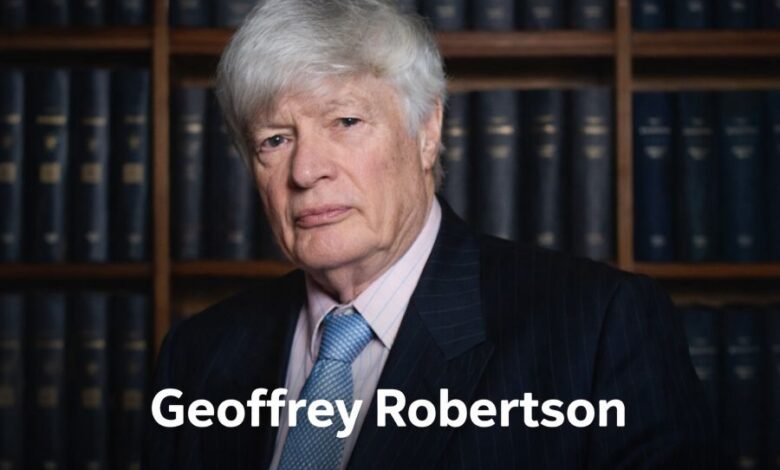
Table of Contents
ToggleIntroduction
Geoffrey Robertson is widely known as one of the most influential legal minds in modern human rights law. As an Australian-British barrister and academic, he has spent decades defending civil liberties, challenging injustice, and advocating for freedom of expression across the world.
His career stands as a powerful example of how the law can protect democracy and human dignity. While his work has earned admiration from supporters of human rights, it has also brought criticism from opponents who disagree with his outspoken legal activism.
Robertson’s life story reflects determination, intelligence, and courage in the legal profession. Through courtroom advocacy, writing, teaching, and public debate, he has played a significant role in shaping discussions about justice and international law.
Understanding the life and achievements of Geoffrey Robertson helps explain why he remains an important figure in modern legal history and human rights advocacy.
Quick Bio
| Field | Details |
|---|---|
| Full Name | Geoffrey Ronald Robertson |
| Known As | Geoffrey Robertson KC |
| Date of Birth | 30 September 1946 |
| Age | 79 years |
| Birthplace | Sydney, New South Wales, Australia |
| Nationality | Australian and British |
| Profession | Barrister, academic, author, broadcaster |
| Known For | Human rights law and civil liberties advocacy |
| Education | University of Sydney; University College Oxford |
| Spouse | Kathy Lette |
| Children | Two |
Early Life and Background
Geoffrey Robertson was born on 30 September 1946 in Sydney, Australia. He grew up in the suburb of Eastwood in New South Wales, where he spent his childhood surrounded by books, education, and political discussion.
His father, Francis Albert Robertson, had served in the Royal Australian Air Force during World War II before moving into the financial sector. His mother, Bernice Joy Beattie, played a key role in raising the family and supporting education.
Growing up in post-war Australia helped shape Robertson’s early views about justice and public responsibility. The political environment of the time exposed him to discussions about democracy, rights, and the importance of legal systems.
From an early age, Robertson showed strong intellectual curiosity. He developed a deep interest in debate, literature, and social issues, which eventually guided him toward a career in law.
Education and Academic Excellence
Geoffrey Robertson’s academic achievements played an important role in shaping his legal career. He attended Epping Boys High School in Sydney, where he developed strong skills in debate and critical thinking.
After completing school, he enrolled at the University of Sydney, one of Australia’s most respected institutions. There he studied arts and law, earning a Bachelor of Arts in 1966 and later a Bachelor of Laws with first-class honours in 1970.
His outstanding academic performance earned him the prestigious Rhodes Scholarship, allowing him to continue his education at University College, Oxford in the United Kingdom.
At Oxford, Robertson completed a Bachelor of Civil Law in 1972, a program known for its rigorous legal training. This period helped him develop a deep understanding of constitutional law, human rights, and international legal systems.
Start of Legal Career
Geoffrey Robertson began his legal career in the United Kingdom in 1973 when he was called to the Bar of England and Wales. This step officially allowed him to practice as a barrister.
During the early years of his career, Robertson became involved in cases related to civil liberties and freedom of expression. These cases often involved controversial issues that attracted media attention and public debate.
His willingness to defend difficult legal cases quickly established his reputation as a bold and principled advocate. Many observers recognized that Robertson was not afraid to challenge authority when defending individual rights.
These early experiences shaped his long-term commitment to human rights law and freedom of speech.
Rise as a Leading Human Rights Lawyer
Over the following decades, Geoffrey Robertson built a global reputation as a leading defender of human rights. His legal work focused on protecting individuals and organizations facing injustice or political pressure.
He has appeared before many significant legal institutions, including international courts and tribunals. Through these cases, Robertson helped highlight important legal principles such as fair trials, free expression, and government accountability.
In 1988, Robertson was appointed Queen’s Counsel, a prestigious recognition given to senior barristers for excellence in advocacy. Following changes to the British monarchy, the title is now known as King’s Counsel.
This recognition confirmed his position as one of the most respected lawyers in the United Kingdom.
Role as an Australian-British Barrister and Academic
Geoffrey Robertson is not only a practicing lawyer but also an influential Australian-British barrister and academic who has contributed significantly to legal scholarship.
He has taught and lectured at universities and academic institutions, sharing his knowledge of international law, civil liberties, and constitutional issues with students and legal professionals.
His academic work has helped bridge the gap between legal theory and courtroom practice. By combining scholarship with practical experience, Robertson has influenced how human rights law is taught and understood.
Through lectures and public discussions, he has encouraged younger generations of lawyers to view the law as a tool for social justice.
Writing Career and Publications
In addition to his legal work, Geoffrey Robertson is a respected author who has written several influential books on law, history, and human rights.
His book The Justice Game explains how the legal system works and provides insight into courtroom strategy and legal ethics. It has been widely praised for making complex legal ideas accessible to the general public.
Another notable book, Crimes Against Humanity, explores the development of international criminal law and examines how legal systems address war crimes and human rights violations.
Through his writing, Robertson has helped educate readers around the world about the importance of justice, accountability, and the rule of law.
Media Presence and Public Influence
Geoffrey Robertson also gained recognition through television and public debate. One of his most famous media projects was the program Geoffrey Robertson’s Hypotheticals.
The show presented fictional moral and political scenarios to a panel of guests, including politicians, writers, and public figures. Participants were asked how they would respond to difficult ethical situations.
This program became popular because it encouraged thoughtful discussion about law, politics, and moral responsibility. It helped bring complex legal questions into mainstream public conversation.
Through television and media appearances, Robertson expanded his influence beyond the courtroom and into the broader public sphere.
Legacy and Impact
The legacy of Geoffrey Robertson reflects decades of dedication to justice and human rights. His career demonstrates how the legal profession can play a critical role in protecting democratic values.
As an Australian-British barrister and academic, he has contributed to legal debates on freedom of speech, constitutional law, and international justice.
His courtroom work, books, and public discussions have helped shape how societies understand civil liberties and legal accountability.
While his strong opinions and advocacy have sometimes attracted criticism, his commitment to defending human rights remains a defining feature of his career.
Conclusion
Geoffrey Robertson’s life and career represent the powerful influence of law in protecting individual freedoms. From his early years in Australia to his international legal career in Britain, he has consistently championed justice and human rights.
Through legal advocacy, teaching, and writing, he has helped shape modern discussions about freedom of expression, fair trials, and international accountability.
The story of Geoffrey Robertson reminds us that the law is not only a profession but also a powerful instrument for defending democracy and human dignity.
FAQ
Who is Geoffrey Robertson?
Geoffrey Robertson is an Australian-British barrister, academic, and author known for his work in human rights law and civil liberties advocacy.
When was Geoffrey Robertson born?
He was born on 30 September 1946 in Sydney, Australia.
What is Geoffrey Robertson known for?
He is best known for defending freedom of speech, civil liberties, and human rights in courts and public debates.
Where did Geoffrey Robertson study law?
He studied law at the University of Sydney and later at University College Oxford as a Rhodes Scholar.
What books has Geoffrey Robertson written?
Some of his well-known books include The Justice Game and Crimes Against Humanity.
Writer Blog54 minutes ago