Henry Marsh – The Fearless Mind Behind Brain Surgery and the Honest Voice of Medicine
A Powerful Journey of a British Neurosurgeon and Author Who Saved Lives Yet Faced the Brutal Truth of Human Fragility

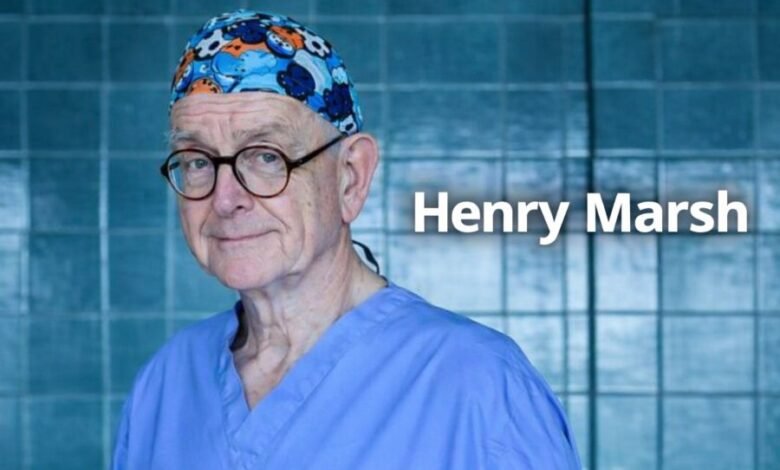
Table of Contents
ToggleIntroduction
Henry Marsh is one of the most respected and thought-provoking figures in modern medicine. As a British neurosurgeon and author, he built a remarkable career operating on the human brain, where every decision can mean the difference between life and death. His professional journey reflects both extraordinary medical skill and the emotional weight of responsibility that comes with it.
While many surgeons are remembered only for their successes, Henry Marsh became widely known for his honesty about failure, doubt, and moral conflict. He openly discussed the risks of neurosurgery, the limits of medicine, and the burden of making irreversible decisions. This combination of courage and vulnerability has made him not just a surgeon, but a powerful voice in global medical ethics.
Quick Bio
| Field | Details |
|---|---|
| Real Name | Henry Thomas Marsh |
| Date of Birth | 5 March 1950 |
| Age | 75 years (as of 2025) |
| Birthplace | Oxford, Oxfordshire, England |
| Nationality | British |
| Profession | Neurosurgeon, Author, Lecturer |
| Education | University College, Oxford; Royal Free Hospital School of Medicine |
| Spouse | Kate Fox |
| Children | Three |
| Known For | Awake brain surgery, bestselling medical memoirs |
| Honour | Commander of the Order of the British Empire (CBE) |
Early Life and Family Background
Henry Marsh was born on 5 March 1950 in Oxford, England. He grew up in an intellectually active household that valued justice, debate, and independent thinking. His father, Norman Stayner Marsh, was a law reformer and academic, while his mother, Christiane Christinnecke, had fled Nazi Germany before settling in Britain.
Being the youngest of four children, Marsh developed a strong sense of curiosity and independence early in life. His family’s background and moral values deeply influenced his later views on ethics, responsibility, and human rights. These influences would later shape both his surgical practice and his writing.
Education and Academic Excellence
Henry Marsh received his early education at the Dragon School in Oxford and later attended Westminster School in London. He was academically gifted and went on to study Politics, Philosophy, and Economics at University College, Oxford, where he graduated with first-class honours.
Although he initially pursued humanities, he later chose medicine, enrolling at the Royal Free Hospital School of Medicine in London. This transition marked the beginning of a life dedicated to science and patient care. His strong philosophical foundation later helped him approach medicine with depth and critical thinking.
Beginning of a Neurosurgical Career
After qualifying in medicine, Marsh trained rigorously in neurosurgery. He eventually became a Fellow of the Royal College of Surgeons in 1984. In 1987, he was appointed Consultant Neurosurgeon at the Atkinson Morley Wing of St George’s Hospital in London.
This position placed him at the center of complex brain surgery in the United Kingdom. As a British neurosurgeon and author, his clinical work soon gained recognition for its precision and innovative approach. Neurosurgery is one of the most demanding medical specialties, and Marsh embraced its challenges with determination.
Expertise in Awake Brain Surgery
Henry Marsh became especially known for performing awake craniotomies, a delicate surgical technique in which patients remain conscious during parts of brain surgery. This method allows surgeons to monitor speech, movement, and other critical brain functions in real time.
Awake brain surgery requires not only technical expertise but also psychological strength from both surgeon and patient. Marsh mastered this demanding procedure and performed thousands of operations during his NHS career. His work significantly contributed to the advancement of neurosurgical practice in Britain.
International Work and Humanitarian Efforts
In the early 1990s, Marsh began traveling to Ukraine to help modernize neurosurgical care. He worked closely with local doctors, sharing knowledge and training surgeons in advanced techniques. His commitment went beyond occasional visits; he developed lasting professional relationships in the region.
His international efforts extended to countries such as Nepal and Albania. Rather than seeking fame, he focused on improving surgical standards in areas with limited resources. These experiences also deepened his understanding of global medical inequality.
Literary Career and Global Recognition
Henry Marsh achieved international fame with his bestselling book Do No Harm: Stories of Life, Death and Brain Surgery published in 2014. The memoir offers a candid look into the operating theatre, revealing the emotional intensity of brain surgery.
He followed this success with Admissions: Life as a Brain Surgeon in 2017 and And Finally: Matters of Life and Death in 2022. These works solidified his reputation as a British neurosurgeon and author who writes with honesty, clarity, and emotional depth. His books have been translated into many languages and praised worldwide.
Personal Philosophy and Ethical Views
Marsh identifies as a humanist and has spoken openly about his non-religious beliefs. His philosophical background strongly influences his reflections on life, death, and medical responsibility.
He has also been vocal about assisted dying and patient autonomy. Rather than presenting medicine as heroic, he portrays it as deeply human, shaped by uncertainty and moral struggle. This balanced perspective has earned him both admiration and critical debate.
Health Challenges and Later Life
In recent years, Henry Marsh was diagnosed with prostate cancer. Instead of hiding his illness, he wrote openly about becoming a patient himself. This experience transformed his understanding of vulnerability and dependency.
His later writings explore the emotional transition from surgeon to patient. Despite stepping back from full-time NHS work in 2015, he continues to lecture, write, and contribute to medical discussions globally.
Honours and Recognition
In 2010, Henry Marsh was appointed Commander of the Order of the British Empire for his services to neurosurgery. This honour recognized decades of dedication to patient care and medical innovation.
Beyond formal awards, his greatest recognition may be the impact of his books and teachings. His reflections have influenced doctors, students, and general readers around the world.
Legacy of Henry Marsh
Henry Marsh leaves a legacy defined by courage, intellect, and honesty. As a British neurosurgeon and author, he combined surgical brilliance with rare transparency about failure and doubt.
His work reminds society that medicine is not just about success, but about responsibility and humility. Through surgery, teaching, and writing, he has shaped how we understand the human brain and the fragile nature of life itself.
Conclusion
Henry Marsh’s life story is both inspiring and sobering. He saved countless lives through advanced brain surgery, yet he never ignored the harsh reality that medicine cannot guarantee perfection.
His powerful journey proves that true greatness lies not only in technical skill, but in honesty and reflection. Henry Marsh stands as a remarkable example of how science and humanity can coexist in the most demanding profession on earth.
Frequently Asked Questions (FAQ)
Who is Henry Marsh?
Henry Marsh is a British neurosurgeon and author known for his work in brain surgery and his bestselling medical memoirs.
When was Henry Marsh born?
He was born on 5 March 1950 in Oxford, England.
What is Henry Marsh famous for?
He is famous for awake brain surgery techniques and for writing books about life, death, and medical ethics.
What books has Henry Marsh written?
His major books include Do No Harm, Admissions, and And Finally.
What honour has Henry Marsh received?
He was awarded the Commander of the Order of the British Empire (CBE) in 2010 for his services to neurosurgery.