Richard Evans: The Remarkable Journey of a British Historian — Insightful Genius Behind Europe’s Darkest Narratives
How Richard Evans Transformed Modern Historical Understanding with Authority, Precision, and Intellectual Courage

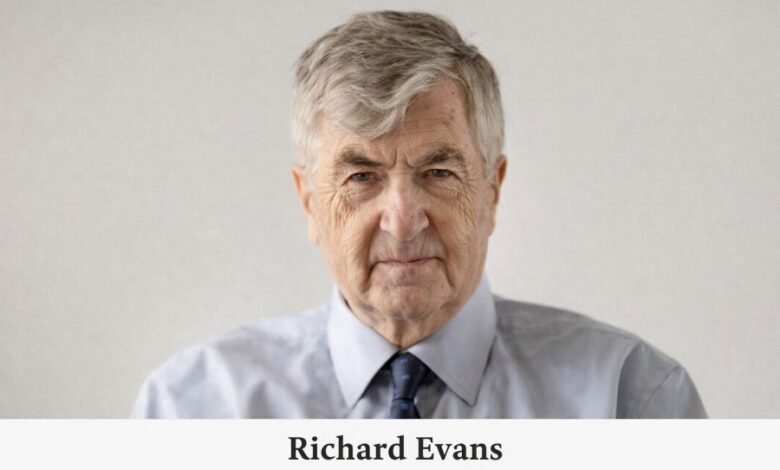
Table of Contents
ToggleIntroduction
Richard Evans stands as one of the most respected voices in modern historical scholarship. Known for his deep research and compelling narrative style, the British historian has shaped how readers and academics understand European history, particularly the complex era of Nazi Germany. His work combines rigorous evidence with clear storytelling, making difficult historical subjects accessible without losing scholarly depth.
Throughout his career, Evans has demonstrated both intellectual bravery and scholarly discipline. While his achievements highlight the positive power of evidence-based history, his career also reflects the challenges historians face when confronting misinformation and controversial interpretations. This balance of impact and responsibility defines his enduring reputation.
Quick Bio
| Field | Details |
|---|---|
| Full Name | Richard John Evans |
| Known As | Richard Evans |
| Date of Birth | 29 September 1947 |
| Age | 78 (as of 2026) |
| Birthplace | Woodford, Essex, England |
| Nationality | British |
| Profession | Historian, Academic, Author |
| Notable For | Research on modern German history |
| Education | University of Oxford (History, DPhil) |
Early Life and Background
Richard Evans was born in Essex, England, into a family with strong Welsh roots. His upbringing exposed him to different cultural influences, helping shape his curiosity about identity, politics, and history. From an early age, he developed a fascination with how societies evolve and how historical narratives are formed.
As a student, Evans showed a natural inclination toward analytical thinking and historical inquiry. His interest in European affairs, particularly Germany’s social and political history, gradually became the foundation of his academic path. This early intellectual curiosity would later define his professional legacy.
Education and Academic Formation
Evans pursued his formal education in history at the University of Oxford, where he excelled academically. His time at Oxford refined his research skills and introduced him to advanced historical methodologies. He later completed a doctoral degree focusing on German social history, which became a cornerstone of his future scholarship.
The academic environment at Oxford played a critical role in shaping his approach to history. Evans developed a strong belief in the importance of primary sources and evidence-driven analysis, principles that would guide his writing and teaching throughout his career.
Beginning of Career
Richard Evans began his academic career as a lecturer in the early 1970s. His early teaching roles allowed him to explore emerging trends in social history while building his reputation as a thoughtful and precise scholar. His lectures were known for clarity and depth, attracting students interested in understanding history beyond surface narratives.
During this period, Evans also started publishing research that examined social inequality and political change in Germany. These early works established him as an authority on modern European history and opened the door to prestigious academic appointments.
Rise as a Leading British Historian
Evans’ career advanced steadily as he took on professorial roles at several major universities. His academic leadership and influential research eventually led to his appointment to one of the most distinguished positions in the field — Regius Professor of History at Cambridge. This role recognized his contributions to historical scholarship and his influence on the discipline.
His work gained global recognition not only within academic circles but also among general readers. By presenting complex historical themes in an engaging style, Evans helped bridge the gap between scholarly research and public understanding, reinforcing his status as a leading British historian.
Major Works and Scholarly Contributions
Richard Evans has authored numerous influential books that explore European history with depth and clarity. His writing is particularly noted for its comprehensive analysis of political, social, and cultural developments. Among his most celebrated contributions is a detailed multi-volume study of Nazi Germany, widely regarded as a definitive account of the period.
Beyond narrative history, Evans has also contributed to discussions on historical methodology. His work emphasizes the importance of critical thinking and evidence, arguing that historians must remain committed to factual accuracy while interpreting complex events. These contributions have shaped debates within the discipline and influenced generations of scholars.
Public Influence and Intellectual Impact
In addition to his academic work, Evans has played a significant role in public historical discourse. Through lectures, essays, and media appearances, he has addressed contemporary debates about how history should be interpreted and taught. His ability to communicate complex ideas clearly has made him a respected public intellectual.
His involvement in high-profile historical discussions demonstrated his commitment to defending scholarly integrity. By carefully analyzing historical claims and evidence, Evans reinforced the importance of rigorous research in shaping public understanding of the past.
Writing Style and Approach
Evans’ writing style combines analytical precision with narrative clarity. He is known for presenting detailed research in a way that remains accessible to non-specialists, making his books widely read beyond academic audiences. This approach reflects his belief that history should be both intellectually rigorous and publicly meaningful.
His work often explores the human dimension of historical events, examining how political decisions affect societies and individuals. This balance between scholarly depth and readability has contributed significantly to his popularity and influence.
Legacy and Lasting Influence
Richard Evans’ legacy lies in his ability to reshape how modern European history is studied and understood. His scholarship has set high standards for research quality and historical interpretation, influencing both academic institutions and public discussions about the past.
As a British historian, his contributions extend beyond individual publications. By promoting evidence-based history and encouraging critical thinking, Evans has helped ensure that historical scholarship remains relevant in a rapidly changing world. His work continues to inspire students, researchers, and readers seeking a deeper understanding of Europe’s history.
Conclusion
Richard Evans represents the power of historical scholarship to illuminate complex realities. His career demonstrates how dedication to research, clarity in communication, and intellectual integrity can shape both academic fields and public knowledge.
While his achievements highlight the positive influence of rigorous scholarship, they also remind us of the challenges historians face in preserving factual accuracy. Through his writing and teaching, Evans has left a lasting mark on the study of history, securing his place among the most influential historians of his generation.
FAQ
Who is Richard Evans?
Richard Evans is a British historian known for his extensive research on modern European and German history.
What is Richard Evans famous for?
He is widely recognized for his scholarly works on Nazi Germany and his contributions to historical methodology.
Where was Richard Evans born?
He was born in Woodford, Essex, England.
What is Richard Evans’ profession?
He is a historian, academic, and author.
Why is Richard Evans important in history?
His research and writings have significantly influenced how modern European history is studied and understood.