Samuel Iling-Junior Biography: Bold Rise, European Success and Difficult Loan Journey
From Islington playgrounds to Chelsea, Juventus, Aston Villa and Italian football

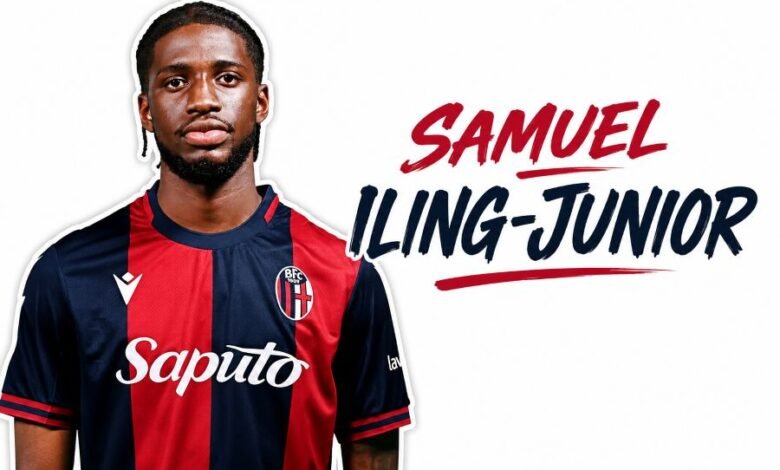
Introduction
Samuel Iling-Junior is an English professional footballer known for his speed, direct attacking runs and ability to cover several positions on the left side. Born in Islington, London, he developed at Chelsea before making the brave decision to continue his career with Juventus in Italy.
His journey has included senior football in Serie A, the UEFA Champions League, the Championship and England’s youth teams. He has also experienced frequent loan moves and strong competition for playing time. As of June 2026, he is playing for Pisa on loan from Aston Villa.
Quick Bio
| Detail | Information |
|---|---|
| Full Name | Samuel Iling-Junior |
| Common Name | Sam Iling-Junior |
| Date of Birth | 4 October 2003 |
| Age | 22 years old, as of June 2026 |
| Birthplace | Islington, London, England |
| Nationality | English |
| Profession | Professional footballer |
| Main Positions | Winger, wide midfielder, wing-back and left-back |
| Height | Approximately 1.82 metres |
| Youth Clubs | Clissold Rangers, Chelsea and Juventus |
| Parent Club | Aston Villa |
| Current Club | Pisa, on loan |
| Pisa Shirt Number | 19 |
| International Level | England youth teams |
| Major Honours | Coppa Italia, UEFA European Under-19 Championship and UEFA European Under-21 Championship |
Who Is Samuel Iling-Junior?
Samuel Iling-Junior is a versatile left-sided footballer who became widely known during his time with Juventus. He progressed from the Italian club’s youth and reserve systems before earning opportunities with the senior team.
He can play as a winger, attacking midfielder, wing-back or full-back. His ability to operate in several roles has helped him find opportunities in different leagues, although it has sometimes prevented him from settling into one permanent position.
Early Life in Islington
Samuel was born on 4 October 2003 in Islington, North London. His earliest football experiences came on his primary-school field, in Clissold Park and around the Park View Estate near his home.
At about eight years old, a school friend introduced him to a local football team managed by the friend’s father. He joined Clissold Rangers and remained there for only a few months before attracting attention from Chelsea.
According to his own account published by England Football, Chelsea first invited him to a development centre. The club soon offered him a place in its academy.
Education and Football Development
Iling-Junior attended St Aloysius’ College in Highgate. He played football for the school while continuing his development inside Chelsea’s academy.
During childhood, he was not limited to one role. He initially played as a centre-back because he was tall for his age. As he became more confident on the ball, he moved into midfield, left-back, wing, number-ten and forward positions.
This broad football education later became one of his strongest professional qualities. He learned to understand both defensive and attacking responsibilities instead of developing as only one type of player.
Chelsea Academy Years
He joined Chelsea at around eight years old and remained in the academy until he was 16. The London club helped him build his technique, tactical understanding and confidence against other leading young players.
Chelsea had a highly competitive pathway, however, and reaching the first team was never guaranteed. Rather than waiting for an opportunity in England, he decided to move abroad in search of a clearer route towards senior football.
His early journey can be compared with other English wide players such as Jaden Philogene, who also developed through Aston Villa’s system and used different first-team opportunities to grow.
Brave Move from Chelsea to Juventus
In 2020, Iling-Junior left Chelsea and joined Juventus at only 16 years old. Moving from London to Turin was a major personal and professional change.
His father initially moved to Italy with him and travelled back and forth, while his mother visited during school holidays. Their support helped him manage the challenges of living in another country at a young age.
The move required confidence because he had to adjust to a new language, culture, coaching system and style of football. He later explained that belief and fearlessness were important when making the decision.
Juventus Youth and Next Gen Career
Iling-Junior first played for Juventus’ youth teams before moving into the club’s reserve side, now known as Juventus Next Gen. His performances showed that he had the pace and attacking quality needed to compete against senior opposition.
Juventus used its reserve team to prepare young players for professional football. This route also supported footballers such as Nicolò Fagioli, who developed through the same club system before earning senior opportunities.
The experience helped Iling-Junior become stronger physically and more comfortable with the tactical demands of Italian football. He eventually moved into the first-team environment.
Senior Breakthrough at Juventus
He made his Serie A debut against Empoli in October 2022. Soon afterwards, he appeared in the UEFA Champions League against Benfica and created a goal after entering the match as a substitute.
That short performance increased attention around him. His direct running and willingness to attack defenders gave Juventus a different option on the left side.
In December 2022, the club extended his contract and formally promoted him to the senior squad. He made his first Serie A start against Atalanta in May 2023 and scored his first senior Juventus goal in the same match.
Like Radu Drăgușin, he used the Juventus youth structure as a route into senior European football.
Coppa Italia Success
The 2023–24 season brought one of the biggest achievements of his early career. Juventus reached the Coppa Italia final and faced Atalanta in May 2024.
Iling-Junior started the match as Juventus earned a 1–0 victory. Winning a major domestic trophy gave him valuable experience of performing under pressure in an important final.
He left Juventus after making more than 40 senior appearances across all competitions. His time in Turin had taken him from an academy prospect to an experienced young professional.
Transfer to Aston Villa
Aston Villa signed Iling-Junior from Juventus in July 2024. The move returned him to England after four years in Italy.
He joined Villa alongside midfielder Enzo Barrenechea. However, he did not immediately establish himself in Aston Villa’s first team and was sent out on loan to gain further experience.
The transfer began a difficult period in which he represented several clubs within a relatively short time. Each move offered playing opportunities, but the changes also made it harder to build rhythm and long-term stability.
Bologna Loan and Champions League Moment
He returned to Italy by joining Bologna on loan in August 2024. The club was preparing to compete in the Champions League, giving him another opportunity at European level.
Iling-Junior scored during his Serie A debut for Bologna against Como. His most memorable moment came in January 2025, when he scored the winning goal in a Champions League victory over Borussia Dortmund.
Despite that important goal, he did not become a regular league starter. His Bologna loan ended early, and he returned to England during the winter transfer period.
Middlesbrough Loan
In February 2025, he joined Middlesbrough on loan for the rest of the Championship season. The move gave him the chance to experience senior English league football regularly.
He appeared in 16 Championship matches and scored in a victory over Blackburn Rovers. Middlesbrough used his pace in wide areas, although he continued to switch between attacking and deeper roles.
The loan helped him understand the physical nature and quick schedule of the Championship. It also showed that his development would require consistent minutes rather than only occasional appearances.
West Bromwich Albion Period
Iling-Junior joined West Bromwich Albion on loan in September 2025. He played on both sides and also operated as a wing-back when required.
He made 24 appearances and scored against Leicester City. His versatility remained useful, but West Brom ended the loan in February 2026.
Frequent changes can be difficult for any developing player. Other young wingers, including Romaine Mundle, have also had to balance development, competition and the need for regular senior football.
Pisa Loan and Current Status
In February 2026, Iling-Junior returned to Italy by joining Pisa. The temporary move followed the end of his West Brom loan.
The official Aston Villa announcement confirmed that he would remain with Pisa until the end of the 2025–26 season. Pisa gave him the number 19 shirt.
His return to Serie A placed him back in a football environment he already understood. It also offered him another chance to show that he could contribute as a winger, wing-back or left-sided defender.
Aston Villa remains his parent club. His longer-term position is expected to depend on the club’s squad plans and any transfer decisions made after his loan ends.
England Youth Career
Iling-Junior has represented England at several youth levels, including Under-15, Under-16, Under-17, Under-19, Under-20 and Under-21.
He was part of the England squad that won the UEFA European Under-19 Championship in 2022. The title became his first major international honour.
In March 2023, he scored twice for England Under-20s in a 2–0 win over Germany. He later progressed to the Under-21 team and scored another two goals during a 7–0 victory over Luxembourg.
He was included in the England squad that won the 2025 UEFA European Under-21 Championship. He entered the final during extra time as England defeated Germany 3–2.
His international development places him among a group of English youth players who gained experience across several age levels, similar to goalkeeper Josef Bursik.
Playing Style and Main Strengths
Pace and Direct Running
Iling-Junior is most dangerous when he receives the ball in space and runs directly towards defenders. His speed helps him carry attacks forward and stretch defensive lines.
Positional Versatility
He can play high on the wing, deeper as a wing-back or in a traditional left-back role. He has also played through central attacking areas during his development.
Left-Sided Creativity
He uses his left foot to cross, pass and create chances. His ability to deliver from wide positions makes him useful when a team needs width.
Confidence in Big Matches
He has played in Serie A, the Champions League, the Europa League, domestic cup finals and international youth tournaments. These experiences have helped him become comfortable in important matches.
Career Challenges
The biggest challenge of his career has been finding a stable long-term role. Since leaving Juventus, he has spent time with Bologna, Middlesbrough, West Bromwich Albion and Pisa.
Loan moves can provide experience, but regular changes also require a player to learn new tactics, teammates and expectations. He has often had to prove himself again shortly after joining a new club.
Another challenge is his positional flexibility. Coaches value his ability to cover several roles, but he still needs to establish the one position in which he can produce his best performances consistently.
Career Timeline
| Year | Major Event |
|---|---|
| 2003 | Born in Islington, London |
| Around 2011 | Joined Clissold Rangers and then Chelsea |
| 2011–2020 | Developed in Chelsea’s academy |
| 2020 | Moved from Chelsea to Juventus |
| 2021 | Progressed towards the Juventus reserve team |
| October 2022 | Made his senior Juventus debut |
| December 2022 | Promoted to the Juventus first team |
| May 2023 | Scored his first senior Juventus goal |
| May 2024 | Won the Coppa Italia |
| July 2024 | Signed for Aston Villa |
| August 2024 | Joined Bologna on loan |
| February 2025 | Joined Middlesbrough on loan |
| September 2025 | Joined West Brom on loan |
| February 2026 | Joined Pisa on loan |
Major Achievements
- UEFA European Under-19 Championship winner with England in 2022
- Coppa Italia winner with Juventus in 2024
- UEFA European Under-21 Championship winner with England in 2025
- Senior appearances in Serie A and the Championship
- UEFA Champions League appearances for Juventus and Bologna
- Winning Champions League goal against Borussia Dortmund
- Progression from grassroots football to one of Europe’s largest clubs
Interesting Facts
- He started his childhood football journey with Clissold Rangers.
- Chelsea recruited him after only a short period in grassroots football.
- He played as a centre-back before becoming an attacking player.
- He moved to Italy when he was only 16 years old.
- Tammy Abraham and Fikayo Tomori contacted him after his move to Italy.
- He has played for clubs in both England and Italy.
- He has won European youth titles at Under-19 and Under-21 level.
- He started the 2024 Coppa Italia final for Juventus.
Future Prospects
Iling-Junior is still young enough to improve his decision-making, finishing and defensive awareness. His experience in two football cultures gives him a strong foundation for the next stage of his career.
His main goal will be to find a club and position where he can play regularly. Consistent first-team football could help him turn his natural pace and versatility into more goals, assists and complete performances.
Conclusion
Samuel Iling-Junior’s biography shows a footballer willing to take risks for his development. He left Chelsea at 16, adapted to life in Italy and reached the Juventus first team before returning to England with Aston Villa.
His career has included major trophies and memorable European moments, but it has also included several loans and uncertainty over his permanent role. The next stage will be important as he tries to turn valuable experience into a stable and successful senior career.
Frequently Asked Questions
Who is Samuel Iling-Junior?
He is an English professional footballer who can play as a winger, wing-back or left-back.
When was he born?
He was born on 4 October 2003.
Where was he born?
He was born in Islington, London, England.
How old is Samuel Iling-Junior?
He is 22 years old as of June 2026.
Which club owns him?
He is registered with Aston Villa.
Which club does he currently play for?
He plays for Pisa on loan from Aston Villa as of June 2026.
Did he play for Juventus?
Yes, he progressed through Juventus’ youth system and made more than 40 senior appearances.
What position does he play?
He mainly plays on the left as a winger, midfielder, wing-back or full-back.
Has he represented England?
Yes, he has represented England at several youth levels and won European titles with the Under-19 and Under-21 teams.