Robin Cormack: The Visionary Scholar Who Transformed Byzantine Art Studies — A Legacy of Insight, Influence, and Intellectual Rigor
How a British classicist and art historian reshaped the global understanding of icons, culture, and visual history

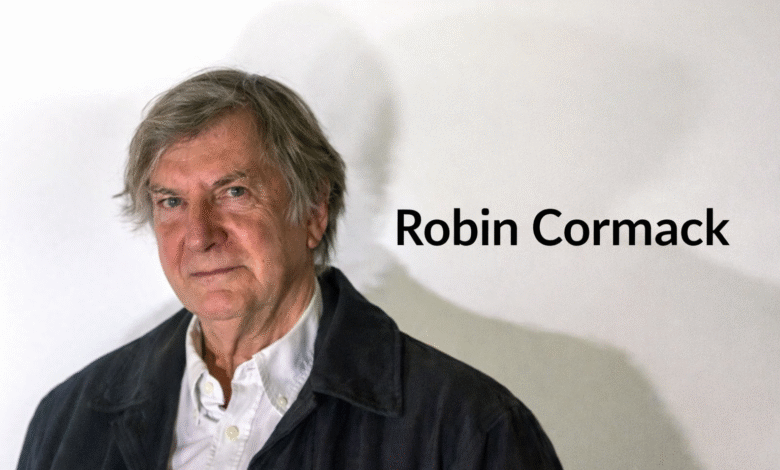
Table of Contents
ToggleIntroduction
Robin Cormack stands among the most respected voices in the study of Byzantine art, a field that blends history, theology, and visual culture into a complex scholarly landscape. As a British classicist and art historian, he dedicated decades to uncovering how images functioned not only as artistic creations but also as social and religious tools that shaped entire civilizations. His work has guided students, scholars, and museum audiences toward a deeper appreciation of Byzantine visual traditions.
Beyond academic achievement, Cormack’s career represents the power of curiosity and persistence. While his research opened new perspectives on icons and religious imagery, it also challenged simplified views of Byzantine culture. This balance of positive influence and critical analysis makes his scholarship both inspiring and intellectually demanding, ensuring his relevance across generations.
Quick Bio
| Field | Details |
|---|---|
| Full Name | Robin Sinclair Cormack |
| Date of Birth | 27 September 1938 |
| Age (2026) | 87 years |
| Nationality | British |
| Profession | British classicist and art historian |
| Known For | Byzantine art and icon studies |
| Education | Bristol Grammar School; Exeter College Oxford; Courtauld Institute of Art (PhD) |
| Spouse | Annabel Shackleton (former); Mary Beard |
| Children | Sophia, Justin, Zoe, Raphael |
Early Life and Education
Robin Cormack’s academic journey began in the United Kingdom, where his early schooling laid the groundwork for a lifelong engagement with classical studies. His intellectual interests developed within an environment that valued rigorous scholarship, encouraging him to pursue higher education in the humanities.
He later attended Exeter College, Oxford, where he deepened his knowledge of classical culture and history. His academic path culminated in doctoral research at the Courtauld Institute of Art, where he examined the cultural and artistic landscape of Thessaloniki after Iconoclasm. This research became the foundation of his future specialization in Byzantine visual culture.
Academic Career
Early Academic Path
Cormack started his professional career as a lecturer at the Courtauld Institute of Art in 1966, marking the beginning of a long association with one of the world’s leading centers for art historical research. During these formative years, he developed his teaching style and refined his research focus on Byzantine imagery.
His reputation grew steadily as he contributed to scholarly discussions and trained students who would later become influential figures in their own right. This period established him as a thoughtful interpreter of visual history and a dedicated educator.
Professorship and Leadership
Cormack’s career reached a major milestone when he became Professor of the History of Art at the Courtauld Institute, a position he held from 1991 to 2004. His leadership extended beyond teaching, as he also served as Deputy Director, helping shape the institute’s academic direction.
After his professorship, he continued to influence the field through fellowships and visiting positions, including roles at Cambridge and Nottingham. These appointments allowed him to share his expertise with broader academic communities and maintain an active presence in research.
Research Focus and Scholarly Contributions
Cormack’s scholarship centers on Byzantine art, particularly icons and their role in religious and cultural life. He emphasized that icons were not merely decorative objects but powerful instruments of communication that conveyed theological ideas and social identities.
His work also explored the wider Mediterranean context, examining how cultural exchange shaped artistic production. By connecting visual analysis with historical interpretation, he offered a more nuanced understanding of how art functioned within Byzantine society.
Major Publications
Among Cormack’s most influential achievements are his books, which have become essential reading in Byzantine studies. Titles such as Writing in Gold, The Byzantine Eye, and Painting the Soul demonstrate his ability to combine scholarly depth with accessible prose.
His book Byzantine Art introduced countless readers to the field, while Icons presented a clear and engaging exploration of the meaning and history of religious imagery. As co-editor of The Oxford Handbook of Byzantine Studies, he also helped shape a comprehensive reference work that remains widely used.
Exhibitions and Public Engagement
In addition to writing and teaching, Cormack played an important role in bringing Byzantine art to public audiences through exhibitions. By contributing to major museum projects, he helped contextualize artifacts and make complex historical themes understandable to visitors.
These exhibitions not only showcased artistic masterpieces but also highlighted the cultural and spiritual significance of Byzantine imagery. His involvement ensured that academic insights reached beyond universities into the broader cultural sphere.
Influence on Byzantine Studies
Cormack’s influence extends far beyond his own publications. His teaching inspired generations of scholars, many of whom continue to build on his ideas. By encouraging interdisciplinary approaches, he helped shift the field toward a more holistic understanding of visual culture.
At the same time, his work prompted debate and critical reflection, demonstrating that scholarship thrives on dialogue as much as consensus. This combination of inspiration and intellectual challenge is a hallmark of his legacy.
Personal Life
Robin Cormack’s personal life intersects with academia through his marriage to classicist Mary Beard, a prominent scholar in her own right. Together, they represent a partnership rooted in intellectual engagement and shared scholarly interests.
His family life, including his children, reflects a balance between professional dedication and personal commitments. This dimension adds depth to his public persona, showing that his achievements were supported by strong personal connections.
Conclusion
Robin Cormack’s career illustrates how sustained curiosity and rigorous scholarship can reshape an academic field. As a British classicist and art historian, he transformed the study of Byzantine art by revealing the complex relationships between images, belief, and society.
His legacy lies not only in his books and exhibitions but also in the generations of students and scholars influenced by his ideas. Through both positive inspiration and critical insight, his work continues to shape how we understand the visual cultures of the past.
FAQ
Who is Robin Cormack?
Robin Cormack is a British classicist and art historian known for his influential research on Byzantine art and icons.
What is Robin Cormack famous for?
He is best known for his books and scholarship that reinterpreted the cultural and social role of Byzantine imagery.
Where did Robin Cormack teach?
He taught primarily at the Courtauld Institute of Art and held academic roles at Cambridge and Nottingham.
What are his most notable books?
Key works include Writing in Gold, Painting the Soul, Byzantine Art, and Icons.
Why is his work important?
His research helped scholars and the public understand Byzantine art as a dynamic cultural system rather than a purely decorative tradition.