Tiny Rowland: The Powerful and Controversial Business Titan of British Corporate History
A remarkable story of ambition, influence, success, and criticism in the world of global business

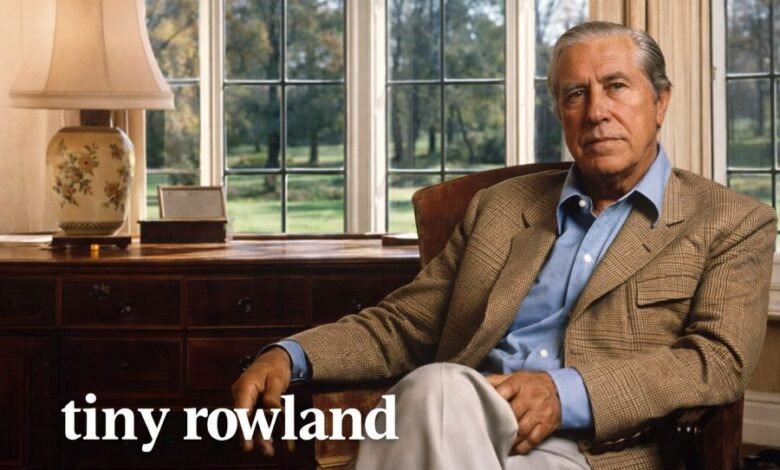
Table of Contents
ToggleIntroduction
Tiny Rowland remains one of the most unforgettable figures in modern British business history. Known for his sharp corporate instincts and bold leadership, he rose from an unusual early life to become the head of one of Britain’s most talked-about multinational companies. His name is often linked with both admiration and controversy, making him a complex personality in the world of enterprise.
As a British businessman, Tiny Rowland built a reputation for expanding business influence across Africa and beyond. His career reflects the power of ambition, but also highlights the challenges and criticism that can come with immense corporate authority. His life story continues to interest readers who want to understand the true face of twentieth-century capitalism.
Quick Bio
| Detail | Information |
|---|---|
| Full Name | Roland Walter “Tiny” Rowland |
| Birth Name | Roland Walter Fuhrhop |
| Date of Birth | 27 November 1917 |
| Place of Birth | Near Calcutta, British India |
| Nationality | British |
| Profession | British businessman |
| Famous For | Leadership of Lonrho conglomerate |
| Spouse | Josie Taylor (married 1968) |
| Children | Four |
| Date of Death | 25 July 1998 |
Early Life and Background
Tiny Rowland was born on 27 November 1917 in a British internment camp near Calcutta, in what was then British India. His birth circumstances were highly unusual, shaped by the political tensions of World War I. Although born under British rule, his family roots included German and Anglo-Dutch heritage.
His early years were marked by movement and uncertainty. After World War I, his family spent time in Germany before eventually relocating to Britain. These early experiences played a major role in shaping his identity, determination, and ability to navigate different cultures.
Education and Personal Development
Rowland attended Churcher’s College in Hampshire, England. During this period, he developed the polished speech and upper-class British mannerisms that later became part of his public image. His education helped him blend into elite business circles despite his foreign family origins.
Although he did not follow a traditional university path, his sharp intelligence and adaptability became his strongest tools. Tiny Rowland’s success was not built on academic titles, but on confidence, strategy, and ambition.
Military Service and Wartime Experiences
During World War II, Tiny Rowland served in the British Army. His wartime years were complicated by the fact that his parents were treated as “enemy aliens” due to German connections. This period was difficult and personally tragic, as his mother died during internment.
These harsh experiences strengthened his resilience. Many historians believe that Rowland’s later toughness in business was influenced by the challenges he faced during the war years.
The Start of His Business Career
After the war, Rowland moved to Southern Rhodesia (now Zimbabwe) in 1948. He became involved in farming and early business ventures, gaining firsthand experience in African industries. This move proved to be a defining step in his career.
Africa would later become central to his corporate vision. His ability to work in international environments gave him an advantage that many British executives of his time did not possess.
Rise to Power: Lonrho and Corporate Expansion
Tiny Rowland’s most famous achievement came through his leadership of Lonrho, originally known as the London and Rhodesian Mining and Land Company. In 1962, he became Chief Executive, taking control of a struggling business and transforming it into a massive multinational conglomerate.
Under his direction, Lonrho expanded into mining, agriculture, hotels, media, and numerous other industries. Rowland became known as a bold corporate strategist who was not afraid to take risks. His success turned him into one of Britain’s most influential business leaders.
A British Businessman with Global Influence
As a British businessman, Rowland built strong networks across Africa and international markets. His leadership style was aggressive and ambitious, earning him both supporters and critics. Many admired his ability to create wealth and expand business opportunities.
However, his influence also raised questions about corporate ethics and power. His business relationships with political leaders were often viewed as controversial, adding complexity to his legacy.
Controversies and Public Criticism
Tiny Rowland’s career was not free of conflict. In the 1970s, Lonrho became the center of major corporate disputes, leading to public scrutiny. British Prime Minister Edward Heath famously described the company as “the unpleasant and unacceptable face of capitalism.”
This statement captured Rowland’s public image: powerful, successful, but often divisive. Supporters saw him as a visionary builder of empire, while critics viewed him as a symbol of unchecked corporate power.
Later Years and Decline of Control
In the 1990s, Rowland’s hold over Lonrho weakened due to internal board struggles. Eventually, he was removed from leadership, marking the end of his corporate reign. Despite this, his impact on the company and British business history remained undeniable.
He spent his later years away from the center of corporate influence, but his name continued to appear in discussions of Britain’s most dramatic business careers.
Personal Life and Family
Tiny Rowland married Josie Taylor in 1968, and together they had four children. While he was known publicly for business battles, his family life remained relatively private.
His role as a husband and father is less documented than his corporate achievements, but his family remained part of his lasting personal story.
Legacy and Historical Significance
Tiny Rowland died in 1998, but his legacy remains strong. He is remembered as one of the most powerful and controversial figures in twentieth-century British corporate life. His ability to transform Lonrho into a global business empire is widely acknowledged.
At the same time, his career serves as a reminder that great success often comes with criticism and debate. Tiny Rowland’s life continues to represent both the promise and the darker side of global capitalism.
Conclusion
Tiny Rowland’s journey from an unusual birth in British India to becoming a towering figure in corporate Britain is both inspiring and cautionary. As a British businessman, he demonstrated unmatched ambition and global vision, building one of the most influential conglomerates of his era.
Yet, his story also reflects controversy, power struggles, and the challenges of leadership at the highest level. Tiny Rowland remains a symbol of business brilliance, but also a reminder that corporate success can create both admiration and opposition.
FAQ
Who was Tiny Rowland?
Tiny Rowland was a British businessman best known for leading Lonrho and turning it into a multinational conglomerate.
What was Tiny Rowland’s real name?
His birth name was Roland Walter Fuhrhop. He later became known as Roland Walter “Tiny” Rowland.
Why was he called “Tiny”?
The nickname was given to him in childhood by his nanny and remained with him throughout his life.
What company made him famous?
He became famous as the Chief Executive of Lonrho, a major British multinational business group.
Was Tiny Rowland controversial?
Yes, he was admired for his success but criticized for aggressive business practices and corporate conflicts.
When did Tiny Rowland die?
He died on 25 July 1998.