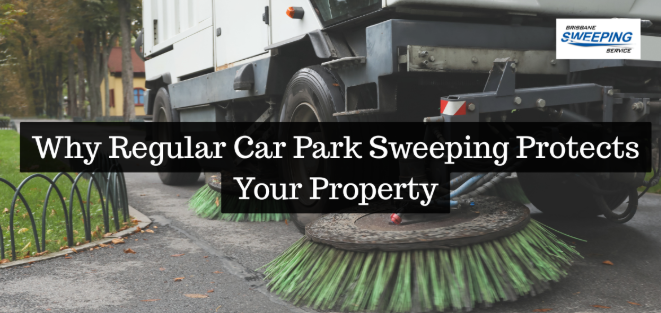
Regular car park sweeping protects your property by removing abrasive debris, which prevents blocked drains and reduces safety hazards before they turn into costly repairs.
At first, it’s just a bit of grit here and some litter there. But under constant vehicle traffic, that buildup grinds into the surface, and the wear adds up a lot faster.
At brisbanesweeping.com.au, we’ve seen this across dozens of Brisbane car parks where a simple sweeping schedule would have saved thousands in resurfacing costs. Many property owners skip regular car park sweeping in Brisbane until the damage becomes visible, even though most issues are preventable with a consistent schedule.
This guide covers why first impressions start in the car park and how skipping regular cleaning chips away at your surfaces and drainage. We’ll also get into the safety and liability risks that come with a neglected car park.
Let’s start with what visitors notice first.
First Impressions Start in the Car Park
Your car park is the first thing visitors see, and a neglected one can leave a bad impression before they even walk inside. Much of that impression comes down to the small visual cues people notice right away and what a clean car park signals about the property overall.
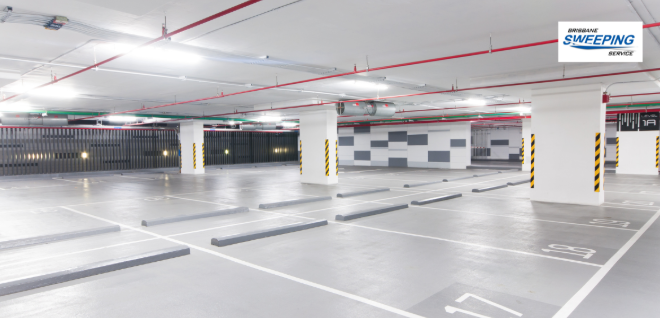
The Visual Cues Visitors Notice Straight Away
Stained concrete, scattered litter, and faded line markings are easy to overlook when you see them every day. But for someone pulling in for the first time, they stand out immediately. A messy car park can suggest that maintenance isn’t a priority, even if the rest of the property is well managed.
A Clean Car Park Reflects on Your Whole Property
A clean car park sets expectations for the rest of the property. When visitors arrive at a well-maintained entrance area, they naturally assume the same level of care also extends to inside the building.
This is especially important for businesses and commercial sites, as it reinforces professionalism and keeps the property looking well-managed over time.
The Hidden Cost of Skipping Car Park Cleaning
By the time your car park looks bad enough to act on, the underlying problems have often been building for months. What looks like a simple layer of dirt is usually a mix of grit, oil residue, tyre dust, and debris that settles into the surface over time. Left in place, that buildup gradually damages the pavement itself.
Among those materials, oil causes some of the worst damage. As it sits on asphalt or concrete, it penetrates the surface and weakens the binder holding the material together. Over time, the surface softens, making cracking and crumbling far more likely in high-traffic areas. Worse still, you won’t see it happening until chunks start breaking off.
What’s more, leaves, sediment, and chemical residue collect around your drainage points, restricting water flow and increasing flood risk after heavy rain. Clear those drains regularly with sweeping, and you avoid expensive drainage repairs or water damage to surrounding structures.
Safety, Liability, and Compliance Risks of a Neglected Car Park
A neglected car park isn’t just an eyesore. If someone gets hurt on your property, you’re looking at liability claims that can reach tens of thousands of dollars.
Here’s what you’re risking:
- Slip Hazards: Oil residue and wet leaves create slick surfaces, especially after rain. One slip on your property can turn into a personal injury claim. We’ve seen settlements in Brisbane reach well above $20,000 for preventable slip-and-fall incidents in commercial car parks.
- Trip Hazards: Cracked pavement, loose debris, and raised edges create clear tripping hazards in busy car parks. Elderly visitors and anyone moving through a dimly lit or unfamiliar area are especially vulnerable. If someone falls because of poor maintenance, the responsibility often sits with the property owner.
- Legal and Compliance Exposure: Neglecting a shared car park puts you at risk for claims from tenants, visitors, and neighbouring property owners. In Queensland, for example, body corporates can be held liable for injuries caused by poor car park maintenance under the Body Corporate and Community Management Act.
Regular sweeping removes these hazards before they become expensive liability issues. It’s cheaper to sweep weekly than to defend a single slip-and-fall claim.
How Sweeping Prevents Blocked Drains
Regular car park sweeping removes the debris that would otherwise wash into your stormwater drains during rain. This prevents blockages from three common sources:
- Organic Debris: If you sweep regularly, wet leaves, bark, and grass clippings never get the chance to mat together at drainage grates. Less buildup means water flows freely instead of pooling across your car park after heavy rain.
- Dirt and Sediment: Fine particles settle into drain channels and compact over time. You won’t notice it week to week, but over months that sediment hardens and narrows the drain opening. Sweeping flushes it out before it becomes a problem.
- Oil and Chemical Residue: Runoff from oil spills and vehicle fluids is one of the worst sources of drainage contamination. When rain hits, these residues wash straight into the stormwater system and can create environmental compliance issues if left unmanaged. That’s why getting on top of oil residue before the next storm is always the better call.
Regular sweeping stops these materials from reaching your drains in the first place. That simple step keeps stormwater systems clear and prevents the kind of blockages that lead to flooding, cleanup costs, and compliance issues.
Why Multi-Level Car Parks Need Expert Cleaning
Unlike open car parks, multi-level structures have enclosed decks and ramps where debris accumulates with no rain to wash it away. These conditions make multi-level car parks more difficult to clean and often require specialised equipment designed for confined spaces and heavy buildup.
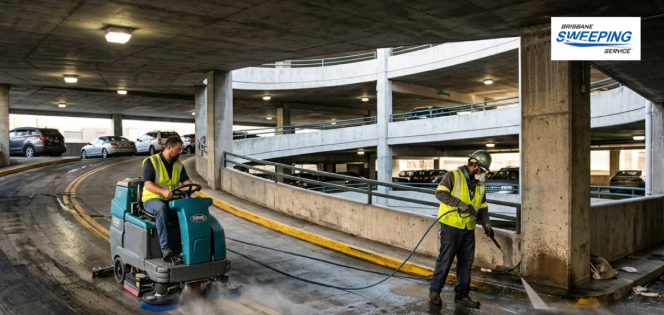
Let’s break down the main challenges and explain what makes them so hard to keep clean.
Enclosed Decks, Ramps, and Tight Corners Create Cleaning Challenges
In an open car park, rain helps wash away some of the dust, oil, and debris that collect on the surface. In a multi-level structure, however, that buildup stays on every deck until it’s physically removed.
The layout also makes cleaning more difficult. Ramps, tight corners, and narrow lanes limit how equipment can move through the space, while low clearance on lower levels restricts what machinery can be used. Without consistent cleaning, debris and residue gradually build up across every level.
Specialised Equipment for Multi-Level Car Parks
Standard sweepers can’t handle the buildup in multi-level car parks because they lack the power to cut through heavy oil residue and can’t navigate tight spaces effectively. That’s why you need:
- High-pressure washing systems to cut through oil residue on concrete decks
- Industrial scrubbers for embedded grime
- Compact machinery designed to navigate ramps and confined areas
These machines are purpose-built for multi-level facilities. They clean thoroughly in tight spaces without damaging surfaces or blocking traffic, so every deck stays clean, safe, and fully operational.
Give Your Car Park the Attention It Deserves
A neglected car park doesn’t just look bad. Over time, it creates surface damage, blocked drains, safety hazards, and potential liability issues that could have been avoided with a consistent cleaning schedule. The good news is that none of it is hard to stay on top of.
Start with a regular sweeping schedule that matches your traffic levels. High-traffic car parks in busy commercial areas may need weekly attention, while smaller sites can get away with fortnightly visits. Pair that with periodic car park scrubbing for oil and chemical buildup, and your surfaces will last a lot longer.
If you need professional car park cleaning in South East Queensland, Brisbane Sweeping Service offers commercial sweeping and scrubbing services. Get in touch to discuss a cleaning schedule for your site.