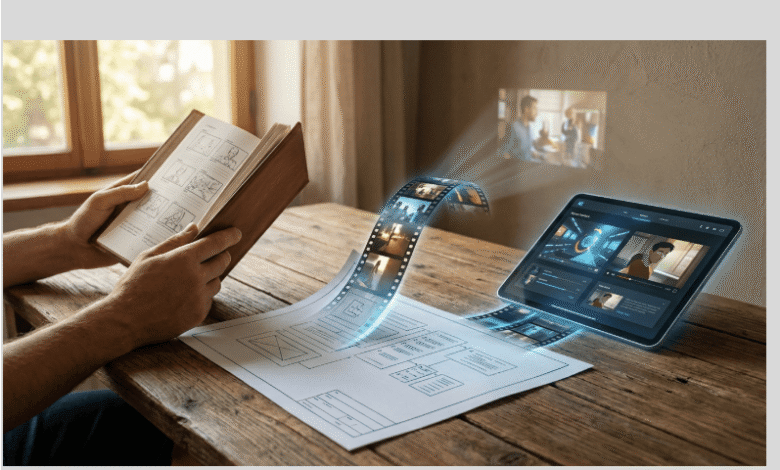
The advertising landscape is undergoing a radical transformation. Traditional video production often requires weeks of planning, expensive equipment, and large crews. Today, the rise of AI video generation is collapsing those timelines from months into minutes.
Marketing teams no longer need to choose between quality and quantity. With the right tools, brands can now produce high-end User-Generated Content (UGC), complex Computer-Generated Imagery (CGI), and cinematic brand films using simple text or image prompts.
This shift toward marketing automation allows creators to focus on strategy rather than technical execution. AI-driven tools are significantly increasing productivity across the creative lifecycle.
Choosing the right platform is critical for maintaining brand consistency. Whether you are scaling an e-commerce store or managing a global brand, these seven tools represent the pinnacle of AI video technology.
1. Higgsfield
Higgsfield is currently the flagship platform for cinematic AI video creation. It is specifically designed to meet the demands of modern performance marketing and high-end social media content.
At the core of the platform is Seedance 2.0. This state-of-the-art model was developed by ByteDance to push the boundaries of what is possible in generative video. Unlike standard models that offer limited control, Higgsfield gives creators frame-level precision.
The platform is built to solve the biggest pain point in AI video: consistency. Most generators struggle to keep a character looking the same across different shots. Higgsfield uses advanced character consistency algorithms to ensure your “brand face” remains identical from the first scene to the last.
Key Features of Higgsfield
The platform offers a robust suite of tools that go beyond simple text-to-video generation. It is a comprehensive ecosystem for professional creators.
- Multi-Shot Sequence Generation: Users can generate entire scenes with multiple camera angles. This allows for the creation of complex narratives without the disjointed feel of traditional AI clips.
- 12-Asset Input Support: You can feed the model up to 12 different inputs simultaneously. This includes text, images, existing video clips, and audio files.
- Native Audio Sync: The model produces video with perfectly synchronized audio. This is essential for creating realistic UGC ads where lip-sync and timing are paramount.
- Accessible Power: All subscription plans on the platform provide access to the Seedance 2.0 model. This ensures that even solo creators can utilize world-class technology.
Best Use Cases
Higgsfield excels in scenarios where professional-grade marketing automation is required. It is the go-to tool for e-commerce brands needing virtual try-ons or social media managers producing high-volume video ads.
The ability to generate and scale video ads from a single product link makes it a leader in the space. It supports over 40 AI avatars and 9 different ad formats, ensuring your content fits every platform from TikTok to YouTube.
2. Runway Gen-3 Alpha
Runway has long been a pioneer in the AI video space. Their latest model, Gen-3 Alpha, offers significant improvements in temporal consistency and visual fidelity.
It is a high-performance tool favored by artists and filmmakers. The model is trained on a massive dataset of cinematic content, which shows in its lighting and texture handling.
Features and Capabilities
- Director Mode: This feature gives users granular control over camera movement. You can dictate pans, tilts, and zooms with high accuracy.
- Motion Brush: Users can paint over specific areas of a static image to dictate where movement should occur. This is perfect for creating subtle CGI effects.
- High-Speed Generation: Gen-3 Alpha is optimized for speed. It can produce high-definition previews in a fraction of the time compared to older iterations.
Runway is best used for high-concept CGI and experimental brand films. It provides a level of artistic “feel” that is difficult for other models to replicate.
3. Luma Dream Machine
Luma AI recently released Dream Machine, a high-speed video generator that focuses on physical realism. It is designed to understand how light and objects interact in the real world.
The model is highly efficient. It can generate 5-second clips that look remarkably like real-world footage. This makes it an excellent choice for quick UGC-style snippets.
Features and Capabilities
- Physical Intuition: The model excels at rendering movement that obeys the laws of physics. Water splashes, fabric folds, and hair movement look natural.
- Image-to-Video Excellence: While text prompts work well, its ability to animate static photos is its strongest suit.
- Fast Iteration: The tool is built for creators who need to test multiple versions of a concept quickly.
Luma is an ideal tool for creators who need realistic b-roll for their marketing automation workflows. It bridges the gap between static product photography and dynamic video content.
4. Kling AI
Kling AI has made waves in the industry by offering exceptionally long video durations. While most AI models struggle with clips longer than five seconds, Kling can generate coherent sequences up to ten seconds or more.
It produces videos with a high degree of realism. The movement is fluid, and the model handles complex human actions better than many of its competitors.
Features and Capabilities
- Complex Human Action: Kling can render intricate movements like eating, walking, or gesturing with high accuracy.
- Extended Clip Length: The ability to generate longer sequences reduces the need for heavy editing and stitching.
- High Definition Output: The videos are crisp and suitable for large-screen displays or high-quality social feeds.
This tool is particularly useful for creators focused on realistic UGC. If you need a character to interact with a product in a natural way, Kling is a top-tier choice.
5. Pika Labs (Pika 1.5)
Pika Labs focuses on the “fun” and creative side of AI video. Their latest update, Pika 1.5, introduced “Pikaffects,” which allow for physics-defying animations.
It is a favorite among social media creators who want to make “viral” style content. The platform is very user-friendly and operates through a sleek web interface or Discord.
Features and Capabilities
- Pikaffects: Users can melt, crush, or inflate objects within their videos. This is perfect for eye-catching CGI social ads.
- Lip-Sync Integration: Pika offers a built-in lip-sync tool. You can upload an audio file, and the AI will animate the character’s mouth to match.
- Style Consistency: It allows users to maintain a specific artistic style, such as 3D animation or claymation, across multiple clips.
Pika is best for brands that want to inject personality and humor into their marketing automation strategies. It is less about “cinematic realism” and more about creative engagement.
6. Adobe Firefly (Video Model)
Adobe has integrated AI video generation directly into its Creative Cloud ecosystem. Firefly is built with “commercial safety” in mind, meaning it is trained on licensed or public domain content.
For enterprise users, this is a major selling point. It ensures that the generated content is free from copyright issues that might plague other models.
Features and Capabilities
- Premiere Pro Integration: The video model is being integrated directly into editing software. This allows for “Generative Extend,” which adds frames to the beginning or end of a clip.
- Text-to-Video and Image-to-Video: Standard generation features are bolstered by Adobe’s deep understanding of color grading and professional aesthetics.
- Object Removal: The AI can intelligently remove unwanted objects from video frames, saving hours of manual rotoscoping.
Adobe Firefly is the best choice for corporate marketing teams. It fits perfectly into existing professional workflows while providing the safety nets required by large legal departments.
7. Midjourney (Video Features)
While primarily known as the king of AI imagery, Midjourney has introduced video features that are essential for the “CGI” part of ad creation. By using the “zoom-out” or “pan” features, creators can create stunning motion sequences.
Midjourney still holds the crown for the highest visual quality in the industry. Many creators use Midjourney to create the “keyframe” and then use tools like Higgsfield to bring it to life.
Features and Capabilities
- Unrivaled Aesthetics: No other tool matches the lighting, composition, and texture of Midjourney.
- Vary Region: This allows you to change specific parts of an image before turning it into a video.
- Personalization: The model learns your aesthetic preferences over time, making it easier to generate on-brand assets.
Midjourney is the starting point for most high-end cinematic ads. It provides the visual foundation upon which a great marketing automation strategy is built.
Conclusion
The era of manual video production is not over, but it is being augmented by incredible technology. Tools like Higgsfield are leading the charge by offering professional-grade consistency and multi-shot capabilities.
By integrating these platforms into your marketing automation stack, you can produce content at a scale that was previously impossible. Whether you need the cinematic power of Seedance 2.0 or the creative flair of Pika, there is an AI tool ready to transform your creative process.
As you build your strategy, remember that the best results come from a hybrid approach. Use Higgsfield for your core narrative and character-driven ads, and supplement with tools like Adobe or Midjourney for specific stylistic needs. The future of advertising is automated, and these seven tools are the keys to unlocking that potential.