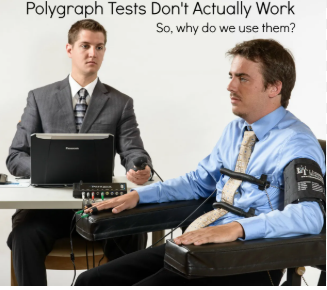
People tend to have strong opinions about polygraph tests. Some swear by them. Others think they’re little more than high-tech guesswork. If you’ve ever watched a crime show, you’ve seen the classic scene: someone strapped to a machine, beads of sweat forming, answering questions while a needle jumps wildly on a graph. It looks dramatic. But real life is a bit less theatrical—and a lot more complicated.
Let’s break it down in plain terms.
What a Polygraph Test Actually Measures
Here’s the thing: a polygraph doesn’t detect lies. Not directly.
What it measures are physical reactions—things your body does automatically. Heart rate. Blood pressure. Breathing patterns. Skin conductivity (which changes when you sweat, even slightly). The idea is simple enough: when people lie, they get nervous. That nervousness shows up in the body.
So the machine records those signals while you answer questions. Then a trained examiner looks at the patterns and decides whether something seems “off.”
But already, you can see the problem. Not everyone reacts to lying the same way. And not everyone who reacts strongly is lying.
Think about it. Imagine you’re accused of something you didn’t do. You’re anxious, maybe even angry. Your heart is racing—not because you’re lying, but because the situation is stressful. The machine doesn’t know the difference.
How the Test Is Actually Done
A real polygraph test isn’t just a quick Q&A. It’s a process, and a surprisingly structured one.
It usually starts with a pre-test interview. This can last longer than the test itself. The examiner talks with you, explains how the machine works, and goes over the questions in advance. Nothing is supposed to be a surprise.
Now, that might sound reassuring—but it also serves another purpose. The examiner is watching how you respond even before the machine is turned on. They’re looking for baseline behavior.
Then comes the test itself. You’re hooked up to sensors, and the questions begin. They’re usually a mix of:
- Relevant questions (about the issue being investigated)
- Control questions (general ones designed to provoke a response, like “Have you ever lied to get out of trouble?”)
The comparison between your reactions to these different types of questions is what the examiner focuses on.
After that, there’s often a post-test discussion. Sometimes the examiner will confront you with their interpretation. In some cases, people confess at this stage—not necessarily because the machine “caught” them, but because of the pressure.
Why People Still Use Polygraphs
Given all the uncertainty, you might wonder why polygraphs are still around.
Part of it comes down to psychology. The test itself can be persuasive. If someone believes the machine will catch them, they may act differently—or even admit something they wouldn’t otherwise.
Law enforcement has used polygraphs as an investigative tool for decades. Not as hard evidence in most courts, but as a way to guide questioning or narrow down suspects.
They’re also used in certain job screenings, especially in government or security roles. The idea is to filter out risky candidates. Whether that works well is another question.
And then there’s the human factor. People like the idea of a “truth machine.” It feels definitive, even if it isn’t.
The Accuracy Debate (And Why It’s Messy)
Ask five experts how accurate polygraphs are, and you’ll get five different answers.
Some studies suggest accuracy rates around 70–90% under controlled conditions. That sounds impressive—until you realize what that means in real life. A 10–30% error rate is huge when serious consequences are involved.
There are two main types of errors:
False positives: The test says someone is lying when they’re telling the truth.
False negatives: The test says someone is truthful when they’re actually lying.
Both happen. And both matter.
Let’s be honest—human emotions are messy. Nervousness, fear, embarrassment, even confusion can trigger the same physical responses as deception. On the flip side, some people are naturally calm under pressure. Others may have practiced controlling their reactions.
So while polygraphs can sometimes point in the right direction, they’re far from foolproof.
Can You Beat a Polygraph?
This question comes up a lot. And the honest answer is… maybe.
There are known techniques people have tried. Some involve controlling breathing. Others involve creating artificial stress during control questions (like subtly tensing muscles or thinking of something stressful) to throw off the comparison.
Now, does that always work? Not necessarily. Experienced examiners are trained to watch for these tricks.
But here’s the bigger point: if a test can be manipulated at all, that raises questions about its reliability.
Interestingly, simply being very calm—or very anxious—can already skew results. No special trick required.
Where Polygraphs Stand Legally
Polygraph results are generally not admissible in court in many places. Judges tend to be cautious about relying on them as evidence.
That doesn’t mean they’re irrelevant. They can still influence investigations. They can affect decisions behind the scenes. And in some contexts, like employment screening, they can carry real consequences.
But when it comes to proving guilt or innocence in a courtroom, polygraphs usually don’t carry much weight.
A Real-World Style Scenario
Picture this.
You’re applying for a job that requires a polygraph test. You’ve got nothing to hide, but you’re nervous anyway. Who wouldn’t be?
During the test, you’re asked, “Have you ever lied to a supervisor?”
You hesitate. Not because you’re hiding something serious—but because you’re thinking back to that one time years ago when you made up an excuse for being late. Your heart rate ticks up. You feel a bit exposed.
The machine picks that up.
Now compare that to someone who has lied frequently but feels no guilt about it. They answer smoothly. No spike in stress. No noticeable reaction.
Which one looks more suspicious?
That’s the uncomfortable gray area polygraphs live in.
Why the Idea Still Appeals to Us
Even with all the flaws, people keep coming back to polygraphs. There’s something deeply appealing about the idea of a machine that can cut through lies.
Maybe it’s because human judgment is fallible. We misread people all the time. We want something objective. Something neutral.
The polygraph promises that—even if it doesn’t fully deliver.
And in fairness, it can be useful when used carefully, alongside other tools. It’s not meaningless. It’s just not definitive.
Should You Trust a Polygraph Result?
Short answer: treat it as one piece of information, not the final word.
If a polygraph suggests deception, it might be worth looking closer. But it shouldn’t be the only reason to draw a conclusion.
Context matters. Behavior matters. Evidence matters.
And sometimes, a person’s reaction says more about the situation they’re in than about their honesty.
Final Thoughts
Polygraph tests sit in an interesting space between science and psychology. They’re not pure guesswork, but they’re not crystal-clear truth detectors either.
They measure stress, not lies. And stress can come from many places.
If you ever find yourself facing one, it helps to understand what’s really happening behind the scenes. Not just the wires and sensors, but the assumptions driving the whole process.
At the end of the day, the most reliable way to understand truth still comes down to something older and less flashy: careful thinking, good questions, and a healthy dose of skepticism.