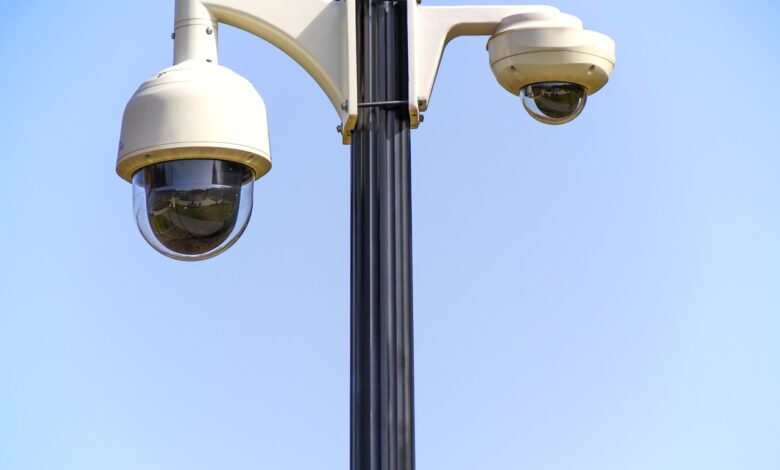
Every couple of years the security industry declares that analog cameras are dead. And every couple of years analog HD refuses to die. CVI, the most prominent of the analog HD standards, has quietly held meaningful market share against the IP wave that was supposed to sweep it away. The reasons this matters are worth examining, because they say something about how customers actually buy security equipment as opposed to how the industry thinks they buy it.
On paper, IP cameras have won every argument. Higher resolution. More features. Cleaner integration with modern software. Better remote access. Stronger analytics. If you were designing a camera system from scratch with unlimited budget and no existing infrastructure, you would pick IP without much hesitation. The industry has been pushing this narrative for over a decade, and in the enterprise segment it has largely succeeded. Large corporate sites, new commercial construction, and enterprise campuses are mostly IP now.
But step outside the enterprise and the picture gets messier. Small businesses, medium-sized retail, existing residential properties, and the enormous long tail of installations that live in buildings built before 2010 tell a different story. Many of these properties already have a coax cable plant. Tearing that out to install Cat6 is expensive and disruptive. Running Cat6 alongside existing coax doubles the work without much payoff. For these properties, a cvi camera plugged into existing coax is not just adequate, it is genuinely the smarter choice.
This is the part the industry tends to underweight. Customer decisions are not made in a vacuum. They are made against a backdrop of existing infrastructure, existing skills, and existing budgets. A building that already has a functional analog system does not need to switch to IP to get good security. It needs to upgrade to higher resolution analog HD and call it done. CVI specifically has been good at this. Current CVI cameras produce 4K image quality that was only theoretically possible on IP a few years ago. They do it over existing coax. They work with NVRs that cost a fraction of their IP equivalents. And they require installers to learn nothing they do not already know.
That last point is underappreciated. The installer base in this industry is huge, and a significant portion of it was trained on analog. Those installers have been doing camera work for fifteen or twenty years. They know how to pull coax, terminate connectors, and troubleshoot analog video. Asking them to retool entirely for IP is asking them to absorb a cost that customers end up paying for. CVI lets them use existing skills on modern hardware, which keeps installation costs reasonable and keeps the talent pool deep.
The argument against CVI is usually that it lacks the advanced features of IP. Analytics are weaker. Remote access is more complicated. Integration with modern software is thinner. All of this is true to varying degrees. But a significant portion of camera deployments do not need advanced analytics or deep software integration. They need to record clear video, let an owner check in from their phone, and provide evidence when something happens. CVI systems do all of these things, often for less money than an equivalent IP deployment. For that middle tier of deployments, the feature gap does not justify the cost gap.
There is also a reliability argument that gets less airtime than it should. Analog HD, including CVI, runs on a simpler protocol stack than IP. There are fewer failure modes. A CVI camera is harder to knock offline with a network misconfiguration because it is not really on the network in the traditional sense. The recorder handles the network side, and the cameras just produce a video signal. For a property owner who wants fewer moving parts and a more durable system, this simpler architecture has real appeal.
None of this is to argue that IP should not be the default for new high-end installations. It should be. The flexibility, the feature set, and the forward compatibility make IP the right choice when you are starting from scratch with adequate budget. But treating IP as the only serious option ignores the reality of how most camera installations actually happen in the world. They happen in existing buildings with existing infrastructure and existing budgets. In that world, CVI has a legitimate place.
The numbers support this. Industry reports continue to show analog HD holding a meaningful share of unit sales, particularly in small and mid-sized commercial applications. The installed base is even larger, because retrofit decisions favor reusing existing infrastructure. This share is not going to flip overnight. If anything, the current CVI generation is extending its lifespan because 4K analog has closed most of the resolution gap that used to be the main argument for switching.
What this tells me is that the security industry, and customers along with it, would do better to think in terms of fit rather than trends. The question is not whether analog or IP is winning. The question is which of them is the right choice for a specific property given its infrastructure, budget, and operational needs. For a new construction site with a large budget and a preference for advanced software, IP is the answer. For a twenty year old commercial building with existing coax, a modest budget, and a need for reliable video, a modern CVI system is often the better answer.
The quiet rise of CVI is really a story about customers making practical choices when the industry tries to push them toward a one-size-fits-all solution. That is usually how these things go. The winner is not always the technology with the better marketing. Sometimes it is the technology that fits the actual conditions of the customer’s property. CVI fits a lot of those conditions, and that is why it is still here.