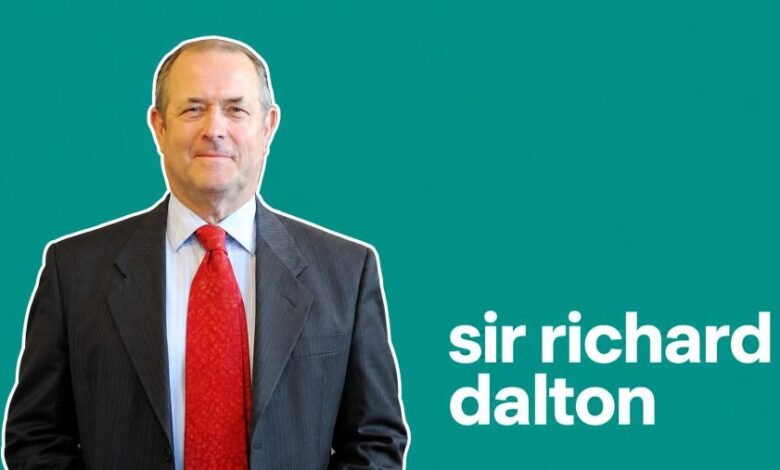
Sir Richard Dalton: Powerful Life of a British Diplomat Who Shaped Middle East Relations
A respected career diplomat remembered for high-level service in Libya, Iran, Jerusalem, and international policy debate.

Introduction
Sir Richard Dalton is a former senior British diplomat whose career is closely connected with Middle East diplomacy, international negotiations, and public policy analysis. He served in the British Diplomatic Service from 1970 to 2006 and became widely known for his ambassadorial work in Libya and Iran. His career shows the positive power of patient diplomacy, but it also reflects the negative reality that international relations often involve conflict, mistrust, and difficult negotiations.
As a diplomat, he worked during sensitive periods in modern Middle Eastern history. Sir Richard Dalton helped represent Britain in regions where political pressure, security concerns, and diplomatic complexity were part of daily work. After retirement, he continued to contribute as a consultant, commentator, and Associate Fellow connected with Chatham House’s Middle East work.
Quick Bio
| Field | Details |
|---|---|
| Full Name | Sir Richard John Dalton KCMG |
| Public Name | Sir Richard Dalton |
| Gender | Male |
| Date of Birth | 10 October 1948 |
| Age | 77 years old |
| Nationality | British |
| Profession | Former diplomat, consultant, commentator |
| Known For | British Ambassador to Libya and British Ambassador to Iran |
| Main Field | Middle East diplomacy |
| Diplomatic Service | 1970–2006 |
| Major Honour | Knight Commander of the Order of St Michael and St George |
| Public Role After Retirement | Associate Fellow and Middle East commentator |
Sir Richard Dalton Early Life and Education
Sir Richard Dalton was born on 10 October 1948. Public biographical information mainly focuses on his education and diplomatic service rather than private childhood details. He was educated at Winchester College and later studied at Magdalene College, Cambridge, two respected institutions that helped prepare him for a career in public service.
His later diplomatic preparation also included Arabic training at the Middle East Centre for Arabic Studies in Lebanon. This training was important because much of his later work focused on Arab and Middle Eastern affairs. For any diplomat working in sensitive regions, language study is not only an academic skill; it is a tool for understanding people, culture, politics, and negotiation.
Beginning of His Diplomatic Career
Sir Richard Dalton joined HM Diplomatic Service in 1970. This marked the beginning of a long public career that lasted more than three decades. His early work included postings connected with Amman and New York, followed by roles within the Foreign and Commonwealth Office.
These early experiences helped him build the professional foundation required for senior diplomatic responsibilities. A diplomat must listen carefully, communicate clearly, understand government policy, and respond calmly under pressure. Sir Richard Dalton developed these qualities through years of service before reaching ambassadorial level.
Career Growth in Middle East Diplomacy
One of the most important parts of Sir Richard Dalton’s career was his specialization in the Middle East. Between 1991 and 1992, he was a research fellow at Chatham House and published work connected with security architecture in the Persian Gulf region. This shows that his career was not limited to embassy representation; it also included policy research and strategic thinking.
From 1993 to 1997, he served as Consul-General in Jerusalem. This was a sensitive and important diplomatic role during the early years of the Middle East peace process. His work in Jerusalem added to his experience in regional diplomacy and placed him close to one of the world’s most complex political environments.
British Ambassador to Libya
Sir Richard Dalton became British Ambassador to Libya after diplomatic relations between the United Kingdom and Libya were resumed. According to the European Leadership Network, he helped re-establish UK diplomatic relations with Libya in 1999. This was a major achievement because relations had been broken for many years.
His Libya role showed the positive side of diplomacy: even after long periods of tension, countries can rebuild communication. However, it also showed the negative side of international affairs: diplomatic progress often comes only after years of mistrust, conflict, and pressure. A skilled diplomat must work carefully in such conditions, and Sir Richard Dalton’s Libya assignment remains one of the strongest parts of his public career.
British Ambassador to Iran
Sir Richard Dalton is also strongly known for serving as British Ambassador to Iran from 2002/2003 to 2006. This was one of the most sensitive diplomatic roles of his career. During this period, Iran’s nuclear programme, regional influence, and relations with Western countries were major international concerns.
As a diplomat in Tehran, he worked during a period when European countries were deeply involved in talks with Iran. His role required careful communication, political understanding, and strategic judgment. The Iran posting strengthened his reputation as a serious Middle East diplomat with direct experience in one of the region’s most important countries.
Career Timeline
| Year / Period | Career Detail |
|---|---|
| 1970 | Joined HM Diplomatic Service |
| 1973 | Posted as Second Secretary to Amman |
| 1975 | Served with UKMIS New York |
| 1991–1992 | Research Fellow at Chatham House |
| 1993–1997 | Consul-General in Jerusalem |
| 1999 | Helped re-establish UK diplomatic relations with Libya |
| 1999–2002/2003 | British Ambassador to Libya |
| 2002/2003–2006 | British Ambassador to Iran |
| 2005 | Appointed KCMG in the Queen’s Birthday Honours |
| 2006 | Retired from the Diplomatic Service |
| 2006–2010 | Director-general of the Libyan British Business Council |
| 2008 | Linked with Chatham House report work on Iran and nuclear diplomacy |
Awards and Honours
Sir Richard Dalton was appointed Knight Commander of the Order of St Michael and St George in the 2005 Queen’s Birthday Honours. The London Gazette listed him as Richard John Dalton, C.M.G., H.M. Ambassador, Tehran, under the Diplomatic Service and Overseas List.
This honour reflects the importance of his diplomatic service. In the British honours system, such recognition is given for notable public and international service. For Sir Richard Dalton, the honour came after years of work in complex diplomatic environments.
Work After Retirement
After retiring from the Diplomatic Service in 2006, Sir Richard Dalton continued to work in public policy and Middle East affairs. He became an Associate Fellow of the Middle East and North Africa programme at Chatham House and also worked as a consultant and commentator on Middle East issues.
He also served as director-general of the Libyan British Business Council from 2006 to 2010. This post-retirement work connected diplomacy, business relations, and regional understanding. It showed that his experience remained useful beyond formal government service.
Publications and Public Commentary
Sir Richard Dalton has written and commented on Iran, Libya, regional diplomacy, and international security. His work has been connected with Chatham House, including analysis on Iran and nuclear diplomacy. Chatham House also lists writing linked to Iran and the Middle East under his name.
His commentary is valuable because it comes from direct diplomatic experience. A public analyst can study foreign policy from outside, but a former ambassador brings practical knowledge of negotiation, government communication, and political risk. That gives his views a strong professional background.
Public Image and Personality
Sir Richard Dalton’s public image is that of a serious, experienced, and region-focused British diplomat. He is not known as a celebrity figure; he is known for policy work, diplomatic judgement, and Middle East expertise. His career suggests patience, discipline, and an ability to work in difficult political environments.
The positive side of his public image is his reputation for experience and specialist knowledge. The negative side is that diplomacy in places such as Iran, Libya, and Jerusalem often brings public criticism, political tension, and controversy because the issues themselves are difficult. Still, his long service shows professional commitment.
Institutional Links and Public Service
Humanists UK lists Sir Richard Dalton as a patron and describes him as a former diplomat who specialized in the Middle East. The same profile states that he has been a regular commentator for UK and overseas media on Iran, Libya, and other Middle East issues.
He has also been associated with Chatham House, one of the well-known international affairs institutions in the United Kingdom. These public roles helped him remain active in discussion on diplomacy, regional security, and foreign policy after retirement from government service.
Latest Public Relevance
Sir Richard Dalton continues to be referenced in public discussions about Iran and wider Middle East diplomacy. His background as a former British ambassador to Iran gives him authority in media and policy conversations about negotiations, regional conflict, and international law.
His continued relevance shows that diplomatic careers can have long influence. Even after leaving office, a diplomat’s experience can shape public understanding of world events. Sir Richard Dalton’s career remains especially relevant whenever Iran, Libya, or Middle East negotiations appear in international news.
Legacy and Impact
Sir Richard Dalton’s legacy is built on diplomatic service rather than fame. He represented Britain in difficult regions, helped support restored relations with Libya, and served in Iran during a period of high international concern. His work reflects the importance of diplomacy as a serious profession.
His impact is also visible in his post-retirement writing and commentary. He helped explain complicated international issues to policy audiences and the public. A strong diplomat does not only attend meetings; he helps create understanding between governments, institutions, and societies.
Conclusion
Sir Richard Dalton stands as an important British diplomat whose career focused on some of the most sensitive areas of international relations. His service in Libya, Iran, and Jerusalem made him a respected figure in Middle East diplomacy. His work shows that diplomacy can create positive progress, but it also proves that global politics can be slow, tense, and difficult.
From joining HM Diplomatic Service in 1970 to continuing as a commentator after retirement, Sir Richard Dalton built a career based on knowledge, patience, and public service. His story is not one of celebrity glamour; it is the story of a professional diplomat who worked through difficult political realities and remained active in serious international debate.
FAQ
Who is Sir Richard Dalton?
He is a former British diplomat known for serving as ambassador to Libya and Iran.
What is Sir Richard Dalton famous for?
He is famous for his senior diplomatic work in Middle East relations.
What is his full name?
He is publicly known as Sir Richard John Dalton KCMG.
What is his nationality?
He is British.
What was his main profession?
He was a career diplomat.
When was he born?
He was born on 10 October 1948.
Where did he study?
He studied at Winchester College and Magdalene College, Cambridge.
Did he work after retirement?
He continued as a consultant, commentator, and Associate Fellow connected with Chatham House.
What was his most important career role?
He is especially known for serving as British Ambassador to Libya and British Ambassador to Iran.