In February 2022, gas prices across Europe spiked within days of the invasion of Ukraine. Countries with strong electricity links to their neighbors had somewhere to turn. Countries without them did not. That difference, more than any single policy paper, explains why cross-border electricity interconnection has moved from an engineering footnote to a board-level priority.
A cross-border electricity interconnection is, at its simplest, a physical link—usually a high-voltage cable, onshore or subsea—that allows one country’s grid to send and receive power from another’s. The concept isn’t new. What has changed is the stakes. As grids absorb more wind and solar, and as geopolitical risk to fuel supply becomes harder to ignore, the ability to import power from a neighbouring market during a shortfall or export surplus when generation runs high has become a core part of how national energy security is defined.
Why Isolated Grids Are a Liability
A grid that operates in isolation carries every risk alone. If a power station trips, if a heatwave pushes demand past capacity, or if a fuel supply is disrupted, there is no external buffer. Interconnected grids spread that risk. When French nuclear output fell sharply in 2022 due to unplanned outages, imports from Germany, Spain, and the UK helped cover the shortfall without triggering blackouts. Norway’s hydropower reserves regularly balance wind variability in Denmark and Germany through the existing Nordic and North Sea links. Neither outcome would have been possible without physical cross-border infrastructure already in place.
This is the practical case for interconnection as a security tool, not just an economic one. Diversifying where electricity comes from reduces the chance that a single point of failure—a plant outage, a fuel embargo, or a drought affecting hydropower—becomes a national crisis.
What Interconnection Adds Beyond Cost Savings
Much of the public conversation around interconnectors focuses on price: linking markets tends to smooth out extreme price swings by letting cheaper electricity flow to where demand is highest. That’s real, but it understates the security dimension.
Cross-border links also:
- Absorb renewable variability. Wind and solar output fluctuates by the hour. A single country’s grid has limited flexibility to manage that alone; a regional grid, linked by interconnectors, can shift surplus generation to wherever it’s needed most.
- Provide emergency reserve capacity. Interconnectors give system operators a fast-response option during unplanned outages, reducing reliance on costly domestic backup generation that sits idle most of the year.
- Support faster decarbonisation. Countries can retire fossil generation with more confidence when they can draw on a neighbor’s low-carbon supply during the transition, rather than needing full domestic backup for every scenario.
- Reduce exposure to single-supplier risk. Regions with diversified, interconnected supply are structurally less vulnerable to disruption from any one source, whether that’s a fuel import, a domestic plant, or a weather-dependent resource.
None of this happens automatically. It depends on physical infrastructure being built, maintained, and expanded—and that infrastructure, particularly where it crosses open water, is where the real engineering and commercial challenge sits.
The Infrastructure Behind The Policy Goal
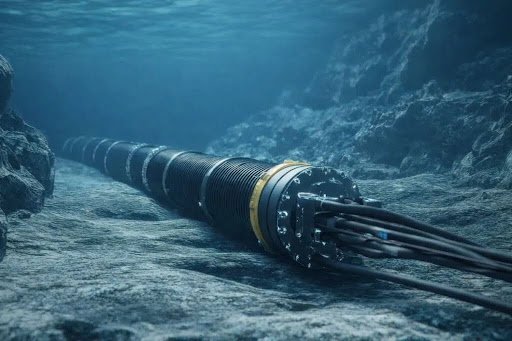
Submarine power cables carry a disproportionate share of this responsibility. Interconnectors like NordLink, connecting Norway and Germany, or the North Sea Link between Norway and the UK, depend on subsea cable systems that must survive decades of exposure to shifting seabeds, fishing activity, anchor strikes, and challenging installation conditions. A single fault on one of these cables can take a major interconnector offline for weeks, which is itself a security risk if a region has come to depend on that capacity.
That reality is why cable routing, protection, burial depth, and repair logistics are no longer back-office engineering details—they’re strategic infrastructure decisions with national security implications. Developers, transmission system operators, and regulators increasingly need the same room to compare approaches, not just publish separate white papers.
This is precisely the gap that a dedicated submarine cable event fills. It’s one thing to read about interconnector reliability in a report; it’s another to hear directly from the project managers who have handled a cable fault mid-installation or the O&M directors managing repair windows in the North Sea.
Where this conversation is happening
Leadvent Group’s 6th Annual Submarine Power Cable and Interconnection Forum, taking place 18–19 November 2026 in London as a hybrid event, brings together over 100 subsea cable and interconnector specialists to work through exactly these questions. Sessions cover the full project lifecycle—survey, route engineering, manufacturing, installation, protection, and repair—alongside practical case studies from developers and technical suppliers currently building the next generation of cross-border links.
For anyone responsible for grid resilience, interconnector planning, or subsea infrastructure delivery, it’s a rare chance to compare notes with peers facing the same routing, permitting, and repair-cost challenges, rather than working through them in isolation.
The Security Case Is Only Getting Stronger
As more countries commit to higher renewable targets, the pressure on interconnection capacity will keep growing—not because it’s the cheapest option, but because it’s increasingly the most reliable one. Regions that invest early in robust, well-maintained cross-border links are positioning themselves to absorb shocks that isolated grids simply cannot.
The technical and commercial work behind that resilience—cable design, installation practice, repair capability—is what determines whether interconnection delivers on its promise. That’s the conversation currently taking shape ahead of November’s forum.
Review the agenda for the 6th Annual Submarine Power Cable and Interconnection Forum to see how the sector is addressing these challenges.