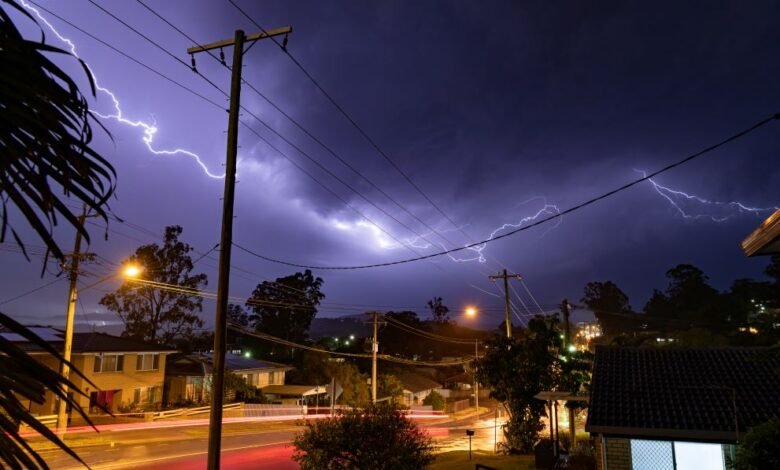
Lightning hits a tree two hundred feet from your buried cable. The strike dissipates into the soil. The ground around the strike becomes electrically charged. That charge travels through the earth. It finds your cable’s armor. The armor conducts the charge directly to your building. Your switch port explodes. Your router dies. Your security cameras go dark. You thought the cable was safe because the lightning did not hit the cable directly. You were wrong. A outdoor armored cable with steel armor is an excellent conductor of electricity. That is good for shielding. It is terrible for lightning protection. The armor must be grounded at both ends and also at multiple points along its length. Every ground point gives the lightning energy a path to dissipate before reaching your equipment. Ask your installer about multi-point grounding. If they only ground at the building entrance, your switch is still at risk. The lightning does not need a direct hit. It only needs to be nearby. Your armor becomes its highway.
The Induced Voltage That Slowly Cooks Your Electronics
Nearby lightning does not have to touch your cable to damage it. Electromagnetic induction creates voltage in any nearby conductor. Your armored cable acts as a long antenna. A lightning strike one thousand feet away induces a voltage surge. That surge travels along the armor. It reaches your equipment. It may not destroy the equipment immediately. Instead, it slowly degrades power supplies, capacitors, and integrated circuits. Your switch fails six months later. You replace it. Six months later, it fails again. You blame the switch brand. The real culprit is your outdoor armored cable acting as an induction coil. The solution is surge protection at both ends of the cable. Not cheap power strips. Real surge protection devices rated for outdoor installations. These devices clamp the voltage before it reaches your equipment. Ask your installer about surge ratings. Look for devices rated for at least ten kilovolts. Lower ratings will fail after one or two nearby strikes. Your cable will keep conducting. Your equipment will keep dying.
The Dissimilar Metals Corrosion That Eats Your Ground Connection
Your cable armor is steel or aluminum. Your ground rod is copper. Your ground wire is copper. When you connect steel to copper and bury it underground, you create a battery. Moist soil acts as the electrolyte. The dissimilar metals corrode. The steel armor corrodes first. The ground connection becomes high-resistance. The next lightning strike has no path to ground. It travels into your building instead. Your outdoor armored cable installation must use bi-metallic connectors designed for underground use. These connectors have a tin or zinc plating that prevents galvanic corrosion. They also contain sealant that excludes moisture. A standard copper lug bolted to steel armor will fail within two years. The corrosion is invisible until the connection crumbles in your hand. Ask your installer what connectors they use. If they show you a standard copper lug, demand an upgrade. Your grounding system is only as good as its weakest connection. Corrosion turns strong connections into weak ones. Prevent it before your next thunderstorm.
The Bonding Jumper That Your Electrician Forgot
Your cable armor must bond to your building’s grounding electrode system. Many electricians connect the armor to a ground rod near the building entrance. They stop there. They forget the bonding jumper that connects that ground rod to the rest of the building’s ground system. Your building has multiple ground paths. The electrical panel ground. The water pipe ground. The structural steel ground. If these are not bonded together, a surge on your cable will find its own path through sensitive equipment. Your outdoor armored cable’s armor must bond to the same ground point as your electrical service. Not a separate rod. Not the water pipe. The same point. Ask your electrician to show you the single-point ground bond. If they cannot identify it, your installation is not code-compliant and not safe. A floating ground is worse than no ground. It creates voltage differences that damage equipment and shock people. Bond everything to one point. Your cable’s armor is part of that system. Treat it that way.
The Sweat Corrosion Inside Your Own Junction Box
Condensation forms inside outdoor junction boxes. Warm daytime air enters. Nighttime temperatures drop. Water condenses on every surface. Your cable’s armor termination is inside that box. The steel armor rusts. The rust expands. The expansion cracks the termination hardware. The ground connection fails. Your outdoor armored cable now has an ungrounded armor. It still conducts lightning. It just has nowhere to send that energy. The next strike finds your equipment instead of the earth. The solution is a junction box filled with dielectric grease or encapsulated with potting compound. No air inside means no condensation. No condensation means no rust. No rust means the ground connection stays intact. Ask your installer about junction box sealing. If they say “a gasketed box is enough,” they are wrong. Gaskets fail. Condensation still forms. Demand fully sealed, potted, or grease-filled terminations for any underground armored cable installation. Your ground connection will outlast the cable itself.
The One Inspection That Prevents A Shocking Discovery
Walk your cable path after installation. Look at every ground connection. Look at every junction box. Look for exposed steel armor near the building entrance. Now imagine a lightning strike one hundred feet away. Trace the path that surge would take. Would it encounter a solid, low-resistance ground path? Or would it encounter a corroded connection, an unsealed box, or a missing bonding jumper? Your outdoor armored cable is a lightning rod disguised as a communication cable. Treat it with respect. Ground it properly. Bond it thoroughly. Seal every termination. Your equipment will survive storms that would destroy ungrounded or poorly grounded installations. The cost of proper grounding is small. The cost of replacing fried switches, routers, and cameras is large. Your network uptime depends on the quality of your cable’s ground path. Inspect it. Test it. Fix it before the next thunderstorm rolls in. Your equipment will thank you with years of silent, reliable service while your neighbors chase electrical gremlins caused by the lightning that found their ungrounded armor.