Jonathan Sumption: A Powerful Mind of Law and History Shaping Modern Britain
The Author and Former Justice of the Supreme Court of the United Kingdom Who Challenged Power with Principle

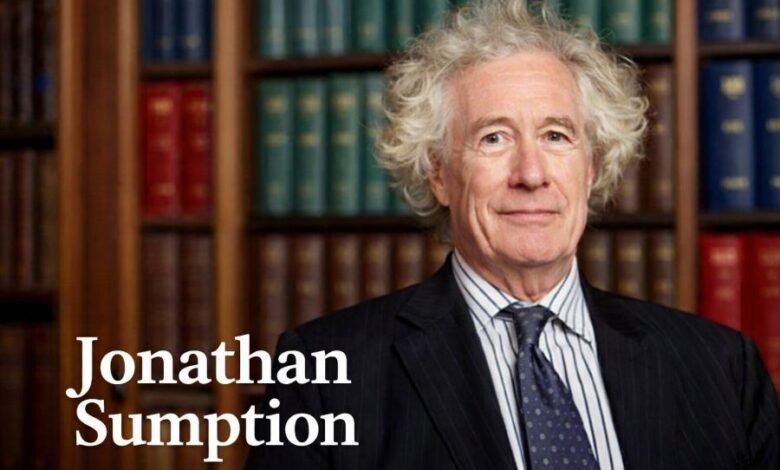
Table of Contents
ToggleIntroduction
Jonathan Sumption stands as one of the most intellectually formidable figures in modern British public life. Known for his sharp legal reasoning, commanding historical scholarship, and willingness to speak uncomfortable truths, he has shaped debates far beyond the courtroom. As an author and former Justice of the Supreme Court of the United Kingdom, his influence reaches into law, politics, history, and public discourse.
At once admired and criticised, Jonathan Sumption represents the rare combination of elite legal practice and deep academic authority. His career reflects both the positive strength of principled independence and the negative reactions that often follow outspoken intellects. This balance of respect and controversy has made him a lasting and unavoidable presence in Britain’s constitutional conversation.
Quick Bio
| Field | Details |
|---|---|
| Full Name | Jonathan Philip Chadwick Sumption |
| Known As | Jonathan Sumption |
| Date of Birth | 9 December 1948 |
| Nationality | British |
| Profession | Author, Historian, Former Supreme Court Justice |
| Education | Eton College; Magdalen College, Oxford |
| Specialisation | Constitutional law, medieval history |
| Notable Role | Justice of the Supreme Court of the United Kingdom |
| Marital Status | Married |
| Children | Three |
Early Life and Intellectual Foundations
Jonathan Sumption was born in the United Kingdom in December 1948 and grew up in an environment shaped by discipline, public service, and intellectual seriousness. As the eldest of four children, he was raised in a household where law and national service were familiar themes, laying early foundations for a life defined by public responsibility.
His formal education began at Eton College, where academic rigour and debate sharpened his analytical skills. He later attended Magdalen College, Oxford, studying medieval history and graduating with first-class honours. This early academic success was not merely a stepping stone but a defining influence, shaping the historian’s mindset that would later distinguish his legal judgments and writing.
From Historian to Legal Practitioner
After completing his studies, Jonathan Sumption embarked on an academic career as a fellow and tutor at Oxford. During this period, he developed a reputation as a serious scholar with a narrative gift, capable of combining detail with clarity. However, despite success in academia, he made the decisive move to law, a transition that would redefine his professional identity.
In 1975, he was called to the Bar at the Inner Temple. This shift marked the beginning of a formidable legal career. Unlike many of his contemporaries, Sumption carried into legal practice the habits of a historian: deep research, contextual reasoning, and long-term perspective. These traits soon set him apart in complex and high-stakes cases.
Rise as a Leading Barrister
Jonathan Sumption rapidly established himself as one of Britain’s most formidable advocates. Practising primarily in commercial, public, and constitutional law, he became known for his precision, intellectual confidence, and ability to dominate complex arguments. His appointment as Queen’s Counsel in 1986 confirmed his standing at the highest level of the legal profession.
This phase of his career represents a positive demonstration of professional excellence. At the same time, his uncompromising style attracted criticism from those who found his approach intellectually intimidating. Yet even critics acknowledged his mastery of legal reasoning, and his reputation continued to grow across courts and jurisdictions.
Appointment to the Supreme Court
In 2012, Jonathan Sumption reached one of the highest offices in British law when he was appointed Justice of the Supreme Court of the United Kingdom. His appointment was remarkable because he joined the court directly from legal practice rather than from a full-time judicial career, a rare and notable distinction.
During his tenure, he contributed to decisions that shaped constitutional interpretation and clarified the boundaries between law and politics. Supporters praised his insistence on judicial restraint and respect for democratic processes. Detractors argued that his philosophy limited the courts’ ability to address injustice. This tension between principle and perception defined much of his judicial legacy.
Author and Historian of Lasting Influence
Alongside his legal career, Jonathan Sumption maintained an extraordinary output as a historian and author. His multi-volume history of the Hundred Years’ War stands as one of the most ambitious historical projects undertaken by a modern British scholar. The work reflects decades of research and is widely regarded as authoritative.
As an author, he combines narrative clarity with analytical depth, making complex periods accessible without sacrificing accuracy. This dual identity as historian and judge reinforces his reputation as an intellectual bridge between past and present, reminding readers that law, like history, operates within broader human contexts.
Public Commentary and Debate
Following his retirement from the Supreme Court, Jonathan Sumption became an increasingly visible public commentator. He has spoken forcefully on constitutional boundaries, the role of courts, and the dangers of expanding judicial power into political decision-making. These views have earned both admiration and backlash.
The positive aspect of this role lies in his willingness to defend principle over popularity. The negative reaction reflects discomfort with his scepticism toward expansive state authority. Regardless of position, his arguments are taken seriously, demonstrating his continued influence on national debate.
Character, Thought, and Professional Identity
Jonathan Sumption is often described as intellectually rigorous, direct, and unafraid of dissent. His career illustrates a consistent commitment to clarity, whether in historical writing or judicial reasoning. He resists fashionable consensus when it conflicts with his understanding of constitutional order.
This consistency has solidified his identity as an independent thinker. While this has limited universal approval, it has strengthened his credibility among those who value disciplined reasoning over rhetorical comfort.
Legacy and Long-Term Impact
The legacy of Jonathan Sumption rests on three pillars: law, history, and public thought. As a former Justice of the Supreme Court of the United Kingdom, he helped define modern constitutional interpretation. As an author, he produced historical work that will endure for generations. As a public intellectual, he continues to challenge assumptions about power and governance.
His career demonstrates that influence does not require consensus. Instead, it is built through intellectual courage, depth of knowledge, and a willingness to accept criticism. This enduring impact ensures that Jonathan Sumption remains a central figure in discussions of law and authority.
Conclusion
Jonathan Sumption’s life and work reflect the power of disciplined intellect in public life. Balancing legal authority with historical insight, he has shaped how law is understood, debated, and applied in modern Britain. His achievements reveal the positive force of principled independence, while the controversies surrounding him highlight the cost of speaking plainly in complex times.
As an author and former Justice of the Supreme Court of the United Kingdom, Jonathan Sumption occupies a unique position where scholarship meets power. His influence continues not because he seeks agreement, but because he insists on serious thinking where it matters most.
FAQ
Who is Jonathan Sumption?
Jonathan Sumption is a British author, historian, and former Justice of the Supreme Court of the United Kingdom, known for his work in constitutional law and medieval history.
What is Jonathan Sumption best known for?
He is best known for his service on the Supreme Court and for authoring the multi-volume history of the Hundred Years’ War.
Was Jonathan Sumption a career judge?
No, he was appointed to the Supreme Court directly from legal practice, which is rare in the UK judicial system.
What subjects does Jonathan Sumption write about?
He writes primarily about medieval European history, law, constitutional principles, and the relationship between courts and politics.
Why is Jonathan Sumption considered controversial?
He is controversial for his outspoken views on judicial limits, government power, and constitutional restraint, which challenge prevailing opinions.