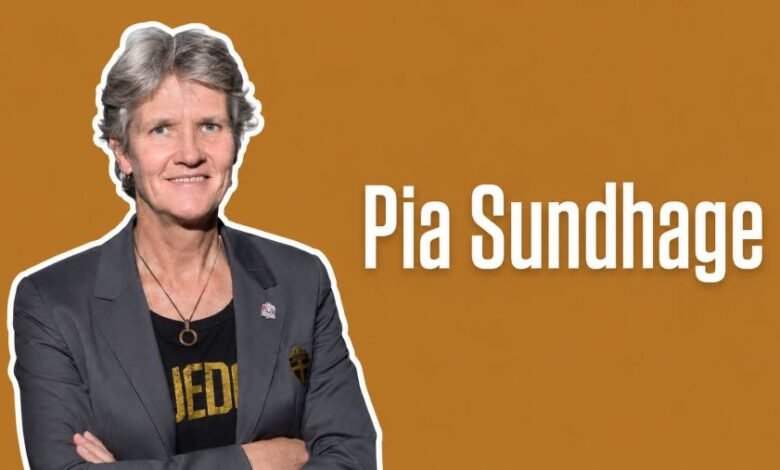
Pia Sundhage Biography: Powerful Rise, Tough Setbacks, and the Inspiring Legacy of a Swedish Football Manager
The story of a Swedish football legend who became one of the most respected coaches in the global women’s game.

Introduction
Pia Sundhage is one of the most respected names in women’s football. She built her reputation first as a talented Swedish international player and later as a successful Swedish football manager with a strong record in major tournaments. Her journey is powerful because it shows courage, discipline, leadership, and long-term commitment to the growth of women’s football.
She is best known for representing Sweden as a player, winning major honors, and later coaching the United States women’s national team to Olympic gold medals. Her career also includes important coaching roles with Sweden, Brazil, Switzerland, and Haiti. The positive side of her story is her historic success and influence; the negative side is that she also faced difficult tournament exits and high-pressure criticism, especially during later coaching roles.
Quick Bio
| Field | Details |
|---|---|
| Full Name | Pia Mariane Sundhage |
| Popular Name | Pia Sundhage |
| Gender | Female |
| Date of Birth | 13 February 1960 |
| Age | 66 years old, as of June 2026 |
| Birthplace | Ulricehamn, Sweden |
| Nationality | Swedish |
| Zodiac Sign | Aquarius |
| Profession | Football coach, former footballer |
| Known For | Olympic gold-winning coach and Sweden football legend |
| Playing Position | Forward / attacking player |
| Current Role | Haiti women’s national team head coach |
| Major Coaching Identity | Swedish football manager |
| Major Player Achievement | 1984 European champion with Sweden |
| Major Coaching Achievement | Olympic gold with the United States in 2008 and 2012 |
Early Life and Childhood
Pia Sundhage was born in Ulricehamn, Sweden, on 13 February 1960. She grew up during a time when girls’ football did not receive the same respect, support, and structure that it receives today. Her early years were shaped by a strong desire to play football even when the path was not easy for young girls.
As a child, she played football with boys and developed confidence through regular competition. This early struggle became an important part of her identity. It helped her become mentally strong, brave in decision-making, and deeply connected to the fight for better opportunities in women’s football.
Football Inspiration and Early Passion
Pia Sundhage loved football from a young age. Her childhood passion was not just about playing a sport; it was about proving that girls could compete, learn, and succeed on the football field. That mindset later became visible in her coaching style.
Her early football life gave her a practical understanding of pressure, teamwork, and self-belief. These qualities helped her as a player and later made her a strong Swedish football manager who understood both the emotional and tactical sides of the game.
Playing Career
Pia Sundhage became one of Sweden’s most important women’s football players. She made her Sweden national team debut as a teenager and later became a key figure in the country’s football history. She played with intelligence, attacking quality, and strong competitive spirit.
Her playing career included major international tournaments and important domestic achievements. She was known mainly as a forward and attacking player. Her ability to score goals, support teammates, and perform in big matches made her one of the leading names in Swedish women’s football.
Sweden National Team Career
Pia Sundhage represented Sweden for many years and became a symbol of consistency. Her national team career included 146 appearances and around 70 goals, depending on the source record used. These numbers show her long service and importance to Sweden.
One of her biggest moments came in 1984 when Sweden won the European title. That victory remains one of the most important achievements in Swedish women’s football history. It also made Sundhage a respected player in the early development era of the women’s game.
Major Tournament History as a Player
Pia Sundhage played in important tournaments that helped shape women’s football. She was part of Sweden’s success in European competition and also played in the early years of the FIFA Women’s World Cup.
She represented Sweden at the 1991 FIFA Women’s World Cup, where Sweden finished third. She also competed in the 1996 Olympic Games, when women’s football was included in the Olympics. These tournaments gave her first-hand experience of elite international football.
Transition from Player to Coach
After her playing career, Pia Sundhage moved into coaching. This transition was natural because she had already built deep football knowledge as a player. Her understanding of the game, leadership personality, and tournament experience gave her a strong base for coaching.
Becoming a coach was not only a career change; it was also a new way for her to influence women’s football. As a Swedish football manager, she used her experience to guide players, build teams, and create competitive environments at international level.
Coaching Career Overview
Pia Sundhage’s coaching career is one of the most impressive in women’s football. She worked with several national teams and became known for her calm leadership, tactical awareness, and ability to manage major tournament pressure.
Her most famous coaching period came with the United States women’s national team. Under her leadership, the team won Olympic gold in 2008 and 2012. She also guided the United States to the 2011 FIFA Women’s World Cup final, where the team finished as runner-up.
Success with the United States
The United States period was the strongest chapter of Pia Sundhage’s coaching career. She inherited a team with great talent and helped turn that talent into major tournament success. Her leadership brought balance, confidence, and structure.
Winning Olympic gold in 2008 was a major breakthrough for her as a coach. Repeating that success in 2012 confirmed her elite status. These victories made her one of the most respected coaches in women’s football and strengthened her image as a world-class Swedish football manager.
Coaching Sweden
After her success with the United States, Pia Sundhage returned to coach Sweden. This role carried emotional importance because she was leading her own national team. She brought experience, discipline, and international confidence to the Swedish setup.
Her biggest achievement with Sweden as coach came at the 2016 Olympic Games, where Sweden won silver. That tournament showed her ability to build a disciplined team capable of competing against strong opponents. It also proved that her coaching success was not limited to one country.
Coaching Brazil
Pia Sundhage later became head coach of Brazil’s women’s national team. Brazil is a football nation with high expectations, technical players, and passionate supporters. Managing Brazil was a major challenge because the team carried both history and pressure.
Her Brazil period had strong moments but also ended with disappointment after the 2023 FIFA Women’s World Cup. Brazil’s early exit was a negative moment in her coaching career. However, it also showed the difficult reality of international football, where even experienced coaches face setbacks.
Coaching Switzerland and Haiti
Pia Sundhage also coached Switzerland and helped the team reach an important stage at UEFA Women’s Euro 2025. Switzerland reached the quarter-finals, which became a historic moment for the team and its supporters.
In 2026, she became head coach of Haiti’s women’s national team. This role gave her another international challenge and another opportunity to support the growth of women’s football. Her appointment showed that her experience remained valuable across different football cultures.
Career Timeline
| Year | Event |
|---|---|
| 1960 | Born in Ulricehamn, Sweden |
| 1975 | Made her Sweden national team debut |
| 1984 | Won the European title with Sweden |
| 1991 | Helped Sweden finish third at the FIFA Women’s World Cup |
| 1996 | Played at the Olympic Games |
| 2008 | Coached the United States to Olympic gold |
| 2011 | Coached the United States to the FIFA Women’s World Cup final |
| 2012 | Coached the United States to another Olympic gold |
| 2016 | Coached Sweden to Olympic silver |
| 2019 | Became Brazil women’s national team coach |
| 2023 | Left Brazil after Women’s World Cup disappointment |
| 2024–2025 | Coached Switzerland women’s national team |
| 2026 | Became Haiti women’s national team head coach |
Career Stats and Major Achievements
| Category | Achievement |
|---|---|
| Sweden Appearances | 146 |
| Sweden Goals | Around 70 |
| Player Honor | 1984 European champion |
| World Cup Player Honor | 1991 bronze medal with Sweden |
| Olympic Player History | Competed at the 1996 Olympic Games |
| USA Coaching Honor | 2008 Olympic gold |
| USA Coaching Honor | 2012 Olympic gold |
| USA Coaching Honor | 2011 FIFA Women’s World Cup runner-up |
| Sweden Coaching Honor | 2016 Olympic silver |
| Switzerland Coaching Moment | Euro 2025 quarter-final run |
| Current Coaching Role | Haiti women’s national team |
Coaching Style and Public Image
Pia Sundhage is known for calm leadership and strong team-building. She does not rely only on emotion or star power. Her teams often show discipline, structure, and belief. She values unity and understands how to manage players in high-pressure tournaments.
Her public image is positive because she represents long service to women’s football. She is respected as a pioneer, but her career also includes criticism after difficult results. This balance makes her story realistic: she is successful, but she has also faced the hard side of elite football.
Personal Life
Pia Sundhage’s public life is mostly connected to football. She is known for her work as a player and coach rather than for celebrity-style personal publicity. She has publicly spoken about being gay, and this has also made her a visible figure in representation within sport.
Her personal story is important because she grew up in an era when women’s football had fewer opportunities. Her journey shows how personal courage and professional discipline can change a person’s life and also influence an entire sport.
Legacy and Impact
Pia Sundhage’s legacy is powerful because she succeeded in two difficult roles: player and coach. Many great players do not become great coaches, and many coaches do not have elite playing careers. She belongs to the rare group that made a major impact in both areas.
As a Swedish football manager, she helped raise the level of international women’s football. Her Olympic gold medals, World Cup final appearance, European history, and leadership across different national teams make her one of the most important figures in the modern women’s game.
Why Pia Sundhage Is Famous
Pia Sundhage is famous because of her long football journey, major tournament success, and leadership in women’s football. She is not known for controversy or entertainment fame; she is known for results, experience, and influence.
Her name is connected with Sweden’s early women’s football success, the United States’ Olympic victories, and several international coaching projects. This makes her biography valuable for readers who want to understand the growth of women’s football through one influential career.
Conclusion
Pia Sundhage’s biography is the story of talent, courage, success, and resilience. She started as a young girl who loved football in Sweden and became a respected global figure in the sport. Her career proves that dedication can turn personal passion into historic achievement.
Her positive legacy includes European success as a player, Olympic gold medals as a coach, and a long influence on women’s football. Her negative moments, including difficult tournament exits, also show the pressure of elite coaching. Overall, Pia Sundhage remains a powerful example of leadership, progress, and lasting impact in the women’s game.
FAQ
Who is Pia Sundhage?
She is a Swedish football manager and former footballer known for her success with Sweden, the United States, Brazil, Switzerland, and Haiti.
What is Pia Sundhage’s full name?
Her full name is Pia Mariane Sundhage.
When was Pia Sundhage born?
She was born on 13 February 1960.
Where is Pia Sundhage from?
She is from Ulricehamn, Sweden.
What is Pia Sundhage famous for?
She is famous for being a Sweden football legend and an Olympic gold-winning coach.
Did Pia Sundhage play football for Sweden?
Yes, she represented Sweden and became one of the country’s most important women’s football players.
What is known about her family background?
Her public biography focuses mainly on her childhood in Sweden and her football journey.
What is known about her personal life?
She has publicly spoken about being gay and is widely known for her football career and leadership.
What was her biggest coaching achievement?
Her biggest coaching achievement was leading the United States women’s team to Olympic gold in 2008 and 2012.
Which team does she coach now?
She is the head coach of Haiti’s women’s national team.