Gerald Ratner Biography: Powerful Rise, Historic Fall and Remarkable Business Comeback
How a British Jewellery Entrepreneur Built a Retail Empire, Lost His Position After One Speech and Rebuilt His Career Through Resilience

Introduction
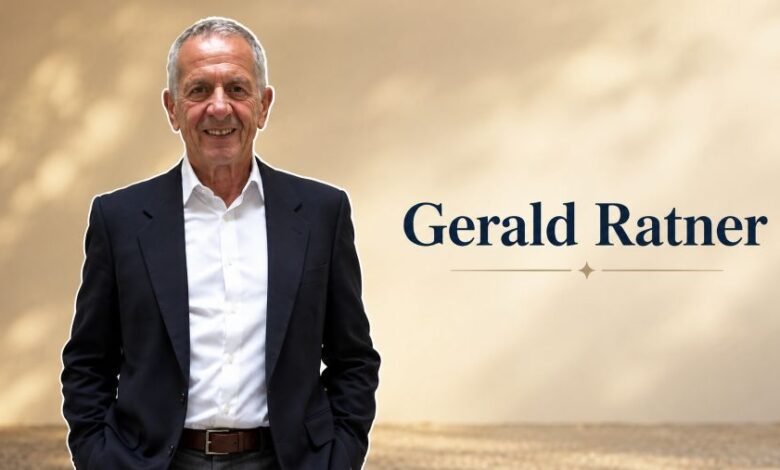
Gerald Ratner is a British businessman, retail entrepreneur, author and public speaker. He is best known for transforming his family’s jewellery company into a huge international retail group with thousands of shops. However, his career changed dramatically after a controversial speech in 1991 damaged customer trust in the Ratners brand.
His story is not simply about one public mistake. It is also about ambitious expansion, creative retail marketing, corporate pressure and the long process of rebuilding a career. Today, Gerald Ratner’s experience is regularly discussed in business schools, leadership events and communication training because it shows how words can affect even a powerful company.
Quick Bio
| Information | Details |
|---|---|
| Full Name | Gerald Irving Ratner |
| Known As | Gerald Ratner |
| Date of Birth | 1 November 1949 |
| Age | 76 years old, as of June 2026 |
| Birthplace | London, England |
| Nationality | British |
| Profession | Businessman, entrepreneur, author and motivational speaker |
| Education | Hendon County Grammar School |
| Father | Leslie Ratner |
| Mother | Rachelle Ratner |
| Wife | Moira Ratner |
| Children | Four |
| Famous For | Expanding Ratners Group and his controversial 1991 speech |
| Former Major Role | Chief executive of Ratners Group |
| Book | The Rise and Fall… and Rise Again |
| Current Work | Business speaking, mentoring and entrepreneurial activities |
Who Is Gerald Ratner?
Gerald Ratner is one of the most recognisable figures in modern British business history. During the 1980s, he turned a struggling family jewellery chain into a mass-market retail empire. Ratners became known for affordable products, bold advertisements, visible prices and continuous promotional offers.
His approach challenged the traditional jewellery industry, which often presented jewellery as an expensive and exclusive purchase. Like other figures associated with British retail leadership, he understood that the shopping experience had to be designed around ordinary customers rather than industry tradition.
Early Life and Family Background
Gerald Irving Ratner was born in London on 1 November 1949. His parents were Leslie and Rachelle Ratner, who reportedly met in India during the Second World War. Gerald grew up in a Jewish family and has publicly discussed how his Jewish identity became more meaningful to him as he grew older.
His father was closely connected with the family jewellery company. Gerald therefore experienced retail business from a young age. Instead of following a long academic route, he entered the family operation as a teenager and learned through direct contact with customers, products and shop management.
Education and Early Business Training
Gerald attended Hendon County Grammar School. He did not attend university or complete a publicly documented professional degree. His most important education came from working in shops and observing how customers reacted to prices, displays and sales messages.
He was also influenced by the traders at Petticoat Lane Market in London. He noticed that sellers who clearly advertised their offers and confidently attracted attention often performed better. This observation later became a central part of his retail strategy.
Joining the Family Jewellery Business
Gerald Ratner entered the family jewellery business at approximately 15 or 16 years old. Sources place his starting period around 1965 or 1966. He began at a practical level and gradually learned sales, marketing, stock control and store operations.
When his father became seriously ill, Gerald assumed greater responsibility for the company. By 1984, he had taken control of a business with around 120 to 130 stores. The chain was already established, but it was losing money and needed a clear new direction.
Transforming Ratners Group
Ratner changed the company’s appearance and pricing strategy. Stores introduced large promotional signs, brightly coloured displays, visible discounts and affordable products. Music and energetic advertising also helped make the shops feel less formal than traditional jewellery stores.
This strategy made jewellery accessible to a wider audience. Customers could buy earrings, watches, rings and gifts without entering an expensive luxury environment. Ratner’s success demonstrated how price, presentation and brand communication can reshape public interest in an established industry.
Growth into an International Retail Empire
The company expanded rapidly during the second half of the 1980s. By around 1990, Ratners Group had approximately 2,500 shops, 25,000 employees and annual sales of about £1.2 billion. Reported annual profits exceeded £120 million during its peak period.
The wider group included major jewellery names such as Ratners, H. Samuel, Ernest Jones and Watches of Switzerland. It also controlled more than 1,000 stores in the United States, making it one of the largest jewellery retail operations of its time.
Business Strategy and Leadership Style
Gerald Ratner’s leadership style was energetic, competitive and heavily focused on growth. He studied customer behaviour, visited stores and paid close attention to how rivals presented their products. He was willing to challenge long-established industry habits when he believed a different approach could produce higher sales.
His strategy depended on high-volume sales and relatively affordable pricing. Rather than earning a large profit on every single product, the company aimed to attract more customers and sell more items. This helped Ratners grow quickly, but rapid expansion also increased the company’s costs, debt and operational pressures.
The 1991 Institute of Directors Speech
On 23 April 1991, Gerald Ratner addressed the Institute of Directors’ annual conference at the Royal Albert Hall in London. During the speech, he made jokes about some inexpensive products sold by his company. Most famously, he described one low-cost decanter set using insulting language.
He also joked that a pair of earrings cost less than a Marks & Spencer prawn sandwich but might not last as long. Although the audience laughed, newspapers widely reported the remarks. Many customers felt that the company’s own chief executive had mocked the products they purchased.
Why the Speech Became So Damaging
The comments created a serious problem because trust is central to jewellery retail. Customers do not simply buy metal, stones or watches. They also buy gifts, memories and symbols of important personal occasions. Ratner’s words therefore affected the emotional value connected with the company’s products.
The event became one of the clearest examples of how careless executive communication can damage a brand. The expression “doing a Ratner” later entered British business language to describe a public statement that harms the speaker’s own company or reputation.
Was One Speech the Only Cause of the Collapse?
The speech caused major reputational damage, but it was not the only challenge facing Ratners Group. Britain was experiencing difficult economic conditions, while the company had expanded quickly and carried substantial financial pressure. Its large store network also made it vulnerable when consumer spending weakened.
The speech accelerated these existing problems by reducing customer confidence at a critical time. This distinction is important because the company’s difficulties resulted from a combination of public relations damage, recession, debt and rapid expansion rather than one sentence acting completely alone.
Departure from Ratners Group
The value of Ratners Group reportedly fell by hundreds of millions of pounds during the crisis. Sales suffered, stores were closed and the company began a major restructuring process. Gerald Ratner remained involved for a period but eventually lost his leadership position.
Public Companies House appointment records show that he resigned from numerous Ratners-related directorships in November 1992. The wider company was renamed Signet Group in 1993, helping it separate itself from the damaged Ratners name.
Life After Losing the Company
After leaving the business, Ratner found it difficult to secure another major corporate position. His name had become closely linked with failure, and many organisations were unwilling to take the risk of working with him. The change was especially severe because he had previously been one of Britain’s most successful and visible executives.
This period placed Ratner among entrepreneurs whose careers are shaped by serious business setbacks. Instead of immediately returning to jewellery, he searched for a new industry in which he could rebuild his confidence and commercial reputation.
The Health Club Comeback
Ratner later developed a health club in Henley-on-Thames. The project was connected with his growing interest in fitness and cycling. He attracted members, secured financial support and developed the operation into a successful business.
The health club was reportedly sold in 2001 for around £3.9 million. This venture proved that he could still identify an opportunity, attract customers and create value outside the jewellery industry. It became the first major stage of his professional recovery.
Return to the Jewellery Industry
Ratner eventually returned to jewellery through an online business called GeraldOnline. The venture was developed with manufacturing and export partners and allowed him to sell jewellery without recreating a large physical shop network.
The online company reportedly developed millions of pounds in annual sales before it stopped trading in 2014. Although it did not become another Ratners Group, it allowed him to return to the industry that had defined his early career.
Author and Motivational Speaker
Gerald Ratner published his autobiography, The Rise and Fall… and Rise Again, in 2008. The book covers his early years, the expansion of the jewellery group, the 1991 speech, his departure and his eventual return to business. Publication information is available through the book’s official Wiley publisher page.
He also built a career as a motivational and business speaker. His presentations focus on retail, leadership, failure, crisis management, reputation and recovery. His willingness to discuss his own mistakes has helped him remain relevant long after leaving the company that carried his family name.
Public Image and Business Philosophy
Gerald Ratner’s public image contains two very different stories. The first is the story of a bold retailer who changed British jewellery shopping and built a huge international company. The second is the story of a chief executive whose careless jokes became more famous than many of his achievements.
In his later career, he has promoted persistence and the ability to learn from failure. His journey shares themes with other examples of resilient entrepreneurship, where early success is followed by serious setbacks, reflection and a new business direction.
Family and Personal Life
Gerald Ratner has been married twice. His publicly reported wife is Moira Ratner, and he has four children. He has acknowledged that his intense focus on business during his most successful years placed pressure on his family life.
After leaving Ratners Group, he gained more time to spend with his children. In later interviews, he presented family balance as one of the important lessons he learned from losing his original business position.
Interests and Lifestyle
Cycling has been one of Ratner’s most consistently reported interests. He has discussed using physical activity to maintain discipline, routine and emotional stability during difficult periods of his life.
He has also shown an interest in cricket, art and business mentoring. His modern public lifestyle appears to focus more on speaking, exercise and advisory work than on the high-profile luxury image connected with his earlier years.
Career Timeline
| Year | Important Event |
|---|---|
| 1949 | Born in London, England |
| 1965–1966 | Entered the family jewellery business as a teenager |
| 1984 | Took control of the family retail company |
| 1986 | Became managing director |
| 1990 | Ratners Group reached around 2,500 stores and 25,000 employees |
| 1991 | Delivered the controversial Institute of Directors speech |
| 1992 | Left major directorships connected with Ratners Group |
| 1993 | Ratners Group was renamed Signet Group |
| 1997 | Became involved in the Henley health club business |
| 2001 | Sold the health club for a reported £3.9 million |
| 2003–2004 | Returned to jewellery through GeraldOnline |
| 2008 | Published his autobiography |
| 2014 | GeraldOnline stopped trading |
| 2025 | Reports emerged about his interest in buying H. Samuel and Ernest Jones |
| 2026 | Continued speaking, mentoring and business-related activities |
Current Status
Gerald Ratner continues to work as a business speaker and mentor. His talks remain popular because his career offers direct lessons about retail growth, public relations, leadership pressure and the difficulty of rebuilding trust.
Reports published during 2025 said he was supporting an investor-backed attempt to acquire H. Samuel and Ernest Jones from Signet Jewelers. By April 2026, the possible transaction had not been publicly confirmed as completed. It therefore remains an ambition rather than a finished acquisition.
Achievements and Lasting Influence
Ratner’s biggest achievement was transforming a struggling family chain into an international retail empire. His ability to understand price-sensitive shoppers helped bring jewellery to a broader mass-market audience.
His legacy also carries an important warning for every British entrepreneur. A company leader represents the brand whenever speaking publicly. A joke that seems harmless inside a conference hall can have a very different meaning when reported to customers across the country.
Interesting Facts About Gerald Ratner
- He started working in the family jewellery business while still a teenager.
- His retail ideas were influenced by sellers at Petticoat Lane Market.
- Ratners Group once had approximately 2,500 stores.
- The business employed around 25,000 people at its peak.
- His famous speech took place at the Royal Albert Hall.
- His name inspired the business expression “doing a Ratner.”
- He rebuilt his career through a health club before returning to jewellery.
- He narrated an audiobook edition of his autobiography.
- He later became a widely booked motivational speaker.
- He has continued exploring ways to reconnect with jewellery businesses from his earlier career.
Conclusion
Gerald Ratner’s biography is one of the most dramatic stories in British retail. He transformed a struggling family operation into a huge jewellery empire by making products affordable, visible and attractive to ordinary shoppers. His commercial instincts helped change the British high street.
His career also shows how quickly public trust can disappear. Although the 1991 speech remains the most famous part of his story, it should not erase his achievements or later recovery. His return through fitness, online retail, writing and public speaking demonstrates that a major failure does not always have to be the final chapter.
Frequently Asked Questions
Who is Gerald Ratner?
He is a British businessman, author and speaker best known for leading Ratners Group.
What is Gerald Ratner’s full name?
His full name is Gerald Irving Ratner.
How old is Gerald Ratner?
He is 76 years old as of June 2026.
Where was Gerald Ratner born?
He was born in London, England.
What school did Gerald Ratner attend?
He attended Hendon County Grammar School.
Why is Gerald Ratner famous?
He is famous for building a major jewellery empire and for his damaging 1991 business speech.
Is Gerald Ratner married?
He is publicly reported to be married to Moira Ratner.
How many children does Gerald Ratner have?
He has four children.
What happened to Ratners Group?
It underwent restructuring and was renamed Signet Group after he left the business.
What does Gerald Ratner do now?
He works mainly as a motivational speaker, mentor and business commentator.