Stephen Cottrell Biography: Powerful Journey of Faith, Leadership and Public Service
The life, ministry, books, family and challenges of the 98th Archbishop of York

Introduction
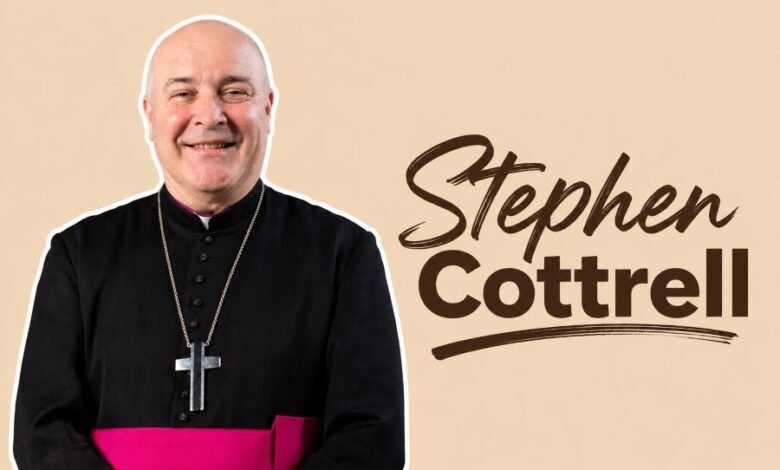
Stephen Cottrell is a British Anglican bishop, Christian author and public speaker. He is best known for serving as the 98th Archbishop of York, one of the highest positions in the Church of England. His work combines religious leadership, public service, preaching, writing and participation in national debates.
His journey did not begin inside a powerful church institution. He discovered Christianity as a teenager, briefly worked in the film industry and later trained for ordained ministry. Over several decades, he progressed from parish priest to bishop, member of the House of Lords and Archbishop of York.
Quick Bio
| Field | Information |
|---|---|
| Full Name | Stephen Geoffrey Cottrell |
| Known As | Stephen Cottrell |
| Date of Birth | 31 August 1958 |
| Age | 67 years old, as of June 2026 |
| Birthplace | Leigh-on-Sea, Essex, England |
| Nationality | British |
| Religion | Anglican Christianity |
| Profession | Anglican bishop, author, preacher and public speaker |
| Famous For | Serving as the 98th Archbishop of York |
| Current Role | Archbishop of York and Primate of England |
| Church | Church of England |
| Education | Polytechnic of Central London and St Stephen’s House, Oxford |
| Higher Qualification | MA studied through St Mellitus College |
| Wife | Rebecca Cottrell |
| Children | Three sons |
| Grandchildren | Two |
| Parliamentary Role | Member of the House of Lords |
| Residence Linked to Office | Bishopthorpe Palace, York |
Why Is Stephen Cottrell Famous?
Stephen Cottrell is famous for being the Archbishop of York, the second most senior bishop in the Church of England. The Archbishop of York leads the church’s Northern Province and works closely with dioceses, bishops, clergy and local Christian communities.
He is also known for writing books about prayer, Christian living, leadership and discipleship. His public role extends beyond church services because he contributes to national debates through the House of Lords and speaks about poverty, social justice, safeguarding and community life.
Early Life and Childhood
Stephen Geoffrey Cottrell was born on 31 August 1958 in Leigh-on-Sea, Essex. He attended Belfairs High School in his hometown. According to his official biography, he did not grow up as a regular churchgoer.
His faith began developing during his teenage years through youth organisations connected with a local church. This experience became an important turning point and gradually influenced the direction of his adult life.
As a young man, he was interested in films, communication and writing. Before entering ministry, he spent a short period working in the film industry. He also worked at St Christopher’s Hospice in South London.
These early experiences exposed him to creativity, communication, illness and human vulnerability. They later helped shape his pastoral approach and his ability to explain religious ideas in simple language.
Education and Religious Training
Cottrell studied at the Polytechnic of Central London, which later became the University of Westminster. His studies were connected with media and communications.
Although this was not theological education, it gave him skills that remained useful throughout his ministry. As a preacher and public speaker, he learned how communication can help people understand difficult ideas.
In 1981, he entered St Stephen’s House, Oxford, to train for Anglican ministry. He was ordained as a deacon in 1984 at the age of 25 and became a priest in 1985.
He later studied for a master’s degree in Christian leadership through St Mellitus College. The degree was awarded through Middlesex University.
Beginning of His Ministry
Stephen Cottrell started his ordained ministry as a curate at Christ Church and St Paul’s in Forest Hill, South London. A curate normally works under the guidance of a more experienced parish priest while gaining practical experience.
This early position allowed him to learn about preaching, pastoral care, worship and community responsibility. It also gave him direct contact with the everyday problems faced by local families.
In 1988, he became priest-in-charge of St Wilfrid’s Church in Parklands, Chichester. At the same time, he worked at Chichester Theological College in pastoral studies and Christian apologetics.
Career Development in the Church
Diocese of Wakefield
In 1993, Cottrell moved to the Diocese of Wakefield. He became Diocesan Missioner and Bishop’s Chaplain for Evangelism.
His work focused on helping churches connect with their communities and communicate the Christian message. This area of ministry remained important throughout his later career.
Springboard Missioner
In 1998, he joined Springboard, an evangelism initiative supported by the Archbishops of Canterbury and York.
He worked as a missioner and adviser, helping churches develop practical ways to reach people who had little or no connection with organised religion.
Peterborough Cathedral
Cottrell became Vice Dean and Canon Pastor of Peterborough Cathedral in 2001. This was a senior cathedral position involving preaching, pastoral leadership and public ministry.
His work at the cathedral increased his experience of leading a large religious institution and prepared him for appointment as a bishop.
Bishop of Reading
In 2004, Stephen Cottrell became Bishop of Reading, an area bishop within the Diocese of Oxford. His consecration was led by former Archbishop of Canterbury Rowan Williams.
Becoming a bishop gave Cottrell greater responsibility for clergy, churches and mission work. He became increasingly recognised for his ability to speak about Christianity in an accessible and modern way.
He remained Bishop of Reading until 2010. During this period, he strengthened his reputation as a preacher, writer and supporter of church growth.
Bishop of Chelmsford
In 2010, he became Bishop of Chelmsford. The Diocese of Chelmsford covers much of Essex and parts of East London, including communities with different cultural, economic and religious backgrounds.
Cottrell led the diocese for almost ten years. His responsibilities included supporting parish churches, managing clergy, encouraging Christian mission and representing the church in public discussions.
During this period, he also became more involved in the national leadership of the Church of England.
Member of the House of Lords
Stephen Cottrell entered the House of Lords as a Lord Spiritual in 2014. Lords Spiritual are senior Church of England bishops who take part in parliamentary debates.
His position places him within the wider relationship between faith, politics and national public life. Similar connections between religious identity and parliamentary service can be seen in the career of Sayeeda Warsi.
Cottrell has contributed to discussions involving social justice, immigration, poverty, defence, community relations and the responsibilities of public institutions.
His UK Parliament profile confirms that he remains a current member of the House of Lords. His parliamentary service also places him among public thinkers and peers such as Peter Hennessy, who have used the Lords as a platform for national debate.
Becoming Archbishop of York
Stephen Cottrell’s selection as the next Archbishop of York was announced in December 2019. He succeeded John Sentamu, who retired from the role in 2020.
Cottrell officially became the 98th Archbishop of York on 9 July 2020 after the Confirmation of Election. His enthronement service took place at York Minster on 18 October 2020.
The process occurred during the COVID-19 pandemic, which meant that parts of his appointment and early ministry were conducted under unusual restrictions.
As Archbishop of York, he became Primate of England and the most senior Church of England bishop in northern England. He also became one of the main national representatives of the church.
Role and Responsibilities as Archbishop
The Archbishop of York provides leadership across the Northern Province of the Church of England. This includes supporting bishops, visiting dioceses, leading services and representing the church at important national events.
Cottrell also serves as a president of the General Synod and contributes to the Archbishops’ Council. These bodies help shape the Church of England’s national policy and mission.
Following the departure of Justin Welby as Archbishop of Canterbury, Cottrell carried out many additional national duties during the vacancy from January 2025 until January 2026.
He continued as Archbishop of York after that temporary period ended.
Books and Published Work
Stephen Cottrell has written more than 20 books. His publications mainly discuss prayer, spirituality, Christian mission, discipleship and the life of Jesus.
Some of his recognised books include:
- The Lord’s Prayer: A Beginner’s Guide
- Prayer: Where to Start and How to Keep Going
- Do Nothing to Change Your Life
- Walking Backwards to Christmas
- Hit the Ground Kneeling
- The Things He Did
- The Things He Said
- The Things He Carried
- On Priesthood
- Striking Out
- How to Pray
- How to Live
He has also written children’s books and contributed to the Church of England’s Pilgrim teaching course.
His writing style usually uses stories, personal reflection and simple explanations. This makes his work accessible to readers who may not have studied theology.
Leadership Style and Public Image
Cottrell presents himself as a Christian follower before describing himself through official titles. His public message is centred on Jesus, prayer, service and changing communities through faith.
His leadership style often focuses on communication, listening and practical mission. Like former Cabinet Secretary Gus O’Donnell, he has worked inside a large national institution where leadership requires patience, organisation and public accountability.
Supporters view him as a skilled preacher who can make Christianity understandable to modern audiences. Critics have sometimes questioned his decisions, particularly during periods of institutional controversy.
His public image therefore includes both respect for his communication skills and serious debate about leadership responsibility.
Public Statements and National Debates
Cottrell frequently speaks on subjects that extend beyond church worship. These include poverty, migration, social division, assisted dying, safeguarding and the role of Christianity in public life.
His speeches often receive media attention because the Archbishop of York is expected to offer a moral perspective on national issues. The relationship between politics, journalism and public accountability is also explored through writers such as Isabel Hardman.
He has opposed the legalisation of assisted dying and has expressed concern about the possible effect on vulnerable people.
He has also participated in Church of England discussions about relationships and sexuality. He has called for disagreement to be handled with patience and respect rather than treating church debates as simple contests between winners and losers.
Wife, Children and Family Life
Stephen Cottrell is married to Rebecca Cottrell. She is a ceramic artist and trained potter who has continued her creative work while moving with the family during his church career.
The couple have three adult sons and two grandchildren. Their sons have not been turned into public personalities, and detailed information about their private lives is not widely published.
Cottrell and his family are associated with Bishopthorpe Palace, the official residence of the Archbishop of York.
Interests and Hobbies
Cottrell enjoys poetry, music, art, walking and football. His interest in creative subjects reflects his earlier education and work in media.
He has completed the Camino de Santiago pilgrimage route twice. His walking experiences inspired poetry and stories included in his book Striking Out.
He supports Tottenham Hotspur and also developed an affection for Huddersfield Town while working in West Yorkshire.
Safeguarding Controversy
Stephen Cottrell faced strong criticism over his handling of the case of priest David Tudor while serving as Bishop of Chelmsford.
Questions were raised about why Tudor remained in positions of responsibility despite a history of safeguarding concerns. Cottrell said that Tudor had returned to ministry before he became bishop and that he did not have legal grounds to remove him until new allegations emerged in 2019.
The controversy led to calls for Cottrell to resign and created serious debate about accountability within the Church of England.
In January 2026, the Church-appointed President of Tribunals concluded that mistakes had been made but that the available evidence did not meet the legal threshold for clergy misconduct by Cottrell.
Cottrell expressed regret over decisions he wished had been handled differently. He also apologised for the pain experienced by victims and survivors.
The formal result cleared him of misconduct, but the case remains an important part of public discussion about his leadership and the wider safeguarding culture of the Church of England.
Major Achievements
Stephen Cottrell’s major achievements include:
- Becoming the 98th Archbishop of York
- Serving as Bishop of Reading
- Leading the Diocese of Chelmsford for almost ten years
- Becoming a member of the House of Lords
- Writing more than 20 books
- Contributing to the Church of England’s Pilgrim course
- Serving as President of the College of Preachers
- Participating in major national religious events
- Promoting pilgrimage, prayer and Christian discipleship
- Temporarily carrying additional national church responsibilities during the vacancy at Canterbury
Current Status
As of June 2026, Stephen Cottrell continues to serve as Archbishop of York and Primate of England.
He remains active in preaching, church governance, parliamentary work, diocesan visits, ordination services and public discussions.
His current work focuses on Christian mission, church renewal, leadership, safeguarding reform and strengthening the Church of England’s connection with local communities.
Interesting Facts About Stephen Cottrell
- He did not grow up as a regular churchgoer.
- He discovered Christianity through church youth organisations.
- He briefly worked in the film industry.
- He worked at St Christopher’s Hospice before training for ministry.
- He studied media and communications before theology.
- He has walked the Camino de Santiago twice.
- His wife is a professional ceramic artist.
- He supports Tottenham Hotspur and Huddersfield Town.
- He has written books for both adults and children.
- He became Archbishop of York during the COVID-19 pandemic.
Conclusion
Stephen Cottrell’s biography shows a journey from a teenager discovering Christianity to one of the most senior religious positions in England. His career has included parish ministry, missionary work, cathedral leadership, episcopal service, writing and parliamentary responsibility.
His communication skills and focus on mission have earned him respect, while safeguarding controversies have brought serious criticism and questions about institutional accountability. His public story therefore includes achievement, faith, pressure, mistakes and continuing responsibility.
As Archbishop of York, he remains an important figure in British religious and public life. His long-term legacy will depend not only on his sermons and books but also on how he responds to the difficult challenges facing the modern Church of England.
Frequently Asked Questions
Who is Stephen Cottrell?
He is a British Anglican bishop, author and the 98th Archbishop of York.
What is Stephen Cottrell’s full name?
His full name is Stephen Geoffrey Cottrell.
How old is Stephen Cottrell?
He is 67 years old as of June 2026.
Where was Stephen Cottrell born?
He was born in Leigh-on-Sea, Essex, England.
Is Stephen Cottrell married?
Yes, he is married to ceramic artist Rebecca Cottrell.
Does Stephen Cottrell have children?
Yes, he has three adult sons and two grandchildren.
What is Stephen Cottrell famous for?
He is famous for serving as Archbishop of York and being one of the Church of England’s most senior bishops.
Is Stephen Cottrell a member of the House of Lords?
Yes, he serves in the House of Lords as a Lord Spiritual.
What books has Stephen Cottrell written?
He has written books about prayer, Christian living, discipleship, leadership and pilgrimage.
Is Stephen Cottrell still Archbishop of York?
Yes, he remains Archbishop of York as of June 2026.