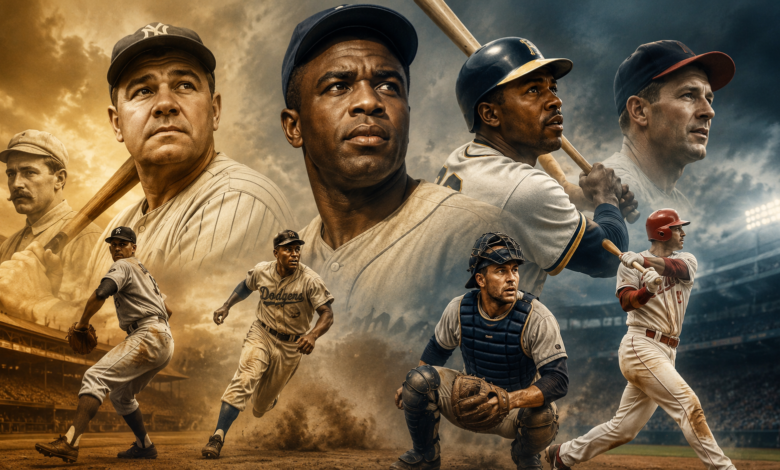
Baseball has long been known as America’s pastime, but its influence extends far beyond the United States. Since the nineteenth century, the sport has produced unforgettable moments and larger-than-life figures whose accomplishments have inspired generations of players and fans. Baseball legends are remembered not only for statistics and championships but also for the ways they changed the game and left lasting marks on sports culture. Their stories reflect determination, skill, and the evolution of baseball itself.
Every era of baseball has introduced players who captured the imagination of fans. Some became symbols of excellence through extraordinary talent, while others transformed the sport through courage and perseverance. Their names continue to appear in conversations about greatness, and their legacies remain woven into the history of the game. Looking back at some of baseball’s most influential figures offers insight into how the sport grew into one of the world’s most beloved competitions.
Babe Ruth And The Birth Of Power Hitting
Few athletes in history have reached the level of fame achieved by Babe Ruth. Born in 1895, Ruth began his professional career as a pitcher with the Boston Red Sox before being traded to the New York Yankees. While he excelled on the mound, it was his power at the plate that transformed baseball and changed the way the game was played.
During an era when home runs were relatively uncommon, Ruth demonstrated that offensive power could dominate the sport. His 60-home-run season in 1927 shattered expectations and helped usher in what became known as the live-ball era. Fans flocked to stadiums to watch him play, and his larger-than-life personality made him one of the first true sports celebrities.
Beyond statistics, Ruth brought excitement and popularity to baseball at a time when professional sports were becoming a central part of American culture. His influence remains so profound that many still consider him the most recognizable figure in baseball history.
Lou Gehrig And The Meaning Of Perseverance
Another New York Yankees legend, Lou Gehrig, became famous for both his remarkable consistency and his character. Nicknamed the “Iron Horse,” Gehrig played 2,130 consecutive games, a record that stood for decades. His durability and reliability made him one of the game’s most respected players.
Gehrig was an exceptional hitter and an important part of several championship teams. Yet his story became even more meaningful when he was diagnosed with amyotrophic lateral sclerosis, a disease that eventually became widely known as Lou Gehrig’s disease.
His emotional farewell speech at Yankee Stadium in 1939, where he described himself as “the luckiest man on the face of the earth,” remains one of the most memorable moments in sports history. Gehrig’s courage and humility continue to inspire athletes and fans alike.
Jackie Robinson Changed More Than Baseball
Baseball history cannot be discussed without recognizing the extraordinary impact of Jackie Robinson. In 1947, Robinson became the first African American player in Major League Baseball’s modern era when he joined the Brooklyn Dodgers. His debut represented a pivotal moment not only in sports but also in American society.
Robinson faced intense discrimination and pressure throughout his career. Despite these challenges, he excelled on the field and earned Rookie of the Year honors in his first season. His speed, intelligence, and competitive spirit helped redefine the game.
More importantly, Robinson’s success helped break racial barriers and opened opportunities for countless athletes who followed. His number 42 has been retired throughout Major League Baseball, ensuring that his legacy remains visible to every new generation.
Willie Mays And Complete Greatness
Willie Mays is often regarded as one of the most complete players ever to step onto a baseball field. Combining power, speed, defensive excellence, and remarkable instincts, Mays excelled in every aspect of the game.
His famous over-the-shoulder catch during the 1954 World Series remains one of baseball’s iconic images. Throughout his career with the New York and San Francisco Giants, Mays accumulated over 660 home runs while displaying extraordinary athleticism.
Fans admired his enthusiasm and joy for the game. His style of play influenced generations of outfielders and established standards that few players have matched. Mays demonstrated that greatness in baseball extends beyond statistics and includes versatility, passion, and leadership.
Hank Aaron And A Historic Achievement
The career of Hank Aaron represents excellence and perseverance. Aaron spent most of his career with the Milwaukee and Atlanta Braves and became one of the most consistent hitters in baseball history.
In 1974, Aaron surpassed Babe Ruth’s career home run record by hitting his 715th home run. The achievement came despite enormous pressure and racial hostility, making his accomplishment even more remarkable. Aaron eventually finished with 755 home runs, a mark that stood for decades.
His quiet professionalism and dedication earned widespread respect. Beyond his records, Aaron became a role model whose contributions to baseball and society continue to be celebrated.
The Evolution Of Baseball Bats
The development of baseball bats has played an important role in shaping the sport. Early players often used handmade wooden bats with varying sizes and shapes. Over time, standards emerged that improved consistency and performance. Today, professional players still rely primarily on wooden baseball bats, while amateur leagues frequently use aluminum or composite models designed for durability and lighter weight.
Changes in baseball bats have influenced hitting styles and offensive production throughout history. Different wood types, including ash, maple, and birch, provide unique characteristics that players select according to personal preference. Advances in equipment technology have contributed to the evolution of the game while preserving many of its traditions.
Though players capture headlines, the equipment they use reflects the sport’s long history and ongoing development.
Modern Legends Continue The Tradition
Baseball’s story did not end with its early stars. Players such as Ken Griffey Jr., Derek Jeter, and Albert Pujols have inspired modern generations with remarkable performances and memorable careers. Their accomplishments continue the tradition established by earlier legends.
Technology, analytics, and global scouting have changed the sport significantly, but the qualities that define greatness remain remarkably consistent. Dedication, skill, leadership, and passion continue to separate extraordinary players from their peers.
Today’s stars build upon the foundation established by the legends who came before them. Their achievements ensure that baseball remains vibrant and relevant in a rapidly changing sports landscape.
Legacies That Endure
Baseball legends are remembered because they represent more than wins and records. They embody perseverance, courage, and excellence. Players like Babe Ruth, Lou Gehrig, Jackie Robinson, Willie Mays, and Hank Aaron shaped the sport through both their performances and their character. Their stories remind fans that greatness is measured not only by statistics but also by the influence individuals have on others.
As baseball continues evolving, new stars will emerge, and new records will be set. Yet the legends of the past remain central to the game’s identity. Their accomplishments connect generations of fans and players, preserving traditions that make baseball unique.
The history of baseball is ultimately a story about people whose talents and determination transformed a game into a cultural institution. Their legacies endure because they helped define what baseball represents and why it continues to capture the hearts of millions around the world.