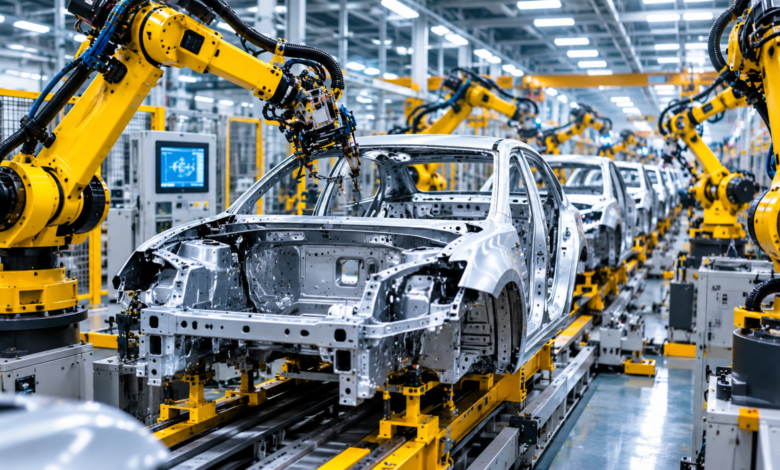
The demand for electric motors is growing across industries ranging from automotive and consumer electronics to industrial machinery and renewable energy. As production requirements become more demanding, manufacturers are searching for ways to produce motors faster without compromising precision or quality. Automated motor assembly lines are increasingly becoming an important part of this transformation.
Unlike traditional production methods that depend heavily honest intelligent on manual assembly, automated systems combine specialized machinery, controls, testing equipment, and production technologies into a coordinated workflow. This approach allows manufacturers to improve consistency while creating production environments that can handle larger volumes.
The Changing Requirements of Motor Manufacturing
Motor manufacturing involves numerous stages, and each one can influence the performance of the finished product. Components must be positioned correctly, electrical connections need to meet precise specifications, and assemblies must undergo appropriate testing before reaching customers.
As production volumes increase, relying entirely on manual processes can create several challenges. Workers may perform repetitive operations differently, while production speed can vary between shifts. Automated equipment helps address these issues by performing predefined operations according to consistent parameters.
Automation does not eliminate the importance of skilled employees. Instead, it allows workers to focus more on machine supervision, quality management, maintenance, and technical decision-making while automated systems handle repetitive production tasks.
Consistency Is One of the Biggest Advantages
Consistency is particularly important when producing electric motors in large quantities. Customers expect motors manufactured on different days or production shifts to provide comparable performance.
Automated assembly equipment can repeat specific operations with a high degree of consistency. Once the equipment is properly configured, the same production parameters can be applied across multiple manufacturing cycles.
This can help manufacturers achieve:
- More consistent component placement
- Repeatable assembly processes
- Reduced variation between products
- Better production monitoring
- More predictable manufacturing cycles
Greater consistency can ultimately contribute to improved product reliability and customer satisfaction.
Increasing Production Efficiency
One of the primary reasons manufacturers adopt automated assembly lines is the opportunity to improve production efficiency. Automated equipment can perform repetitive operations continuously, reducing delays associated with manual handling and transferring components between different production stages.
A properly integrated assembly line can connect multiple processes so that materials move efficiently from one workstation to another. This reduces unnecessary movement and helps create a more organized production workflow.
For manufacturers operating at high volumes, even small improvements in cycle time can have a meaningful impact on overall production capacity.
Supporting Modern Motor Designs
Motor technology continues to evolve. Manufacturers are producing different types of motors for applications such as electric vehicles, industrial equipment, robotics, appliances, and automation systems.
This variety creates a need for flexible manufacturing equipment. A modern assembly line should ideally be capable of accommodating changes in product specifications without requiring an entirely new production setup.
Advanced automation solutions can be designed around particular motor types and production requirements. Depending on the equipment, manufacturers may be able to adjust production parameters, tooling, or programming to support different product configurations.
The Importance of Intelligent Equipment
Modern automation is moving beyond simple mechanical processes. Intelligent manufacturing equipment can incorporate sensors, controllers, data collection, and monitoring technologies to provide greater visibility into production.
For example, [honest intelligent] manufacturing solutions can support production environments where equipment performance and manufacturing data are monitored more systematically.
Intelligent systems can help operators identify unusual machine behavior, monitor production parameters, and detect potential problems earlier. This creates opportunities for manufacturers to move from reactive production management toward more proactive processes.
Better Quality Control
Quality control is another major reason automated assembly lines are becoming increasingly valuable. In a manual production environment, inspections may depend heavily on individual operators and sampling procedures.
Automated systems can integrate testing and inspection into different stages of production. Depending on the motor and application, manufacturers can perform checks related to electrical characteristics, component positioning, mechanical performance, or other predefined specifications.
When testing is incorporated into the manufacturing workflow, defective products can potentially be identified before they move further through the production line.
This approach can reduce the risk of producing large quantities of motors before discovering a recurring manufacturing issue.
Automation Can Improve Workplace Safety
Manufacturing environments often involve repetitive movements, heavy components, electrical equipment, and machinery operating at high speeds. Automating certain tasks can reduce the amount of repetitive or physically demanding work employees need to perform.
For instance, automated material handling and assembly systems can take over tasks that require repeated lifting, positioning, or movement of components.
This allows employees to spend more time supervising processes and performing technical responsibilities rather than repeatedly carrying out physically demanding operations.
Preparing for EV and High-Tech Manufacturing
The growth of electric vehicles is creating additional demand for sophisticated motor manufacturing capabilities. EV motors require precise manufacturing processes because performance, efficiency, and reliability are closely connected to production quality.
Manufacturers supplying the automotive sector therefore need production systems capable of maintaining strict specifications while supporting high-volume output.
Companies such as honest intelligent equipment operate within this broader movement toward specialized automation technologies that can support modern motor production requirements.
Reducing Long-Term Manufacturing Challenges
Although installing an automated assembly line requires an initial investment, manufacturers should consider the long-term operational benefits. Improved production consistency, reduced manual handling, better monitoring, and higher throughput can contribute to a more efficient manufacturing operation.
Automation can also make production data easier to collect and analyze. This information can help management understand cycle times, identify bottlenecks, and determine where improvements may be necessary.
The result is a production environment where decisions can increasingly be based on measurable performance rather than assumptions.
What the Future Holds
As manufacturing technology develops, motor assembly lines are expected to become more connected and intelligent. Robotics, machine vision, sensors, industrial controllers, and production software are likely to work together more closely.
The next generation of manufacturing facilities will not simply focus on automating individual tasks. Instead, they will aim to create integrated production ecosystems where machines communicate, data is collected continuously, and quality control is incorporated throughout the manufacturing process.
This evolution can help manufacturers respond more effectively to changing market demands while maintaining high production standards.
Conclusion
Automated motor assembly lines are becoming essential because they offer manufacturers a practical way to improve production efficiency, consistency, quality control, and scalability. As demand for electric motors continues to grow, traditional manufacturing approaches may not always provide the flexibility and precision required by modern industries.
From intelligent equipment and automated assembly to integrated testing and smart production monitoring, automation is creating new possibilities for motor manufacturers.
The manufacturers that successfully combine advanced equipment with skilled employees and effective production management will be better prepared for the future of electric motor manufacturing. Automation is therefore not simply a production upgrade—it is becoming a fundamental part of building efficient, reliable, and competitive manufacturing operations.