Securing the Future of Mobility: Electrical Protection Strategies for Commercial EV Charging Stations

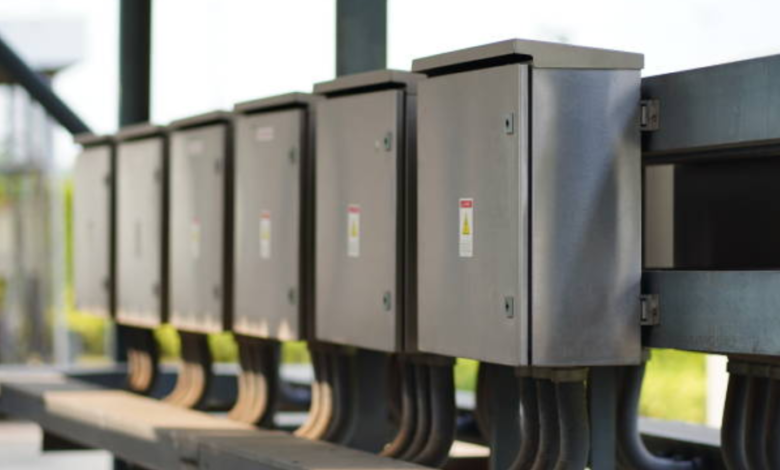
The Hidden Threat to EV Infrastructure: Transient Overvoltages
Commercial Electric Vehicle Supply Equipment (EVSE) represents a significant capital investment, housing some of the most sophisticated power electronics deployed today. Fundamentally, these units are high-power computers constantly exposed to the harshest outdoor elements.
Despite their rugged enclosures, commercial chargers share a severe, invisible vulnerability: transient overvoltages. Direct lightning strikes to nearby infrastructure, coupled with continuous grid fluctuations, inject massive energy spikes directly into the charging network.
These brief but highly destructive voltage surges effortlessly bypass standard circuit breakers. Once inside, they can instantly degrade or completely destroy the sensitive semiconductor microchips that regulate power delivery and vehicle communication.
Why Surge Protection is Non-Negotiable for EVSE
For facility managers and infrastructure developers, dealing with the aftermath of an electrical surge is a reactive and highly expensive mistake. Surge protection must be engineered into the core blueprint of any new charging hub from day one.
Modern commercial EV supply equipment consists of highly sensitive power electronics that are constantly exposed to the elements and grid anomalies. A single transient overvoltage event can bypass standard breakers, destroying vital internal components and leading to massive replacement costs.
Collaborating with a specialized surge protective device manufacturer to integrate industrial-grade SPDs at the design phase is the most reliable method to isolate these systems from destructive grid surges. Implementing protective solutions from an established industry player like LSP ensures uninterrupted network availability.
By proactively deploying these solutions, operators can safeguard the extended lifecycles of their high-value DC Fast Chargers, preventing catastrophic hardware failures before they occur.
Understanding the Vulnerabilities in Charging Networks
AC vs. DC Side Risks
To properly defend a charging network, engineers must address the distinct physical threats originating from both the grid (AC) and the vehicle (DC) sides.
On the alternating current (AC) side, the primary threats are utility grid switching transients and induced atmospheric surges. Heavy industrial loads turning on and off nearby can send continuous, lower-level overvoltages into the charger’s main power supply.
On the direct current (DC) side, the risk profile changes. High-voltage switching during the battery charging process, or potential fault feedback pulses originating from the vehicle itself, can introduce dangerous electrical noise back into the charger’s conversion modules.
The Ripple Effect of Equipment Failure
When a transient overvoltage compromises a single charging module, the damage rarely stays localized. Many commercial hubs operate on a shared electrical bus or dynamic load-balancing system.
The sudden burnout of an inverter or control board creates instant load imbalances across the site. This sudden shift can trigger safety shutdowns in adjacent units, cascading a localized hardware failure into a total site blackout.
Key Components of a Comprehensive Protection Strategy
Building a resilient defense architecture requires a cascaded approach. Engineers must layer protection from the facility’s main power entrance down to the individual charging pedestals.
A robust protection strategy should incorporate the following deployments:
- Main Distribution Board Defense: Installing high-capacity Type 1 and Type 2 SPDs at the site’s main service entrance to intercept and divert catastrophic lightning currents away from the entire facility.
- AC Input Protection (Inside EVSE): Deploying compact Type 2 SPDs directly at the AC input terminals of the charger to clamp residual grid surges and internal switching transients.
- DC Output Protection: Utilizing dedicated DC-rated Type 2 SPDs on the output side to shield the charger’s power electronics from vehicle-induced feedback and DC switching arcs.
- Data and Communication Lines: Applying specialized surge protectors for Ethernet and RS-485 interfaces to ensure the critical billing and load-management networks remain online during storms.
Calculating the Cost of Downtime vs. Prevention ROI
When evaluating the budget for electrical protection, developers must calculate the true cost of unmitigated risk rather than just the procurement price of the protective components.
If a severe surge destroys the main control board of a high-capacity DC Fast Charger, the direct replacement costs can reach thousands of dollars per unit. However, the hardware cost is just the beginning.
Operators must factor in the extensive revenue lost during the weeks it takes to procure replacement parts and schedule specialized technicians. Furthermore, frequent network outages lead to immediate customer churn in a highly competitive mobility market.
Compared to these compounding losses, the upfront investment in industrial-grade SPDs is negligible, offering an exceptionally high Return on Investment (ROI) over the charger’s operational lifespan.
Adhering to Global EV Safety Standards
Mitigating electrical risks extends beyond operational reliability; it demands strict adherence to rigorous international safety guidelines. Electrical engineers must follow specific frameworks, primarily IEC 60364-7-722, which outlines the mandatory requirements for EV power supply installations.
Ensuring that every commercial charging station is equipped with precisely rated overvoltage protection guarantees compliance with local electrical codes.
Furthermore, adherence to these engineering standards maintains the validity of facility insurance policies, which often require proof of standard-compliant surge protection to underwrite infrastructure risks.
This standardized engineering approach protects both the millions invested in the infrastructure and the end-users relying on the network for daily mobility.
Conclusion
Securing commercial EV charging infrastructure against electrical anomalies is a critical prerequisite for long-term operational success. The deployment of cascaded surge protection systems effectively eliminates the threat of transient overvoltages. Infrastructure developers and facility managers should actively reassess their electrical schematics in their next project audit to ensure total compliance and system resilience.