Stephanie Flanders: A Powerful Voice in Modern Economics and Media
The British Journalist Who Transformed How the World Understands Economics

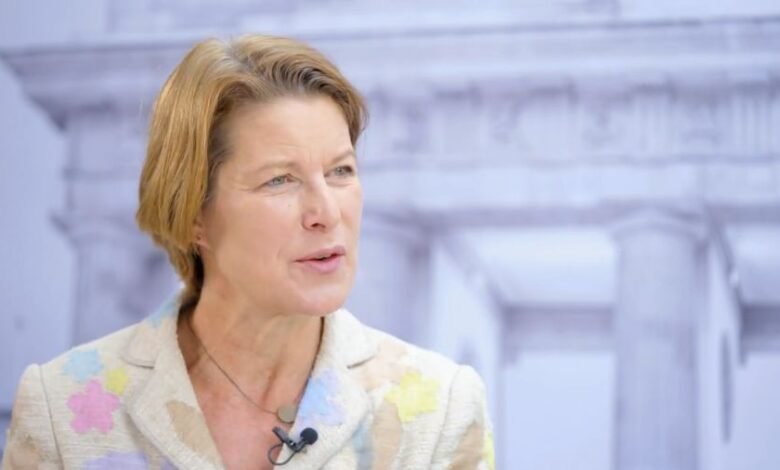
Table of Contents
ToggleIntroduction
Stephanie Flanders is widely recognised as one of the most authoritative and respected figures in economic journalism. Known as a British journalist with deep expertise in economics and public policy, she has spent decades shaping how complex financial issues are explained to the public. Her career reflects a rare balance between intellectual rigor and clarity, allowing audiences to engage with topics that often feel distant or technical.
While Stephanie Flanders is praised for her calm authority and analytical depth, her work has not been without scrutiny. Some critics argue that economic journalism can oversimplify policy debates, yet supporters note that her ability to translate complexity into understanding is precisely her strength. This balance of praise and criticism has helped define her professional identity and long-term relevance.
Quick Bio
| Attribute | Details |
|---|---|
| Full Name | Stephanie Hope Flanders |
| Date of Birth | 5 August 1968 |
| Birthplace | England, United Kingdom |
| Nationality | British |
| Profession | Economist, British journalist, editor, broadcaster |
| Education | Oxford University (PPE), Harvard Kennedy School |
| Partner | John Arlidge |
| Children | Two |
| Known For | Economic journalism, broadcasting, editorial leadership |
Early Life and Family Background
Stephanie Flanders was born in England into a family deeply connected to arts, journalism, and public discourse. From an early age, she was surrounded by conversations about politics, culture, and global affairs, which helped shape her intellectual curiosity. Her father, Michael Flanders, was a celebrated performer and lyricist, while her mother, Claudia Cockburn, worked as a disability campaigner and United Nations translator.
Her childhood was marked by both inspiration and loss. Her father died when she was young, an experience that influenced her independence and resilience. Growing up in such an intellectually rich environment encouraged her to question assumptions and develop a strong analytical mindset that later defined her career as a British journalist.
Education and Academic Foundations
Stephanie Flanders received her secondary education at St Paul’s Girls’ School in London, an institution known for academic excellence. She later attended Balliol College at the University of Oxford, where she studied Philosophy, Politics, and Economics. Achieving first-class honours, she demonstrated early mastery of economic thinking and public policy analysis.
Her academic journey continued at the Harvard Kennedy School of Government, where she earned a Master of Public Administration as a Kennedy Scholar. This international exposure strengthened her understanding of global economics and governance, providing a strong foundation for her later roles in policy, journalism, and media leadership.
Start of Career in Economics
Before becoming widely known as a British journalist, Stephanie Flanders began her professional life as an economist. She worked at the Institute for Fiscal Studies and London Business School, focusing on economic research and policy analysis. These early roles gave her a strong grounding in data, evidence, and economic theory.
This phase of her career was crucial, as it allowed her to approach journalism with the mindset of an economist rather than a commentator. The positive outcome of this background was credibility, although the challenge was translating technical research into accessible language. Over time, she successfully bridged that gap.
Transition into Journalism
Stephanie Flanders moved into journalism through the Financial Times, where she became an economics columnist and leader writer. This transition marked a turning point, allowing her to combine analytical skills with storytelling. Her writing focused on macroeconomic policy, government spending, and financial markets.
She later worked as a reporter for The New York Times and served as a senior adviser and speechwriter to the U.S. Treasury Secretary. These experiences broadened her perspective and reinforced her reputation as a serious, globally minded British journalist with real policy experience.
Broadcast Career and Public Recognition
Stephanie Flanders became widely known during her time at the BBC. She joined Newsnight as economics editor and later became the BBC’s Economics Editor. During this period, she reported on major events such as the global financial crisis and European debt challenges.
Her broadcasting style was calm and authoritative, which audiences found reassuring during economic uncertainty. While some critics felt that broadcast economics could never capture full complexity, her supporters argued that her clarity helped millions better understand the real-world impact of economic decisions.
Leadership in Finance and Global Media
After leaving the BBC, Stephanie Flanders moved into the financial sector as Chief Market Strategist for UK and Europe at J.P. Morgan Asset Management. This role allowed her to apply economic insight directly to market analysis, advising institutional audiences.
She later joined Bloomberg News, becoming Senior Executive Editor for Economics and Head of Bloomberg Economics. In this leadership role, she oversees global economic coverage and analysis. The positive impact of this position is her influence on global economic narratives, though it also places her work under intense professional scrutiny.
Professional Identity as a British Journalist
Stephanie Flanders is often described as a British journalist who successfully bridges economics and public communication. Her strength lies in explaining how abstract economic policies affect everyday lives. She avoids sensationalism, focusing instead on evidence-based reporting.
At the same time, the nature of economic journalism means that not all audiences agree with interpretations or emphasis. This tension is natural in public discourse and reflects her role as a trusted, though sometimes challenged, voice in modern media.
Influence, Reputation, and Legacy
Stephanie Flanders has built a lasting legacy as one of the most influential economic journalists of her generation. Her work has shaped public understanding of economics in the UK and beyond, particularly during times of crisis.
Her influence is largely positive, rooted in credibility and clarity. However, like all prominent figures in public debate, she faces criticism from those who believe economic media should take stronger or different stances. This balance of trust and challenge defines her professional legacy.
Conclusion
Stephanie Flanders stands as a powerful example of how expertise and communication can combine to create lasting impact. As a British journalist with deep economic knowledge, she has helped audiences navigate uncertainty and complexity with confidence. Her career reflects resilience, intellectual honesty, and a commitment to public understanding.
While no journalist is beyond criticism, her contribution to economic discourse remains significant. Stephanie Flanders continues to shape how economics is discussed, understood, and debated across global media.
Frequently Asked Questions (FAQ)
Who is Stephanie Flanders?
Stephanie Flanders is a British journalist, economist, editor, and broadcaster known for her work in economic journalism and global media leadership.
What is Stephanie Flanders known for?
She is known for explaining complex economic issues clearly, particularly during her time as BBC Economics Editor and later as Head of Bloomberg Economics.
What is Stephanie Flanders’ educational background?
She studied Philosophy, Politics, and Economics at Oxford University and earned a Master of Public Administration from Harvard Kennedy School.
Is Stephanie Flanders still active professionally?
Yes, she continues to work in global economic media leadership, contributing analysis and editorial oversight.
Why is Stephanie Flanders influential?
Her influence comes from combining academic economics, policy experience, and journalism to make economic issues accessible and relevant to the public.