Harvey Blair Rising Footballer Facing Tough Career Challenges
A determined Portsmouth winger building his professional path

Introduction
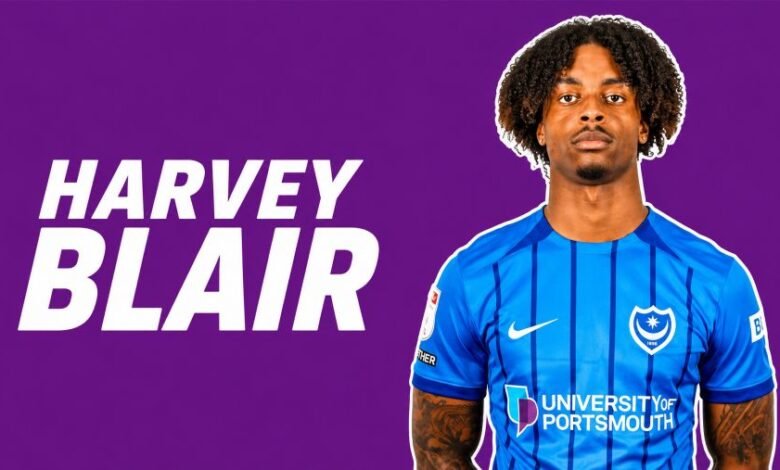
Harvey Blair is an English footballer known for his development through Liverpool’s academy and his move to Portsmouth FC. He is still in the early stage of his senior career, but his journey already includes academy growth, a Liverpool senior debut, injury setbacks, and a fresh opportunity in Championship football.
As a young attacking player, he represents both the promise and pressure of modern football. His story is positive because he reached senior football after years of academy development, but it also includes difficult moments because injuries have interrupted his progress. Harvey Blair remains a player with room to grow, and his Portsmouth chapter is important for shaping his long-term career.
Quick Bio
| Field | Details |
|---|---|
| Real Name | Harvey Antonio Blair |
| Popular Name | Harvey Blair |
| Date of Birth | 14 September 2003 |
| Age | 22 years old |
| Birthplace | Huddersfield, England |
| Nationality | English |
| Profession | Professional footballer |
| Position | Right winger, forward |
| Current Club | Portsmouth FC |
| Shirt Number | 29 |
| Height | 1.78 m |
| Strong Foot | Right |
| Former Club | Liverpool |
| Current Contract | Portsmouth until 30 June 2027 |
Early Life
Harvey Antonio Blair was born on 14 September 2003 in Huddersfield, England. His early life became closely connected with football, and he entered the academy system at a young age. Huddersfield has produced several talented footballers, and Blair’s early development showed enough promise to take him into elite youth football.
His football education started before he became widely known to fans. Instead of becoming famous through media attention, he built his reputation through academy performances, training standards, and technical development. This background helped him prepare for professional football and gave him the foundation needed to compete at a higher level.
Education and Football Development
Public details about Harvey Blair’s formal school education are limited, so his known education is mainly connected to football development. His most important learning came through structured academy training, where young players are taught technique, tactical awareness, discipline, fitness, and professionalism.
He spent part of his youth journey in elite football environments and later developed through Liverpool’s academy. That type of academy education is demanding because players must improve every season while competing against other talented prospects. For Blair, this system helped shape him into a quick and flexible attacking footballer.
Family Background
Harvey Blair has a brother named Marley Blair, who is also connected with football. This shows that football has been part of his family environment, although detailed family information is not widely available in verified public sources.
Reliable public records do not confirm detailed information about his parents, grandparents, spouse, or children. For that reason, this article does not add unverified claims. A clean biography should focus only on available and reliable information, especially when discussing personal life.
Nationality and Background
Harvey Blair is English by nationality and was born in Huddersfield, England. His football identity has mainly been built in English football through Liverpool and Portsmouth.
He is also listed on some football profiles with England and Jamaica links, but his professional club career has been in England. His nationality is important because he has developed inside the English academy structure, one of the most competitive football development systems in Europe.
Physical Profile
Harvey Blair stands at around 1.78 metres tall. His height gives him a balanced physical profile for a winger or forward, allowing him to play with mobility while still having enough size to compete in physical situations.
He is right-footed and usually plays in attacking roles. His profile suits wide forward positions, where movement, pace, decision-making, and quick ball control are important. As a modern footballer, he must also contribute without the ball through pressing and defensive work.
Playing Position
Harvey Blair is mainly known as a right winger, but he can also play as a forward. His attacking flexibility is useful because it allows coaches to use him in different areas of the front line.
A winger today is not only expected to cross the ball. The role requires pressing, cutting inside, creating chances, supporting full-backs, and making runs into goal-scoring positions. Blair’s development at Liverpool helped him understand these modern attacking responsibilities.
Start of Career
Harvey Blair’s football career started in academy football before he became a senior professional. His early rise came through youth systems where performance, attitude, and consistency are carefully judged.
He later joined Liverpool’s academy, where his journey became more visible. Liverpool confirmed that his journey with the club started at under-12 level and that he progressed through the ranks before making his senior debut in October 2021.
Liverpool Academy Career
Liverpool’s academy played a major role in Harvey Blair’s development. The academy is known for producing talented players and preparing them for the physical and mental demands of professional football.
Blair progressed through Liverpool’s youth levels and earned attention as an attacking player. Reaching the senior squad from academy football is never easy because competition is intense, especially at a club with Liverpool’s standards. His rise showed that he had strong potential and the ability to handle elite training environments.
Senior Liverpool Debut
One of the biggest moments in Harvey Blair’s early career came in October 2021 when he made his senior Liverpool debut against Preston North End in the Carabao Cup. This was a major achievement because it marked his transition from academy prospect to senior-level footballer.
A senior debut for Liverpool is a powerful milestone for any young player. Even though Blair did not become a regular first-team player at the club, that appearance remains an important part of his career story and proves that he reached a high level during his academy years.
Move to Portsmouth
Harvey Blair completed a permanent transfer from Liverpool to Portsmouth on 23 August 2024. Liverpool announced the move and described it as a new chapter in his career after his progress through the Reds’ academy.
The move to Portsmouth was important because young footballers need regular senior opportunities to continue improving. At Liverpool, competition for attacking positions is extremely strong. Portsmouth offered Blair a platform to gain more senior experience and test himself in a demanding league environment.
Portsmouth Career
At Portsmouth, Harvey Blair wears shirt number 29 and plays as an attacking footballer. His role is to contribute in forward areas, create pressure on defenders, and help the team with energy and attacking movement.
Portsmouth represents a key stage of his career. This period can help him move from promising academy graduate to established senior footballer. To do that, he needs consistent fitness, regular match minutes, and stronger attacking output over time.
First Senior Goal
Harvey Blair scored his first senior goal for Portsmouth in a 1–1 draw against Sheffield Wednesday on 26 April 2025. This was a meaningful moment because first senior goals often build confidence and show that a player is beginning to make an impact at professional level.
For an attacking player, goals and assists are important measurements. Blair’s first Portsmouth goal gave him a positive milestone, but his next challenge is to become more consistent and contribute regularly in competitive matches.
Career Timeline
| Year | Career Event |
|---|---|
| 2003 | Born in Huddersfield, England |
| Youth Years | Developed through academy football |
| 2015 | Joined Liverpool academy at youth level |
| 2021 | Made senior Liverpool debut against Preston North End |
| 2023 | Faced a meniscus injury setback |
| 2024 | Played in Liverpool pre-season |
| 23 August 2024 | Joined Portsmouth permanently |
| 2025 | Scored first senior Portsmouth goal against Sheffield Wednesday |
| 2026 | Continued working to establish himself at Portsmouth |
Career Stats Overview
Harvey Blair’s senior career includes time with Liverpool and Portsmouth. His Liverpool senior appearance came in the Carabao Cup, while his Portsmouth career has given him more chances to play regular senior football.
His statistics are still developing because he is a young footballer. For players at his stage, appearances, minutes, fitness, and development are just as important as goals. The next few seasons will be important for improving his career numbers and reputation.
Playing Style and Strengths
Harvey Blair is a forward-minded footballer with the ability to play wide or through attacking areas. His game is based on movement, pace, direct running, and attacking flexibility.
His positive quality is that he can offer energy in wide areas and give coaches different attacking options. The negative side is that injuries and limited senior minutes have slowed his rhythm. To reach a higher level, he must stay fit and turn potential into consistent performances.
Injury and Health Status
Harvey Blair suffered a meniscus injury in 2023 during his Liverpool period. This was a difficult setback because injuries can interrupt development, especially for young players trying to break into senior football.
In football, fitness is often as important as talent. A young footballer may have strong technical ability, but regular availability is needed to gain match experience. Blair’s health and injury recovery remain important parts of his career progress.
Source of Income
Harvey Blair’s known source of income is professional football. As a contracted player at Portsmouth, his main income comes from his work as a footballer.
There is no verified public information about separate companies or major business ventures. Therefore, it is better to describe his income source simply and accurately as football salary and football-related professional earnings.
Social Media Presence
Harvey Blair is active on social media through public football-related accounts. His known Instagram handle is @harveyablair, and his X handle is @harveyablair7.
Social media helps modern footballers connect with fans, share career updates, and build their public identity. However, Blair’s main reputation still comes from his football development, club career, and performances on the pitch.
Career Overview
Harvey Blair’s career can be described as a journey from academy promise to senior opportunity. He developed at Liverpool, reached the senior team, and then moved to Portsmouth to continue his professional growth.
His career has positive signs because he has already experienced elite academy football and senior competition. It also has challenges because injuries and limited playing time have affected his progress. His future depends on consistency, fitness, confidence, and performance.
Latest Career Situation
Harvey Blair’s recent career focus is establishing himself at Portsmouth. After leaving Liverpool, he needs regular senior minutes to build experience and prove his value.
Portsmouth is an important club for this stage of his journey. If he can stay fit and perform consistently, he has the chance to become a stronger Championship-level footballer and build a more stable professional career.
Legacy
Harvey Blair’s legacy is still in progress. At this point, he is best known as a former Liverpool academy player who made a senior debut and later moved to Portsmouth to build his career.
His story can inspire young footballers because it shows that academy success is only the beginning. The real challenge is staying fit, working hard, and proving yourself again after every setback. Harvey Blair has talent, but his final football legacy will depend on what he achieves in the coming years.
Conclusion
Harvey Blair is a young English footballer with a promising but challenging career path. His journey includes strong academy development, a senior Liverpool debut, a permanent move to Portsmouth, and the ongoing challenge of becoming a consistent professional player.
He has already achieved important milestones, but his future remains open. If he can overcome injury problems, gain regular minutes, and improve his attacking output, Harvey Blair can continue growing into a more complete and respected footballer.
FAQs
Who is Harvey Blair?
He is an English professional footballer who plays as a forward for Portsmouth FC.
What is Harvey Blair’s real name?
His real name is Harvey Antonio Blair.
How old is Harvey Blair?
He is 22 years old.
Where was Harvey Blair born?
He was born in Huddersfield, England.
What is Harvey Blair’s nationality?
He is English.
What position does Harvey Blair play?
He mainly plays as a right winger or forward.
Which club does Harvey Blair play for?
He plays for Portsmouth FC.
Did Harvey Blair play for Liverpool?
He developed through Liverpool’s academy and made his senior debut for the club.
When did Harvey Blair join Portsmouth?
He joined Portsmouth permanently on 23 August 2024.
What is Harvey Blair known for?
He is known for his Liverpool academy background, attacking role, and Portsmouth career.