For most of the last decade, the creator economy ran on three primary disciplines: writing, illustration, and video. A novelist with a steady audience could expect to also become, in some part, a designer of book covers, a producer of social clips, an editor of audio. The borders between creative crafts have softened to the point where any working creator now juggles tools that would have been distinct professions a generation ago. The newest addition to that toolkit, quietly making its way into creator workflows through 2026, is 3D.
When a sentence becomes a sculpture
The arrival of text-to-3D as a usable medium has been less heralded than the rise of AI image generation, but its trajectory is following the same arc. Two years ago, generating a usable 3D model from a written prompt was the territory of researchers and a handful of early adopters. The output was rough, the formats were limited, and the production pipeline assumed a technical user. That has changed quickly. A writer can now describe an object — “a brass pocket watch with a cracked face, late nineteenth century, slightly tarnished” — and receive a 3D model with proper materials in minutes. The barrier between writing about an object and showing one is collapsing.
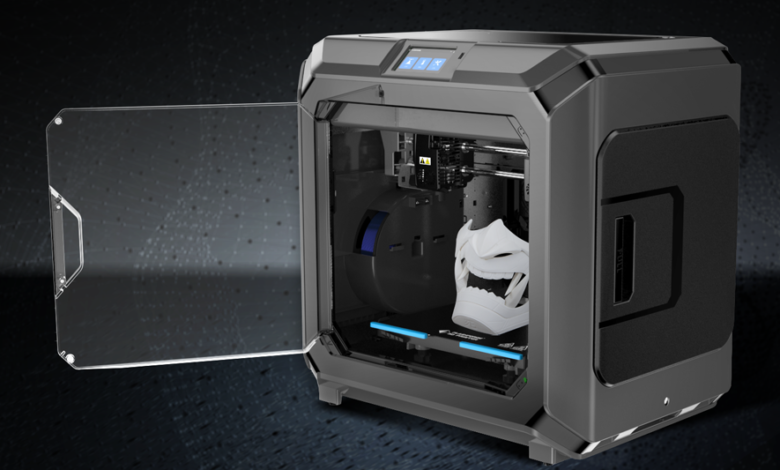
What’s striking about the workflow change is how naturally 3D fits into existing creative habits. A novelist building a fantasy world can render their imagined cities, weapons, and creatures as visual references. A children’s book author can generate models of their characters for promotional content. A short-fiction writer can produce a printable figurine to send to subscribers. None of these activities required 3D skills before. Now they don’t require them at the user level either.
The medium creators are reaching for
Newsletter writers, indie publishers, and even literary novelists have started incorporating 3D content into their reader experiences. A horror writer in early 2026 ran a campaign offering subscribers a printable resin miniature of an object from her novel. A history-focused podcaster has been generating 3D recreations of artifacts discussed on each episode for use as social previews. A poetry collective produced a small AR exhibition where each poem was paired with a generated 3D object representing its central image.
Tools have caught up with creative ambition. Text-to-3D tools such as 3D AI Studio now produce models with clean topology and PBR materials in under five minutes, with exports compatible with consumer 3D printers, Blender, Unity, and AR formats like USDZ. For a creator who has neither time nor inclination to learn modeling software, the friction has dropped to roughly that of generating an image two years ago.
Where this fits in a creator’s week
The practical question for working creators isn’t whether the technology is impressive — it is — but where it earns its place in a finite week. The honest answer, for most, is that 3D doesn’t replace existing creative outputs. It supplements them. A creator who already produces a weekly newsletter and a monthly podcast doesn’t suddenly add a daily 3D pipeline. They use generative 3D for specific purposes: a launch graphic that needs depth, a Kickstarter pitch that benefits from a rotatable preview, a Patreon-tier reward that wouldn’t be feasible with traditional manufacturing.
The economics matter here. Producing a 3D model the conventional way — hiring a freelancer, ordering a small print run — is typically a several-hundred-dollar commitment with multi-week timelines. The generative version costs almost nothing in marginal time and money. That changes which creators can plausibly include 3D in their offerings, and the answer is: most of them.
Why this is bigger than novelty
There’s a tendency to dismiss new creator tools as gimmicks until they aren’t. Podcasting was the same way. Video newsletters were the same way. The pattern with each new medium has been that it stays fringe for a few years, then crosses some threshold of accessibility, then becomes a normal expectation of creator output.
3D is approaching that threshold. The accessibility piece — generating a model in plain English without owning a single piece of professional software — is solved. The output quality piece is solved enough for a wide range of creator use cases. What remains is the cultural part: creators experimenting with the medium until conventions emerge for what good 3D content looks like in a fan-facing context.
That cultural development is happening in public, in real time. A children’s author publishes printable figurines of their book characters and the comments fill with parents requesting more. A worldbuilder posts a generated model of an in-fiction artifact and a fan community spontaneously starts collecting them. The signal is consistent: audiences welcome 3D content from creators they already follow, often more enthusiastically than the creators themselves expected.
The next conventional skill
A novelist in 2010 didn’t expect to know how to edit a podcast. Most of them now do, at least passably. A poet in 2015 didn’t expect to know how to make a video reel for social media. Most of them now do. The same arc, applied to 3D, suggests that within a few years a working creator will be expected to know how to generate a 3D model when a project benefits from one.
That isn’t a burden. It’s an expansion. Each new medium that became a creator’s job also became a new way for creators to reach audiences, find readers who wouldn’t have discovered them otherwise, and turn the work of writing into something that lives in more places. 3D, generated from a sentence, is the latest version of that pattern. It’s already further along than most working writers realize.