Travis Clayton: Powerful Rise from Rugby to the NFL
How a British multi-sport athlete reached the Buffalo Bills without playing college football

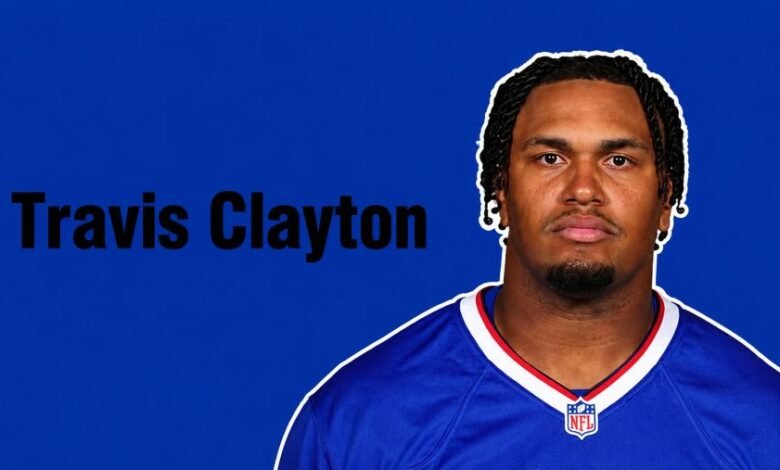
introdution
Travis Clayton is an English professional American football player whose journey from lower-level rugby to the NFL is unlike most modern sporting stories.
The Buffalo Bills selected him in the seventh round of the 2024 NFL Draft despite him never having played an organised American football game. His rare combination of height, speed, strength and multi-sport experience convinced the team that he had significant development potential.
Clayton initially trained as an offensive tackle. In June 2026, Buffalo began a major new chapter in his career by moving him from offence to defence.
Quick Bio
| Detail | Information |
|---|---|
| Full Name | Travis Clayton |
| Date of Birth | 17 February 2001 |
| Age | 25 years old |
| Birthplace | Basingstoke, Hampshire, England |
| Nationality | British |
| Profession | Professional American football player |
| Current Team | Buffalo Bills |
| Jersey Number | 67 |
| Original NFL Position | Offensive tackle |
| 2026 Role | Developing on the defensive line |
| Height | 6 feet 7 inches |
| Official Listed Weight | 303 pounds |
| Former Sport | Rugby union |
| NFL Draft | 2024, Round 7, Pick 221 |
| NFL Route | International Player Pathway programme |
| Regular-Season Appearances | None through June 2026 |
Who Is Travis Clayton?
Travis Clayton is a British athlete best known for joining the Buffalo Bills through the NFL International Player Pathway programme.
He was born in Basingstoke, Hampshire, on 17 February 2001. Before entering American football, he developed his athletic ability through several sports.
His background included rugby union, association football, boxing, rowing and tennis. This varied training helped him build the movement, coordination and physical strength that later attracted NFL scouts.
Clayton’s rise is especially remarkable because he did not play college football in the United States. He entered the NFL as a raw international prospect who had to learn an entirely new sport.
Early Life and Multi-Sport Background
Sport played an important role in Clayton’s childhood and teenage years.
He spent time in Fulham’s youth football system and was also linked with opportunities involving Reading, Southampton and Chelsea. Readers interested in the history of the London club can also explore the career of Fulham football icon Tosh Chamberlain.
Football helped Clayton develop quick footwork and balance. However, he did not continue towards a senior professional career in the sport.
He also trained in boxing, which improved his hand movement, power and confidence in physical situations. Rowing contributed to his endurance and total-body strength.
Clayton was even offered an opportunity to try skeleton. He decided against it because he was uncomfortable with travelling head-first down an ice track at high speed.
Rugby Career in England
Clayton later focused on rugby union and played for Basingstoke Rugby Football Club.
The club competed in the eighth tier of the English rugby structure. Clayton was used as a winger despite having a much larger frame than most players in that position.
His speed allowed him to carry the ball in open space, while his strength made him difficult to stop once he built momentum.
The combination of size and mobility that made him unusual in rugby also became his greatest advantage when NFL evaluators studied him.
His sporting transition is different from the traditional journeys of established international players such as Shane Horgan, who developed through professional rugby systems before building a long international career.
First Experience with American Football
Clayton first explored American football when he attended the NFL Academy in London in 2019.
The academy was created to help talented young athletes from outside the United States develop the technical and tactical skills required for American football.
He did not immediately remain on that path. Instead, he returned to other sporting and working commitments before giving the game another serious attempt several years later.
Clayton’s decision to return became one of the most important turning points of his life.
He eventually earned a place in the 2024 International Player Pathway class. The programme gives international athletes intensive coaching and an opportunity to be evaluated by NFL organisations.
International Player Pathway Training
Clayton travelled to the United States and completed specialist training at IMG Academy in Florida.
The programme covered strength, conditioning, offensive-line movement, hand placement, blocking technique and tactical understanding.
This was a difficult challenge because most NFL prospects have played American football for many years before reaching the draft.
Clayton had to learn terminology, formations and position-specific movements within a much shorter period.
His size and speed immediately stood out. At approximately 6 feet 7 inches and more than 300 pounds, he reportedly completed the 40-yard dash in around 4.79 seconds.
That performance was exceptionally fast for an athlete of his size.
Historic 2024 NFL Draft Selection
The Buffalo Bills selected Clayton with the 221st overall choice in the seventh round of the 2024 NFL Draft.
The selection was historic because he became the first British player drafted directly through the International Player Pathway programme.
He was also only the second athlete from the programme to be selected in the NFL Draft at that time.
The NFL’s official International Player Pathway report described the moment as an important achievement for the league’s efforts to discover talent outside the United States.
Clayton appeared at the draft carrying the Union Flag and celebrated with other international prospects.
His selection showed that Buffalo valued long-term athletic potential even though he lacked traditional playing experience.
Why the Buffalo Bills Drafted Him
Buffalo’s decision was mainly based on Clayton’s physical measurements and movement skills.
His height gave him the frame required for an NFL lineman. His speed suggested that he could move effectively despite his weight.
His rugby background also provided experience in contact situations, teamwork and handling pressure in a fast-moving sport.
However, athletic ability alone could not guarantee success. Clayton still needed to learn detailed blocking techniques, defensive recognition and the timing required to compete against experienced NFL players.
Buffalo therefore treated him as a long-term development prospect rather than a player expected to start immediately.
The technical coaching needed for such a transition highlights the importance of experienced NFL staff, a subject also visible in the career of American football coach Matt Eberflus.
Rookie Contract and First NFL Season
Clayton signed his rookie contract with the Buffalo Bills in May 2024.
He joined the team’s offseason programme and began learning the offensive tackle position. This required him to protect quarterbacks, create running lanes and react quickly to powerful defensive players.
He did not make a regular-season appearance during his first year.
Buffalo placed him on injured reserve before the 2024 season. The move allowed him to remain within the organisation while recovering and continuing his development.
His first year was therefore focused more on learning and physical preparation than competitive statistics.
The 2025 Season
Clayton returned for Buffalo’s 2025 offseason and training camp.
He gained preseason experience and participated in joint practices, giving coaches a better opportunity to evaluate his progress against NFL-level opposition.
A concussion interrupted his preseason and prevented him from playing in Buffalo’s final preparation game.
The Bills released him during their final roster reductions in August 2025. They brought him back to the practice squad one day later.
He remained connected to the organisation throughout the season and continued developing without appearing in a regular-season game.
Reserve/Future Contract
Buffalo signed Clayton to a reserve/future contract in January 2026.
This agreement allowed him to join the team’s expanded offseason roster and compete for another opportunity during training activities.
The contract did not guarantee a place on the final 53-player roster.
It did, however, show that Buffalo still saw enough athletic promise to continue investing time in his development.
For Clayton, the 2026 offseason became another opportunity to prove that he could turn physical potential into a useful professional role.
Major Move from Offence to Defence
The most important recent development came during Buffalo’s 2026 offseason programme.
Clayton began working with the defensive line after spending his first two NFL years learning offensive tackle.
The Buffalo Bills’ official minicamp report said that he had officially switched from offence to defence.
The change was reportedly encouraged by Clayton himself. He believed his aggressive playing style and physical abilities might be better suited to attacking blockers rather than protecting against defenders.
Buffalo’s coaches started evaluating him as a possible defensive tackle within the team’s changing defensive system.
Why Defence May Suit Him
Defensive-line play could allow Clayton to use his speed, strength and rugby instincts more naturally.
Instead of reacting to a pass-rusher, he can attack the space in front of him and attempt to disrupt running plays or pressure the quarterback.
His experience carrying the ball and tackling in rugby may also help him understand movement, leverage and physical contact.
However, the new role brings another demanding learning process. Defensive linemen must understand gap assignments, hand technique, pad level and offensive blocking patterns.
His progress during training camp and preseason will help determine whether the experiment becomes a permanent position change.
Height, Weight and Athletic Ability
Clayton’s official Buffalo roster measurements list him at 6 feet 7 inches and 303 pounds.
Reports from the 2026 offseason suggested that his working weight had increased considerably while he maintained impressive movement for his size.
His 40-yard dash performance remains one of the most discussed parts of his athletic profile.
Speed alone does not make a successful lineman, but it explains why Buffalo remained interested despite his limited experience.
Young rugby prospects such as Tom Bowen also demonstrate how pace and movement can become defining qualities in physically demanding sports.
Playing Style
Clayton’s sporting identity is built around power, movement and physical confidence.
In rugby, he was a large winger capable of running in space. In American football, coaches initially tried to transform those qualities into offensive-line skills.
His move to defence may allow him to play with greater aggression.
Clayton has publicly spoken about enjoying the physical side of American football. His willingness to change positions also reflects flexibility and determination.
He is still a developmental player, so his playing style cannot yet be judged through regular-season NFL performances.
Challenges in His Career
The biggest challenge has been his lack of competitive American football experience.
Most NFL linemen spend years learning the game in school and university programmes. Clayton entered the league without that background.
He has also faced injuries, roster competition and the pressure of learning two different positions.
The Buffalo Bills have established starters and several younger players competing for limited roster places.
Clayton must therefore show that his athletic qualities can become reliable, repeatable football skills.
Career Timeline
| Year | Career Event |
|---|---|
| 2001 | Born in Basingstoke, England |
| Youth years | Played football and trained in several other sports |
| 2019 | Attended the NFL Academy in London |
| Before 2024 | Played rugby union for Basingstoke RFC |
| January 2024 | Joined the International Player Pathway programme |
| April 2024 | Drafted by Buffalo with pick No. 221 |
| May 2024 | Signed his rookie contract |
| August 2024 | Placed on injured reserve |
| August 2025 | Released during roster cuts and re-signed to the practice squad |
| January 2026 | Signed a reserve/future contract |
| June 2026 | Officially switched from offence to defence |
| Current | Competing for a role with the Buffalo Bills |
Career Statistics
Clayton had not appeared in an NFL regular-season game through June 2026.
He therefore had no official regular-season games, starts, tackles or sacks recorded at that point.
His professional progress has mainly taken place in offseason training, preseason action and practice-squad development.
His future statistics will depend on whether he earns an active-roster place and receives opportunities during the regular season.
Current Status
As of June 2026, Clayton remains part of the Buffalo Bills’ offseason setup.
He is developing as a defensive lineman after previously training as an offensive tackle.
His immediate target is to impress during training camp and preseason.
Buffalo must eventually decide whether to include him on the active roster, retain him for further development or make another roster move.
His current story remains unfinished, but the position change gives him a fresh route towards his first regular-season appearance.
Impact on British Sport
Clayton’s selection created an important example for British athletes interested in American football.
He showed that players without a United States college background can still attract NFL attention through international development programmes.
His journey may encourage rugby players and multi-sport athletes to consider new career opportunities.
Other respected figures, including England rugby great Josh Lewsey, show how skills such as speed, strength and tactical awareness can shape successful sporting careers.
Clayton’s route is different, but it carries a similar message about discipline, adaptation and professional ambition.
Interesting Facts
- He was born and raised in Basingstoke, Hampshire.
- He played rugby as a winger despite his unusually large frame.
- His early sporting background included football, boxing, rowing and tennis.
- He attended the NFL Academy in London in 2019.
- He never played US college football.
- Buffalo drafted him before he had played an organised American football game.
- He became the first British player drafted directly through the International Player Pathway programme.
- He moved from offence to defence during Buffalo’s 2026 offseason.
- He wears jersey number 67.
- He hopes to establish a long-term career in the NFL.
Conclusion
Travis Clayton has followed one of the most unusual routes into professional American football.
His journey began with football and rugby in Basingstoke before the International Player Pathway programme gave him a chance to display his rare athletic qualities.
Buffalo’s decision to draft him showed the value the organisation placed on his size, speed and potential.
He has not yet played in an NFL regular-season game, but his 2026 move to defence has created a new opportunity.
The next stage of his career will depend on how quickly he learns the defensive role and whether he can earn a place on Buffalo’s active roster.
Frequently Asked Questions
Who is Travis Clayton?
He is an English professional American football player with the Buffalo Bills.
How old is he?
He is 25 years old, having been born on 17 February 2001.
Where was he born?
He was born in Basingstoke, Hampshire, England.
How tall is he?
He is officially listed at 6 feet 7 inches.
What position does he play?
He entered the NFL as an offensive tackle but moved to the defensive line during the 2026 offseason.
Which rugby team did he represent?
He played rugby union for Basingstoke Rugby Football Club.
When was he drafted?
Buffalo selected him in the seventh round of the 2024 NFL Draft with pick No. 221.
Has he played an NFL regular-season game?
He had not recorded a regular-season appearance through June 2026.