Martin Wolf: The Powerful Voice of Global Economics — Insightful Genius Yet a Critical Challenger of Modern Capitalism
How a British journalist reshaped economic thinking while questioning the very systems he once supported

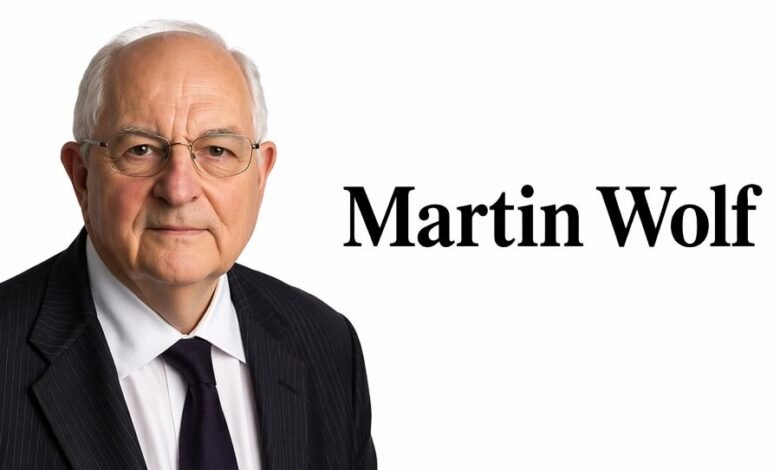
Table of Contents
ToggleIntroduction
Martin Wolf is widely regarded as one of the most influential economic commentators in the modern world. As a leading British journalist, he has spent decades explaining complex global financial systems in a way that policymakers, academics, and everyday readers can understand. His work stands at the intersection of journalism, economics, and global policy.
What makes Martin Wolf truly unique is not just his expertise, but his willingness to evolve. He has supported globalisation and free markets, yet he has also openly criticised their failures, especially after financial crises. This balance of support and skepticism has made his voice both powerful and, at times, controversial.
Quick Bio
| Field | Details |
|---|---|
| Full Name | Martin Harry Wolf |
| Date of Birth | 16 August 1946 |
| Age (2026) | 79 years |
| Birthplace | London, England |
| Nationality | British |
| Profession | Journalist, Economist, Author |
| Known For | Chief Economics Commentator |
| Organization | Financial Times |
| Education | University of Oxford (MPhil in Economics) |
| Spouse | Alison Margaret Potter |
| Children | Three |
Early Life and Background
Martin Wolf was born in London in 1946 into a family deeply shaped by European history. His father, Edmund Wolf, was an Austrian Jewish playwright, while his mother came from a Dutch Jewish background. Their experiences during World War II and the broader history of Europe had a lasting influence on his intellectual outlook.
Growing up in post-war Britain, Wolf developed a strong awareness of political and economic systems. These early influences would later shape his interest in understanding how economies function and how policy decisions affect societies on a global scale.
Education and Academic Foundation
Wolf attended University College School in London before continuing his studies at the University of Oxford. At Oxford, he pursued Philosophy, Politics, and Economics, eventually earning an MPhil in Economics in 1971.
His academic journey provided him with a solid theoretical foundation. It also exposed him to different schools of economic thought, allowing him to develop the analytical skills that would later define his career as a leading British journalist in economic commentary.
Start of Career
Martin Wolf began his professional career at the World Bank in 1971. As part of the Young Professionals Programme, he quickly rose through the ranks and became a Senior Economist by 1974.
During his time there, he worked on development issues and global economic policy. This early experience gave him firsthand insight into how international institutions operate, shaping his later critiques of global financial systems.
Career at the Financial Times
Wolf joined the Financial Times in 1987, marking a turning point in his career. He initially worked in editorial roles before becoming Associate Editor in 1990 and later Chief Economics Commentator in 1996.
In this role, he has written extensively on globalisation, financial crises, economic policy, and international trade. His columns are known for their clarity, depth, and ability to explain complex ideas without oversimplifying them.
Evolution of Economic Views
One of the most remarkable aspects of Martin Wolf’s career is his intellectual evolution. Early in his career, he strongly supported free markets and globalisation, believing they were key drivers of economic growth and prosperity.
However, after the 2008 global financial crisis, his views shifted. He began advocating for stronger regulation, government intervention, and reforms to the global financial system. This willingness to rethink his beliefs has strengthened his credibility as a thoughtful and independent voice.
Books and Thought Leadership
Martin Wolf has authored several influential books that explore global economics and financial systems. His works include Why Globalization Works, Fixing Global Finance, The Shifts and the Shocks, and The Crisis of Democratic Capitalism.
These books have contributed significantly to economic debates worldwide. They reflect his deep understanding of global markets and his ability to connect theory with real-world events, making him a respected figure beyond journalism.
Source of Income and Professional Work
As a leading British journalist, Martin Wolf’s primary source of income comes from his work at the Financial Times. In addition to journalism, he earns from book publishing and speaking engagements.
His influence extends beyond writing. He frequently participates in international conferences and economic forums, where his insights are valued by global leaders and policymakers.
Influence and Global Impact
Martin Wolf’s work has had a profound impact on how people understand economics. His writing reaches a global audience, including decision-makers at the highest levels of government and business.
He is often seen as a bridge between academic economics and the public. By translating complex theories into accessible language, he has helped shape informed discussions about global economic challenges.
Awards and Recognition
Throughout his career, Martin Wolf has received numerous awards for his contributions to journalism. He was awarded the CBE (Commander of the Order of the British Empire) in 2000 for services to financial journalism.
He has also received prestigious honors such as the Gerald Loeb Lifetime Achievement Award. These recognitions highlight his long-standing influence and excellence in economic reporting.
Recent Work and Relevance
Even in recent years, Martin Wolf remains highly active. He continues to write about critical issues such as inflation, global instability, and economic policy challenges.
His ability to stay relevant in a rapidly changing world demonstrates his deep understanding of economic trends. It also shows his commitment to informing the public about issues that shape the global economy.
Legacy
Martin Wolf’s legacy lies in his ability to challenge conventional thinking while maintaining intellectual integrity. As a British journalist, he has played a crucial role in shaping modern economic discourse.
He is respected not only for his knowledge but also for his willingness to question dominant narratives. This combination of insight and independence ensures that his work will continue to influence future generations.
Conclusion
Martin Wolf stands as a powerful yet critical voice in global economics. His journey from a supporter of free markets to a thoughtful critic of their limitations reflects a rare intellectual honesty.
Through decades of work, he has helped people better understand the forces that shape economies. His contributions continue to guide policymakers, inspire debate, and educate readers around the world.
FAQ
Who is Martin Wolf?
Martin Wolf is a British journalist and economist known for his role as Chief Economics Commentator at the Financial Times.
What is Martin Wolf famous for?
He is famous for his analysis of global economic issues, financial crises, and policy debates.
Where was Martin Wolf born?
He was born in London, England.
What is Martin Wolf’s profession?
He is a journalist, economist, and author.
What are Martin Wolf’s major contributions?
His writings and books have significantly influenced global economic thinking and policy discussions.