Minouche Shafik — Powerful Global Economist with Remarkable Success and Controversial Leadership Challenges
From Egypt to the House of Lords, a journey of influence, brilliance, and pressure

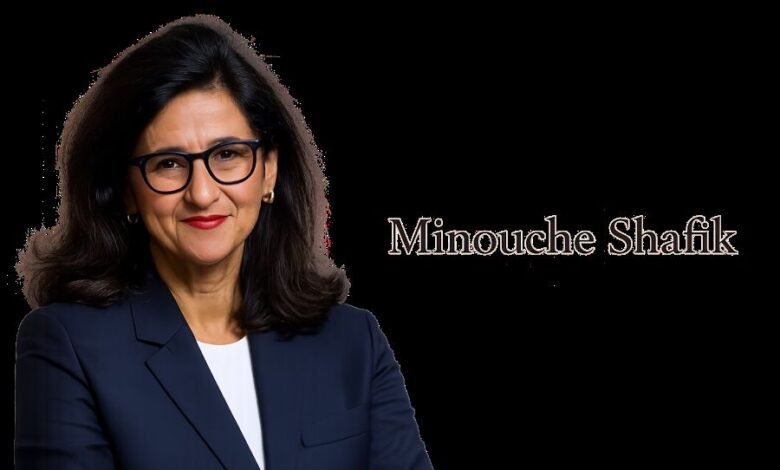
Table of Contents
ToggleIntroduction
Minouche Shafik stands among the most influential economists of the modern era. Her journey from Alexandria to leading global institutions reflects intelligence, determination, and the ability to navigate complex political and economic systems.
Her career, however, is not just a story of success. It also reflects the intense scrutiny that comes with leadership at the highest level. From global financial institutions to university governance, her decisions have shaped debates while also attracting criticism.
Quick Bio
| Field | Details |
|---|---|
| Real Name | Nemat Talaat Shafik |
| Known As | Minouche Shafik |
| Date of Birth | 13 August 1962 |
| Birth Place | Alexandria, Egypt |
| Nationality | British, American, Egyptian |
| Profession | Economist, Academic Leader |
| Education | University of Massachusetts Amherst, LSE, Oxford |
| Known For | Global policy leadership, academia |
| Title | Baroness Shafik |
| Public Role | Member of the House of Lords of the United Kingdom |
Early Life and Background
Minouche Shafik was born in Alexandria, Egypt, into a family that valued education and intellectual growth. Her early years were shaped by political changes that forced her family to relocate, a transition that deeply influenced her global perspective.
Growing up in the United States, she experienced a multicultural environment that helped her understand different economic and social systems. This early exposure later became a key strength in her international career.
Education
Shafik’s academic path reflects excellence and discipline. She pursued her undergraduate studies at the University of Massachusetts Amherst, where she built a strong foundation in economics and politics.
She later earned a master’s degree from the London School of Economics and completed her doctorate at the University of Oxford. These institutions helped refine her analytical skills and prepared her for global leadership roles.
Career Beginnings
Her professional journey began at the World Bank, where she worked on economic development and global financial policies. This role allowed her to understand real-world economic challenges beyond academic theory.
Her early success was rapid and impressive. She quickly rose through the ranks, earning recognition for her ability to combine research with practical policy solutions.
Global Career Overview
World Bank and IMF
Shafik built a strong reputation at the World Bank, eventually becoming one of its youngest vice presidents. Her work focused on development, poverty reduction, and economic reform.
She later joined the International Monetary Fund as Deputy Managing Director. In this role, she handled major global financial challenges and contributed to policy decisions affecting multiple countries.
UK Government and Central Banking
Her move into public service marked a new phase in her career. As Permanent Secretary at the UK’s Department for International Development, she managed large-scale international aid programs.
She then served as Deputy Governor at the Bank of England, where she played a key role in maintaining financial stability and overseeing banking systems during critical periods.
Academic Leadership
Shafik became Director of the London School of Economics, making history as the first woman to hold the position. Her leadership focused on strengthening global partnerships and academic excellence.
Later, she was appointed President of Columbia University. Her tenure brought both achievements and challenges, particularly during periods of campus unrest that tested her leadership.
Role in the House of Lords
One of the defining aspects of her career is her role as a Member of the House of Lords of the United Kingdom. As Baroness Shafik, she contributes to discussions on economic policy, education, and social development.
This position reflects recognition of her expertise and influence. It also places her at the center of policymaking in one of the world’s most established political systems.
Leadership Style and Influence
Minouche Shafik is known for her analytical thinking and pragmatic approach. She often focuses on practical solutions rather than theoretical debates.
Her leadership style combines collaboration with decisiveness. While this has earned her respect, it has also exposed her to criticism, especially in politically sensitive situations.
Challenges and Controversies
Leadership at the global level often comes with challenges, and Shafik’s career is no exception. Her time at Columbia University, in particular, was marked by intense public scrutiny.
These controversies highlight the complexity of modern leadership. Balancing institutional values, public expectations, and political pressures is never easy, and her experience reflects that reality.
Publications and Ideas
Shafik is also a respected author. Her book What We Owe Each Other: A New Social Contract explores the relationship between individuals and society.
In her work, she argues for fairness, responsibility, and stronger social systems. These ideas have influenced debates on economic policy and social reform.
Personal Life
Minouche Shafik has maintained a relatively private personal life despite her public career. She has been married and has children, balancing family responsibilities with demanding professional roles.
Her ability to manage both personal and professional commitments reflects discipline and resilience, qualities that define her overall journey.
Recent Developments
In recent years, Shafik has remained an influential voice in global economics and public policy. Her resignation from Columbia University attracted significant attention, marking a turning point in her career.
Despite challenges, she continues to play a role in shaping economic discussions and policy thinking at the highest levels.
Legacy
Minouche Shafik’s legacy lies in her contribution to global economic policy and institutional leadership. She has worked across governments, financial institutions, and academia, leaving a lasting impact in each sector.
Her journey reflects both achievement and complexity. She represents a generation of leaders who operate in highly interconnected and demanding global systems.
Conclusion
Minouche Shafik’s story is one of remarkable success, intellectual strength, and leadership under pressure. From Egypt to becoming a global policy figure, her journey is both inspiring and instructive.
Her influence continues to shape economic thinking and public policy, ensuring that her legacy will remain relevant for years to come.
FAQ
Who is Minouche Shafik?
She is a global economist, academic leader, and policy advisor known for her roles in major international institutions.
What is she known for?
Her leadership at the World Bank, IMF, Bank of England, and major universities.
Is Minouche Shafik a Member of the House of Lords?
Yes, she is a Member of the House of Lords of the United Kingdom.
What is her educational background?
She studied at the University of Massachusetts Amherst, London School of Economics, and the University of Oxford.
What is her most famous book?
What We Owe Each Other: A New Social Contract.