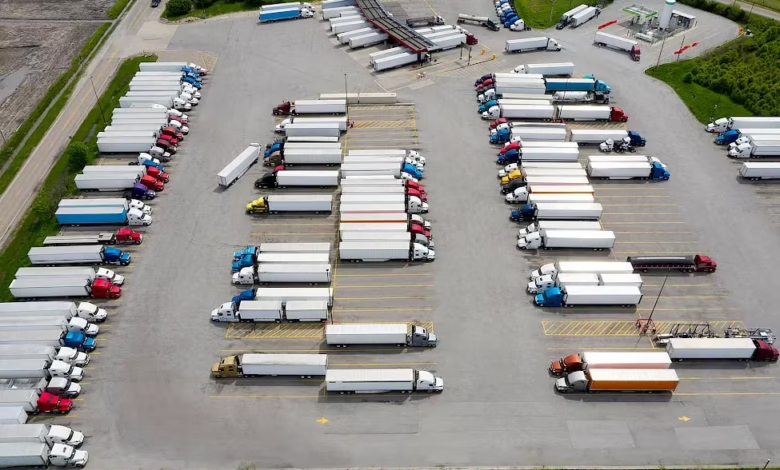
Overnight truck parking is a critical part of the freight and logistics industry, ensuring that long-haul drivers have safe, legal, and well-equipped places to rest during their journeys. As global supply chains expand and road freight increases, the demand for secure and accessible overnight truck parking has become more important than ever. Truck drivers often travel long distances under strict delivery schedules and legal driving-hour limits, making rest periods not just a convenience but a regulatory requirement. Without proper parking infrastructure, the entire logistics system can face delays, safety risks, and operational inefficiencies.
Understanding Overnight Truck Parking and Its Importance
Overnight truck parking refers to designated spaces where commercial trucks can be safely parked during nighttime hours or extended rest periods. These facilities may be located along highways, at logistics hubs, truck stops, industrial zones, or dedicated parking terminals. The primary purpose is to provide drivers with a secure environment where they can rest while ensuring their vehicles and cargo remain protected.
The importance of overnight truck parking extends beyond simple convenience. It directly impacts road safety, driver well-being, and supply chain efficiency. Drivers are required to follow regulated driving-hour limits in many countries to prevent fatigue-related accidents. When proper parking is unavailable, drivers may be forced to continue driving beyond safe limits or park in unsafe locations, both of which create serious risks for themselves and others on the road.
Key Features of Safe and Efficient Truck Parking
A well-designed overnight truck parking facility includes several essential features that ensure safety, comfort, and operational efficiency. One of the most important elements is adequate space design. Trucks require significantly larger parking bays compared to standard vehicles, and proper spacing is necessary for safe maneuvering.
Security is another critical feature. Modern facilities use surveillance cameras, perimeter fencing, controlled entry and exit systems, and on-site security personnel to protect vehicles and cargo. Since trucks often carry valuable goods, strong security measures reduce the risk of theft and vandalism.
Lighting also plays a vital role in safety. Well-lit parking areas improve visibility at night, reduce accident risks, and enhance overall security. Many facilities also include restrooms, showers, rest lounges, and food services to support driver comfort during long rest periods.Some advanced parking hubs offer repair workshops, tire services, and fuel stations, making them complete service centers for long-haul trucks.
Challenges in Finding Overnight Truck Parking
Despite its importance, the availability of overnight truck parking remains a major challenge in many regions. One of the most significant issues is the shortage of dedicated parking spaces compared to the growing number of commercial trucks on the road.
In many high-traffic logistics corridors, parking areas fill up quickly, especially during peak hours. This forces drivers to spend additional time searching for safe spots, which leads to delays and increased fuel consumption.
Another challenge is uneven infrastructure distribution. Some regions have well-developed truck parking networks, while others lack even basic facilities. This imbalance creates logistical bottlenecks and increases operational stress for drivers.Security concerns also remain a problem in poorly managed or informal parking areas. Lack of surveillance or lighting can expose trucks to theft, cargo tampering, or damage.
Impact on Logistics and Supply Chain Efficiency
Efficient overnight truck parking plays a crucial role in maintaining smooth supply chain operations. When drivers can reliably find safe parking, they are able to follow legal rest schedules, which helps maintain safety and compliance. This reduces the risk of accidents caused by fatigue.
Delays in parking availability can disrupt delivery schedules, affecting warehouses, retailers, and customers downstream. Even small delays can have a ripple effect across the entire supply chain, especially in time-sensitive industries such as food, retail, and manufacturing.Fuel efficiency is also impacted. When drivers spend time searching for parking, unnecessary driving increases fuel consumption and operational costs. Properly located parking facilities help reduce this inefficiency.
Safety and Legal Regulations
In many countries, truck drivers are required by law to take mandatory rest breaks after a certain number of driving hours. These regulations are designed to reduce fatigue-related accidents and improve road safety. However, compliance depends heavily on the availability of safe overnight truck parking.
Authorities in some regions enforce strict penalties for illegal roadside parking or violation of rest regulations. This makes access to proper parking facilities even more critical for fleet operators and independent drivers.Well-regulated parking areas ensure compliance with safety laws while also protecting drivers from fines and legal issues.Technology is transforming the way overnight truck parking is managed. Digital platforms now allow drivers to locate available parking spaces in real time, reducing uncertainty and search time.
Mobile applications provide information on parking availability, pricing, security features, and nearby services. Some systems even allow advance booking of parking spaces, ensuring guaranteed availability upon arrival.
Smart sensors installed in parking spaces can detect occupancy and update systems instantly. This data helps drivers and fleet managers plan routes more efficiently.GPS integration and fleet management software also help logistics companies coordinate parking schedules with delivery timelines, improving overall efficiency.
Economic and Environmental Benefits
Proper overnight truck parking infrastructure offers both economic and environmental benefits. From an economic perspective, reduced delays and improved efficiency lead to lower operating costs for logistics companies. Faster turnaround times improve productivity and customer satisfaction.
Environmentally, reducing unnecessary driving in search of parking helps lower fuel consumption and carbon emissions. Trucks that idle less and travel fewer extra kilometers contribute to cleaner air and improved fuel efficiency.Well-designed parking facilities also help reduce roadside congestion, improving traffic flow and reducing accident risks in busy transport corridors.
The future of truck parking is expected to become more advanced, automated, and technology-driven. Governments and private companies are investing in large-scale logistics hubs that combine parking with fueling, maintenance, and rest services in one integrated facility.Automated parking systems and AI-based space management will help optimize usage and reduce congestion. Drivers may soon be able to reserve parking spaces dynamically based on real-time traffic and delivery schedules.
Conclusion
Sustainability will also play a major role, with eco-friendly designs, solar-powered lighting, and electric truck charging stations becoming standard features in modern overnight truck parking facilities.
Overnight truck parking is an essential part of the global logistics system, ensuring safety, efficiency, and regulatory compliance for long-haul drivers. Despite ongoing challenges such as space shortages and uneven infrastructure, advancements in technology and investment in modern facilities are improving conditions significantly.
As freight demand continues to grow, the importance of reliable overnight truck parking will only increase. By improving infrastructure, adopting smart systems, and prioritizing driver needs, the transportation industry can build a safer, more efficient, and more sustainable future for logistics worldwide.