Transforming Concrete Surfaces: The Complete Guide to Epoxy Garage Floor Coating, Benefits, Installation, and Long-Term Durability

Garage floors endure some of the toughest conditions within a residential or commercial property. They are constantly exposed to vehicle traffic, heavy equipment, chemical spills, moisture, dirt, and temperature fluctuations. Over time, these factors can cause ordinary concrete floors to crack, stain, deteriorate, and lose their visual appeal. While concrete is known for its strength, it is naturally porous and vulnerable to damage when left unprotected. This is why many property owners choose epoxy garage floor coating as a long-term solution for improving durability, appearance, and functionality.
An epoxy-coated garage floor does much more than enhance aesthetics. It creates a protective barrier that resists wear, chemicals, moisture, and impact damage while providing a smooth, professional-looking finish. Whether used in residential garages, commercial workshops, warehouses, or automotive facilities, epoxy flooring has become one of the most popular flooring upgrades available today.
Understanding how epoxy coatings work, their benefits, installation process, maintenance requirements, and long-term value can help property owners make informed decisions about upgrading their garage floors.
Understanding What Epoxy Garage Floor Coating Is
Epoxy garage floor coating is a specialized flooring system created by combining resin and hardener components that chemically react to form a durable, rigid surface. Once applied to properly prepared concrete, the coating bonds tightly to the substrate, creating a seamless and highly resilient finish.
Unlike ordinary floor paint, epoxy is not simply a decorative covering. It forms a thick protective layer that becomes part of the floor surface itself. This bond gives epoxy its exceptional durability and resistance to abrasion, chemicals, and moisture.
The final appearance can vary significantly depending on the chosen formulation. Some epoxy systems produce a high-gloss finish that reflects light and brightens the space, while others create textured surfaces for improved slip resistance. Decorative flakes, metallic pigments, and custom color combinations can also be incorporated to achieve specific aesthetic goals.
Because of its versatility and performance, epoxy flooring has become a preferred solution for both functional and decorative flooring applications.
Why Concrete Floors Need Protection
Concrete may appear solid and durable, but it is actually a porous material that absorbs moisture, oil, chemicals, and contaminants. Over time, these substances can penetrate the surface, causing discoloration, weakening, and structural deterioration.In garages, exposure to automotive fluids such as oil, brake fluid, fuel, and antifreeze is common. These substances can stain untreated concrete and make cleaning difficult. Moisture intrusion is another concern, particularly in regions with humid conditions or significant seasonal weather changes.
Repeated vehicle traffic also contributes to surface wear. Tires, tools, and heavy equipment can gradually erode the concrete surface, leading to cracks, chips, and dust formation. Once damage begins, repairs can become increasingly expensive and time-consuming.An epoxy garage floor coating helps address these issues by sealing the surface and creating a protective layer that shields the concrete from daily wear and environmental exposure.
Major Benefits of Epoxy Garage Floor Coating
One of the most significant advantages of epoxy flooring is its durability. Properly installed epoxy systems can withstand heavy vehicle traffic, dropped tools, machinery movement, and continuous use without significant damage. This makes them ideal for both residential and commercial environments.Chemical resistance is another major benefit. Epoxy coatings are designed to resist oil, gasoline, solvents, cleaning products, and other chemicals that commonly come into contact with garage floors. Spills can typically be cleaned without causing permanent staining or surface degradation.
Moisture protection also plays a crucial role. By sealing the concrete surface, epoxy reduces water penetration and helps prevent moisture-related damage. This is particularly important in garages where vehicles may bring in rainwater, snow, or mud.
Aesthetic improvement is another reason property owners choose epoxy flooring. The glossy finish creates a clean, polished appearance that enhances the overall look of the space. Decorative options allow for customization that matches personal preferences or branding requirements.In addition to appearance and durability, epoxy flooring is relatively easy to clean and maintain. Dust, dirt, and debris can be removed quickly, making it a practical solution for busy environments.
Different Types of Epoxy Flooring Systems
Not all epoxy flooring systems are the same. Several different types are available, each designed to meet specific performance and aesthetic requirements.
Standard solid-color epoxy systems are among the most common options. These coatings provide a uniform appearance while delivering excellent durability and protection. They are often chosen for residential garages due to their clean and professional look.
Decorative flake systems incorporate colored vinyl flakes into the epoxy layer. These flakes create texture, visual interest, and improved slip resistance. They are popular in both residential and commercial settings because they help conceal dirt and minor imperfections.Metallic epoxy coatings offer a more dramatic appearance by incorporating metallic pigments that create unique patterns and reflective effects. These systems are often used when aesthetics are a primary consideration.
Quartz-filled epoxy systems combine epoxy resin with colored quartz granules. This creates a highly durable and slip-resistant surface suitable for demanding environments such as industrial facilities and commercial garages.Each system offers unique benefits, and the best choice depends on factors such as usage requirements, budget, and design preferences.
The Importance of Surface Preparation
The success of an epoxy flooring project depends heavily on proper surface preparation. Even the highest-quality coating will fail if the underlying concrete is not adequately prepared.
The process begins with a thorough inspection of the concrete surface. Cracks, chips, and other defects must be identified and repaired before coating application. Any contaminants such as oil, grease, paint, or sealers must also be removed.
Mechanical grinding or shot blasting is often used to create the ideal surface profile for epoxy adhesion. This process opens the pores of the concrete and ensures a strong bond between the coating and substrate.Moisture testing is another important step. Excess moisture within the concrete can interfere with adhesion and lead to coating failure. Addressing moisture issues before installation is essential for long-term success.
Proper preparation may require significant effort, but it is one of the most critical factors in achieving a durable and attractive finish.
The Installation Process Explained
The installation of an epoxy garage floor coating follows a systematic process designed to maximize performance and longevity.
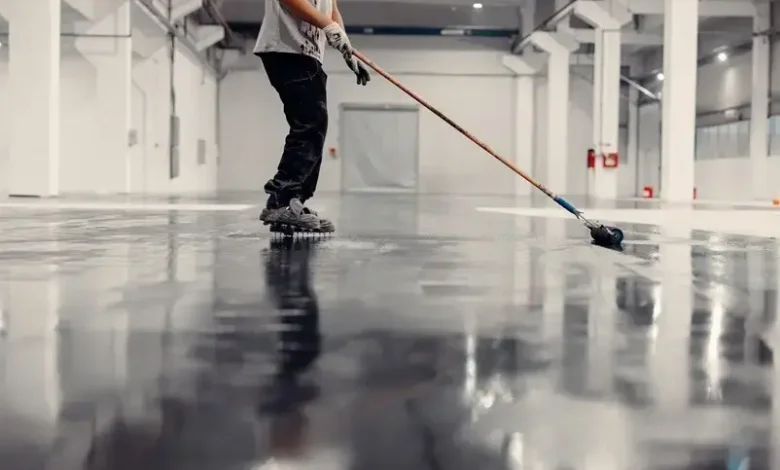
After surface preparation is completed, a primer coat is typically applied. The primer helps improve adhesion and creates a stable foundation for subsequent layers. Once the primer has cured, the main epoxy coating is applied evenly across the floor surface.Depending on the chosen system, decorative flakes, quartz granules, or metallic pigments may be added during this stage. These materials become embedded within the coating and contribute to both appearance and functionality.
After the epoxy layer has cured, a protective topcoat is often applied. This topcoat enhances durability, UV resistance, chemical protection, and gloss retention. It also provides additional protection against scratches and wear.The curing process varies depending on the specific product and environmental conditions. While light foot traffic may be permitted within a day or two, full curing can take several days before vehicles and heavy equipment can safely use the surface.
Common Mistakes to Avoid
One of the most common mistakes in epoxy flooring projects is inadequate surface preparation. Skipping or rushing this step often leads to peeling, bubbling, or premature coating failure.
Another mistake is choosing low-quality materials based solely on price. Inferior products may provide a satisfactory appearance initially but often lack the durability and chemical resistance required for long-term performance.Improper mixing of epoxy components can also create problems. Epoxy relies on precise chemical ratios to cure correctly. Errors during mixing may result in weak adhesion, uneven curing, or surface defects.
Applying epoxy under unsuitable environmental conditions is another frequent issue. Temperature and humidity levels must fall within recommended ranges to ensure proper curing and performance.Working with experienced professionals helps avoid these mistakes and ensures that the finished floor meets both functional and aesthetic expectations.
Maintenance and Long-Term Care
One of the reasons epoxy flooring remains so popular is its relatively low maintenance requirements. Regular sweeping and occasional mopping are typically sufficient to keep the surface clean and attractive.Spills should be cleaned promptly to maintain appearance and prevent slip hazards. Although epoxy is highly resistant to staining, routine cleaning helps preserve its finish and extend its lifespan.
Periodic inspections are also beneficial. Checking for scratches, chips, or areas of wear allows minor issues to be addressed before they become more significant.
Protective measures such as using mats beneath heavy equipment or placing pads under sharp objects can further extend the life of the coating.With proper care, an epoxy floor can remain functional and visually appealing for many years without requiring extensive maintenance.
Long-Term Value and Return on Investment
Installing an epoxy garage floor coating is often viewed as a practical investment rather than merely a cosmetic upgrade. The enhanced durability reduces maintenance and repair costs associated with damaged concrete surfaces.
Improved aesthetics can also contribute to increased property value. A clean, professionally finished garage creates a positive impression and may appeal to potential buyers.
Energy efficiency benefits may also be realized in some settings. Reflective epoxy surfaces improve lighting efficiency by reflecting light more effectively, reducing the need for additional illumination.When considering the combined benefits of durability, protection, appearance, and ease of maintenance, epoxy flooring offers significant long-term value for both residential and commercial properties.
Conclusion
Epoxy garage floor coating has become one of the most effective ways to enhance and protect concrete surfaces. By creating a durable, chemical-resistant, and visually appealing finish, epoxy transforms ordinary garage floors into high-performance spaces capable of withstanding years of use.
From protecting against moisture and stains to improving appearance and simplifying maintenance, the advantages of epoxy flooring extend far beyond aesthetics. However, achieving these benefits requires proper preparation, quality materials, and professional installation.
For property owners seeking a long-lasting flooring solution that combines functionality, durability, and style, epoxy garage floor coating remains one of the most reliable and valuable investments available. When installed and maintained correctly, it provides years of dependable performance while enhancing the overall utility and appearance of the space.