Larger homes and high-energy properties — farms, villas, all-electric houses, and homes with home offices, pools, or workshops — often use far more electricity than a typical residence. When the power goes out, a small backup unit that keeps a few lights and a phone charger running usually isn’t enough. For these properties, the more relevant question is whether the home needs whole-home backup, and if so, how big that system actually needs to be.
This is a simpler question to answer than it might seem, as long as it’s approached in the right order: understand what the home actually uses, then figure out how much of that needs to be backed up, and only then look at battery size and equipment.
What Does Whole-Home Backup Actually Cover?
“Whole-home backup” doesn’t necessarily mean every single outlet and appliance stays powered exactly as if nothing happened. It means the system is designed to support a much wider range of circuits — HVAC, kitchen appliances, well pumps, EV charging, home offices — rather than just a handful of emergency essentials.
A whole home battery backup design aims to support a wider range of circuits than a basic emergency system, but the actual loads must still be defined before equipment is selected. In practice, this means walking through the property and listing what actually needs to run during an outage, rather than assuming “whole home” automatically means “everything, all the time.”
High-Consumption Household Loads
Large properties tend to have a few loads that use far more electricity than everything else combined. Identifying these early makes the rest of the planning process much easier:
- Heating and cooling systems, especially if the home uses electric heat or multiple HVAC zones
- Water systems, including well pumps, irrigation, or pool equipment
- Kitchen equipment, particularly if the home has commercial-style or double appliances
- EV charging, which can use as much power as several major appliances running together
- Home offices or workshops, especially where equipment runs for long stretches during the day
These loads don’t all need to run at once during an outage, but knowing which ones matter most helps determine both battery size and backup priorities.
Electric Heating, HVAC, and Heat Pumps
Electric heating deserves special attention because it tends to be the single biggest consumer of power in an all-electric home, especially during cold weather. Heat pumps are generally more efficient than older electric resistance heating, but they still draw substantial power, particularly during defrost cycles or extreme temperatures. A home that relies entirely on electric heat will need a noticeably larger backup system than one with a gas furnace, simply because heating can’t be skipped during a winter outage.
Expected Backup Duration
How long does the system need to last without outside power? This depends on how often outages happen locally, how long they typically last, and whether a generator is available as a secondary backup. A property that experiences occasional one-hour blips needs a different plan than one that regularly loses power for a day or more. This number, more than almost anything else, drives how large the battery needs to be.
Solar Charging and Energy Recovery
If the property has solar panels, the battery isn’t just a one-time reserve — it can recharge during daylight hours, which extends how long the system can support the home during a multi-day outage. How much recharging is possible depends on panel size, sunlight availability, and the time of year, since winter solar output is often much lower than summer output in many regions. A system that looks sufficient in July may perform very differently in January, so seasonal variation is worth factoring in rather than assuming worst-case testing conditions match year-round performance.
Battery Capacity Versus Inverter Output
These two numbers are often confused, but they measure different things. Battery capacity, measured in kilowatt-hours (kWh), is how much energy the system can store — think of it as the size of the tank. Inverter output, measured in kilowatts (kW), is how much power the system can deliver at once — think of it as how fast the tank can be emptied.
A big battery with a small inverter can store plenty of energy but struggle if several large appliances run at the same time. A powerful inverter paired with a small battery can handle sudden demand but may run out of stored energy quickly. Both numbers need to match the home’s actual usage pattern, not just its overall size.
Installation Space and Possible Electrical Upgrades
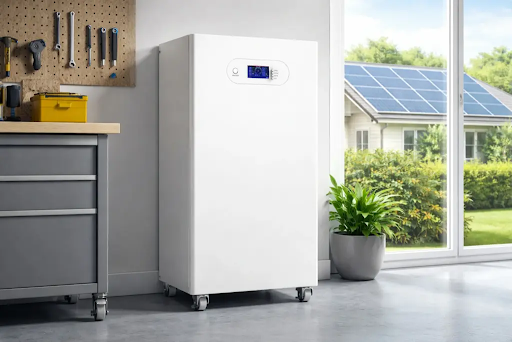
Whole-home battery systems take up real space and often require some electrical work beyond simply mounting the unit. This can include a dedicated subpanel, upgraded wiring, or additional ventilation depending on where the equipment is installed. Larger systems may also need more clearance for servicing and airflow, and local codes can affect where the equipment is allowed to sit. It’s worth having these details reviewed early, since electrical upgrades can affect both the project timeline and the overall budget.
Battery manufacturers can also support installers with system design and compatibility. Avepower supplies LiFePO4 battery storage for residential and project applications and works with solar installers, distributors, and project developers on capacity selection, inverter communication, and expansion planning. For energy brands and wholesalers, it also provides OEM and ODM customization covering cabinet design, logos, protocols, connectors, packaging, and documentation.
Whichever manufacturer and installer a homeowner works with, confirming compatibility and expansion options ahead of installation avoids costly changes later.
Is 40kWh Too Large for a Home?
Not necessarily. In a large all-electric property, farm, villa, or home with substantial backup loads, 40kWh battery storage may be justified by the required runtime and daily energy consumption. For a smaller home with modest backup goals, this would likely be more capacity than necessary — but for a property running electric heat, a well pump, EV charging, and a home office simultaneously, it can be a reasonable and even conservative choice.
The right number ultimately comes from the load list and backup duration worked out earlier, not from a general rule of thumb based on square footage.
Bringing It All Together
Whether the equipment comes from Avepower or another established manufacturer, the same planning approach applies. Whole-home battery backup for a high-energy property isn’t about buying the largest system on the market — it’s about matching real household loads, expected outage duration, and available solar recovery to a system that’s sized correctly the first time. A clear picture of what the home actually uses, paired with a qualified installer who can translate that into capacity and power requirements, remains the most reliable path to a system that performs when it’s actually needed.