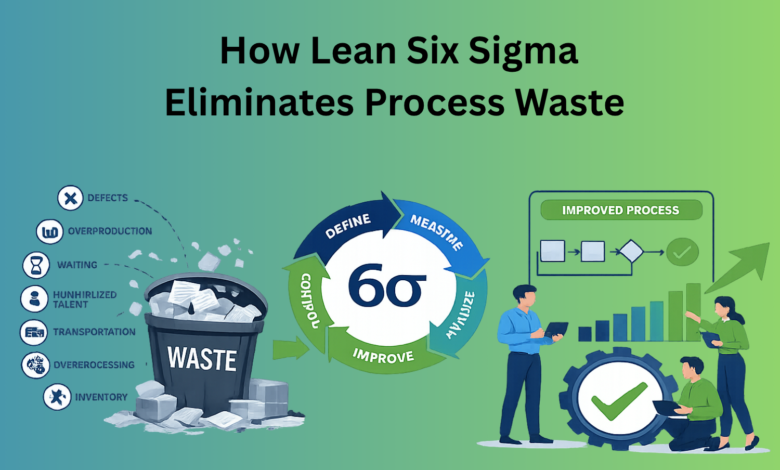
Why do some businesses complete work faster while others waste time and effort on the same tasks every day? The difference often comes down to how well their processes are managed. Lean Six Sigma Certification helps professionals understand practical methods for identifying unnecessary activities and improving efficiency. Rather than working harder, organisations focus on working smarter by removing waste from every stage of a process. This creates better results for both employees and customers.
In this blog, we will explore how Lean Six Sigma eliminates process waste and supports continuous improvement.
How Lean Six Sigma Removes Process Waste
Below are the key ways Lean Six Sigma helps organisations identify, reduce, and eliminate process waste for better performance:
Identifies Activities That Add No Value
Separating important tasks from those that do not serve customers is one of Lean Six Sigma initial objectives. Every procedure is closely scrutinised to find activities that use resources or time without benefiting the final product.
Organisations can eliminate or streamline these pointless operations once they have been recognised. Teams are able to devote more time to tasks that actually add value as a result.
Reduces Waiting Time
One of the main reasons for process waste is waiting. Operations are slowed down and productivity is decreased when permissions or information sharing are delayed.
Lean Six Sigma assists companies in locating delays and enhancing workflow. Shorter delivery timelines and more customer satisfaction are the results of moving through each stage more quickly.
Prevents Errors and Rework
Errors frequently lead to more labour and disgruntled clients. Additionally, fixing mistakes raises expenses and slows down company operations.
Lean Six Sigma assists in locating the underlying causes of faults by employing organised problem-solving methodologies. Organisations can enhance quality and decrease the requirement for repetitive effort if these factors are eliminated.
Improves Process Flow
When labour proceeds through pointless steps or in an ambiguous order, many processes become inefficient. This decreases overall efficiency and causes confusion.
The goal of Lean Six Sigma is to improve workflows by eliminating barriers and better planning tasks. Improved process flow enables employees to finish jobs more rapidly and reliably.
Minimises Excess Inventory
Although keeping more inventory than is necessary may appear beneficial, it frequently raises storage expenses and consumes important resources. Deeper process issues may also be concealed by excess inventory.
Organisations are encouraged by Lean Six Sigma to keep the proper amount of inventory based on real demand. This increases operational flexibility while cutting waste.
Makes Better Use of Resources
People, tools, supplies, and time are examples of resources that should all support productive labour. Waste rises when these resources are not used effectively.
Lean Six Sigma assists businesses in more efficiently allocating resources through meticulous analysis. Teams can improve performance without needlessly raising expenses or workloads.
Standardises Best Practices
The same activity may be carried out differently by different employees, producing inconsistent outcomes. Confusion and problems with quality are frequently caused by a lack of established procedures.
Clear and consistent working practices are encouraged by Lean Six Sigma. Standardised procedures lower variance and greatly simplify the onboarding process.
Supports Data Based Decision Making
Many organisations address challenges using assumptions. This can result in ineffective remedies that do not address the true problem.
Lean Six Sigma drives decisions using facts and measurable data. By examining performance information, businesses can develop with more confidence and create lasting outcomes.
Encourages Continuous Improvement
Waste disposal is not a one-time activity; Customer wants and market conditions will evolve and business processes have to be continuously improved.
Lean Six Sigma helps to build a culture of people who are constantly looking for ways to be more efficient. Small improvements delivered steadily can have great long term advantages across the company.
Conclusion
One of the best methods to increase output, cut expenses, and provide customers with more value is to eliminate waste. Lean Six Sigma offers useful methods that assist businesses in creating effective procedures while promoting ongoing development. Professionals looking to strengthen their process improvement skills can expand their expertise through Lean Six Sigma Certification with The Knowledge Academy, a global training provider, to confidently identify waste and deliver better business outcomes.
READ ALSO: Top 3 Most Recommended Places to Purchase Backlinks From