Many UK homeowners compare resin driveways and block paving after dealing with weeds, puddles, loose blocks, sinking areas or an old surface that no longer improves the property. The wrong choice can mean higher maintenance, poor drainage and repeat repair costs. A serious driveway decision should start with the base, water movement, daily use and long-term upkeep. With experienced installation, resin can be the better option for a clean, low-maintenance and modern finish, while block paving still suits some traditional homes.
Resin driveways are often better than block paving when the priority is low maintenance, smooth appearance, drainage and weed resistance. A resin bound surface creates a seamless finish using natural aggregate mixed with resin, then trowelled over a prepared base.
Block paving is better when the homeowner wants a more traditional brick pattern, individual block replacement and a classic paved appearance. It can perform well, but it depends heavily on strong edging, jointing sand, sub-base depth and regular maintenance.
The real answer is not simply resin or block paving. The better driveway is the one installed with the correct sub-base, drainage plan, edge restraint, fall, load-bearing strength and finish choice for the property.
For homeowners comparing both options professionally, speaking with experienced resin surfacing contractors in UK can help confirm whether resin is suitable for the existing base, driveway size and drainage conditions.
Are Resin Driveways Better Than Block Paving?
This section explains the decision point clearly. The surface is only one part of the driveway. A good result depends on preparation, drainage, installation skill and how much maintenance the homeowner is willing to accept.
A driveway fails when the surface is chosen before the ground condition is checked. Resin and block paving both need a stable foundation, but they behave differently once installed.
A resin bound driveway needs a sound base, often open-textured tarmac or suitable concrete, depending on the drainage design. If the base is weak, cracked or moving, the resin finish can reflect those problems over time.
Block paving needs a properly compacted sub-base, sharp sand laying course, edge restraints and filled joints. If any of these are poor, the blocks can move, dip, spread or create uneven areas.
The first serious question should be: what problem are you trying to solve? If the current driveway has weeds, loose joints and constant cleaning, resin may solve more problems. If easy localised repair is the main concern, block paving may still appeal.
Compare the Surface Finish First
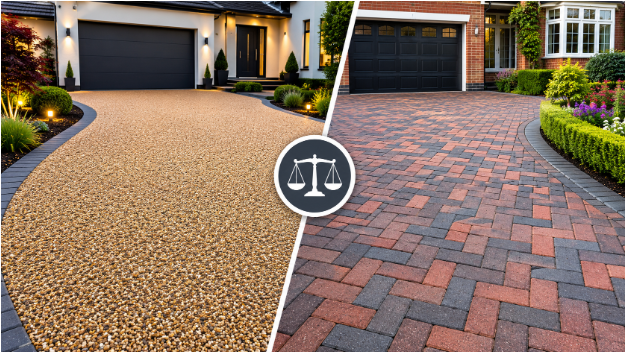
The surface finish affects kerb appeal, cleaning, usability and the first impression of the property. Resin gives a smoother modern look, while block paving gives a more traditional pattern-led driveway finish.
Resin bound driveways create a smooth, decorative and seamless surface. The aggregate blend can be chosen to suit modern homes, family driveways, paths, entrances and commercial-style finishes.
Block paving uses individual blocks laid in patterns such as herringbone, stretcher bond or basket weave. This gives a classic paved appearance, especially for older properties or homes with traditional brickwork.
The main difference is the number of joints. Resin has a continuous finish with fewer areas for dirt and weeds to settle. Block paving has visible joints across the whole surface, which become part of the look and maintenance routine.
For a clean, modern driveway with minimal visual interruption, resin usually wins. For a driveway where pattern, brick detail and individual block character matter most, block paving remains a strong option.
Check Drainage Before Price
Drainage should be checked before budget, colour or pattern. A driveway that looks good but holds water can cause puddles, surface damage, staining, frost risk and possible planning issues.
A correctly installed resin bound driveway can be permeable when laid over a suitable porous base. This helps rainwater pass through the surface instead of running across the driveway or pooling near the house.
Block paving can also be permeable, but not every block paving system is designed that way. Standard block paving may need proper falls, channels or drainage points to move water safely away.
This is where many cheaper quotes become risky. A low price may ignore the drainage design, base correction or edge detail. That can leave the homeowner with a surface that looks finished but performs badly in heavy rain.
For UK homes, especially where front garden driveways are involved, SuDS compliance, permeability and water runoff control should be treated as core parts of the project, not extras.
Understand Weed and Moss Risk
Weeds and moss are one of the biggest reasons homeowners compare resin with block paving. The surface design directly affects how often the driveway needs cleaning, treating and re-sanding.
Resin bound surfacing has fewer open joints, so weeds have fewer places to establish. It is not maintenance-free, but it is usually easier to keep tidy than a surface with hundreds of sand-filled joints.
Block paving is more exposed to weed growth because the joints can collect dust, seeds and organic matter. Over time, jointing sand may wash away or loosen, which creates more space for weeds and movement.
Moss and algae can affect both surfaces, especially in shaded, damp or north-facing areas. However, block paving often needs more frequent attention because the joints hold moisture and debris.
If the homeowner wants the least routine weed control, resin is normally the stronger choice. If they choose block paving, they should accept ongoing joint maintenance, weed treatment and occasional re-sanding as part of ownership.
Look at Long-Term Maintenance
A driveway should be judged by what it needs after installation. The lowest-maintenance surface is usually the one that stays stable, drains well and does not need constant joint repair.
Resin driveways usually need sweeping, occasional washing and sensible care to remove leaves, dirt, oil or organic build-up. The surface should not be attacked with harsh chemicals or aggressive pressure washing too close to the finish.
Block paving needs more hands-on maintenance. The joints may need topping up, weeds need removing, and sunken or loose areas may need lifting and relaying.
The advantage of resin is that the surface is easier to keep visually clean. The advantage of block paving is that individual blocks can be removed and replaced if a small section becomes damaged.
For busy households, rental properties and homeowners who do not want repeated weekend maintenance, resin often provides the better day-to-day experience.
Compare Cost Beyond the Quote
Price should not be judged only by the first installation quote. The real cost includes base preparation, drainage, repairs, cleaning time, joint maintenance and how long the surface stays presentable.
Block paving can sometimes look cheaper at the quotation stage. However, a proper block paved driveway still needs excavation, sub-base work, edge restraints, laying course, compaction and finishing.
Resin can cost more when the project needs base correction, UV-stable resin, decorative aggregate or drainage upgrades. But the long-term maintenance cost may be lower because there are fewer joints and less routine re-sanding.
A cheap resin quote is not automatically good value. Thin application, poor mixing, weak base preparation or unsuitable weather during installation can lead to cracking, loose stones or surface failure.
The better investment is the driveway that handles daily vehicle use, rainwater, foot traffic and cleaning without becoming a recurring repair job.
Think About Repairs and Future Access
Repairability matters if pipes, cables, drains or future groundworks may affect the driveway. Resin and block paving are very different when a small area needs to be opened or replaced.
Block paving is easier to lift in sections. Individual blocks can be removed, services can be accessed, and the same blocks can often be relaid if they are still in good condition.
Resin is more difficult to patch invisibly. A repair may be strong and practical, but colour matching can be difficult because the original surface may have weathered.
This does not make block paving better overall. It simply means block paving has an advantage where future access is likely, such as around inspection covers, service trenches or older drainage lines.
For resin driveways, good planning is important before installation. Drain covers, edging, thresholds and service points should be considered early so the finished surface is not disturbed soon after completion.
Match the Driveway to the Property
The best driveway should suit the home, not just the trend. Modern resin and traditional block paving can both look excellent when matched correctly to the building and street setting.
Resin works well for contemporary homes, clean frontages, larger driveway areas, smooth paths and properties where a tidy low-maintenance finish is important.
Block paving suits homes where a traditional pattern, brick-style detail or heritage appearance fits the architecture. It can also work well where the homeowner wants strong visual borders or mixed paving designs.
Colour choice is important for both surfaces. Very light resin can show dirt more easily, while darker block paving can fade or highlight salt marks depending on material and exposure.
For Bedfordshire homeowners comparing local installation options, professional resin bound driveways installers in bedfordshire can advise whether the property style, driveway slope and base condition are suitable for resin.
Check Safety, Grip and Daily Use
A driveway must work safely in wet weather, frost, shade and daily foot traffic. Appearance matters, but grip, level finish and trip reduction are more important for long-term use.
Resin bound surfacing can provide a smooth and stable finish. Anti-slip aggregate can also be added during installation to improve grip, especially on slopes or areas exposed to rain.
Block paving can provide good traction, but uneven blocks, loose edges or sinking patches can create trip hazards. This is more common when the sub-base or edge restraint fails.
Both surfaces need good installation around thresholds, garage entrances, drainage channels and pavement edges. A poor level can cause water to run toward the property or create awkward transitions.
For families, older residents and high-use driveways, the safer surface is usually the one with the best preparation, correct fall and consistent finish.
Choose Based on Installation Quality
Installation quality is the biggest factor in the resin versus block paving decision. A well-installed driveway in either material will outperform a cheap surface installed without proper ground preparation.
Resin driveway problems often come from poor base condition, incorrect mixing, unsuitable weather, weak edging or the wrong resin system. The surface may then crack, loosen, fade or become slippery with debris build-up.
Block paving problems often come from poor compaction, weak edge restraints, inadequate drainage, thin sub-base or poor joint finishing. The result can be sinking, spreading, rocking blocks and weed-heavy joints.
A serious contractor should check the existing surface, drainage route, driveway fall, traffic load, edging, access and finish expectations before giving a final specification.
The best question is not only “which surface is better?” It is also “which contractor will build the base and drainage properly before installing the surface?”
Final Verdict for UK Homes
This final section gives a practical decision. Resin is often better for low maintenance, clean design and drainage. Block paving is still strong where repair flexibility and traditional appearance matter most.
Resin driveways are generally better than block paving for homeowners who want a modern finish, fewer weeds, easier cleaning and strong drainage potential. They are especially suitable when installed as a proper resin bound system over a suitable base.
Block paving is better for homeowners who prefer a traditional appearance, individual block repair and a surface that can be lifted more easily for future access.
The wrong choice is usually made when the homeowner focuses only on price. The right choice comes from checking drainage, sub-base condition, installation method, maintenance expectations and property style.
For many UK homes, resin offers the stronger everyday solution. But it must be installed by skilled professionals, using the right materials, base preparation and finishing method.
Frequently Asked Questions
Do resin driveways crack over time?
Cracking usually happens when the base underneath the resin is weak, moving or poorly prepared. Resin is only as reliable as the surface below it, so base inspection and preparation are essential before installation.
Is resin better than block paving for weeds?
Resin is usually better for weed resistance because it has a smoother surface with fewer joints. Block paving has sand-filled joints where weeds, moss and debris can collect unless maintained regularly.
Which driveway is easier to repair?
Block paving is usually easier to repair in small sections because individual blocks can be lifted and replaced. Resin repairs are possible, but matching the exact colour and texture can be harder.
Is resin slippery when wet?
A properly installed resin bound surface should include suitable grip measures, especially on slopes. Poor installation, lack of anti-slip aggregate or debris build-up can make any surface less safe in wet conditions.
Does resin need planning permission in the UK?
A permeable resin bound driveway may avoid planning issues when it drains correctly. However, planning rules depend on the surface area, drainage route, property type and local restrictions, so checks are still sensible.