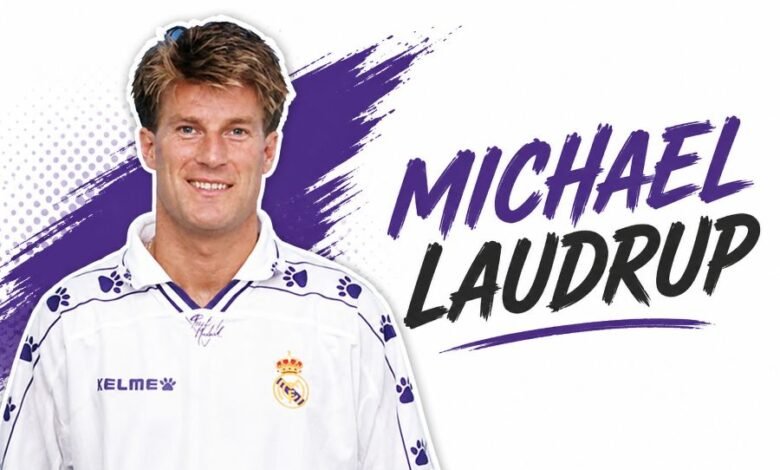
Michael Laudrup: The Brilliant Genius of Modern Football
Age, Clubs, Denmark Career, Trophies, Coaching Journey and Legacy

introdution
Michael Laudrup is a former Danish footballer and manager known for his outstanding vision, elegant movement and creative passing. He played for some of Europe’s biggest clubs and became one of the most respected attacking midfielders of his generation.
His career included major success with Juventus, Barcelona, Real Madrid and Ajax. He also represented Denmark in 104 senior international matches before building a coaching career across Denmark, Spain, England, Russia and Qatar.
Quick Bio
| Detail | Information |
|---|---|
| Full name | Michael Laudrup |
| Date of birth | 15 June 1964 |
| Age | 62 years old as of June 2026 |
| Birthplace | Frederiksberg, Denmark |
| Nationality | Danish |
| Profession | Former footballer, football manager and pundit |
| Playing position | Attacking midfielder and second striker |
| Height | Around 1.83 metres |
| Senior Denmark appearances | 104 |
| Senior Denmark goals | 37 |
| Playing retirement | 1998 |
| Last managerial club | Al-Rayyan |
| Famous for | Passing, vision, dribbling and chance creation |
Why Is Michael Laudrup Famous?
Michael Laudrup is famous for being one of the most naturally gifted playmakers in European football history.
He was able to identify spaces before defenders could react. His passing often removed several opponents from the game and placed his teammates in clear scoring positions.
His style was based on intelligence rather than physical strength. Like other players known for exceptional midfield intelligence, he understood positioning, movement and the rhythm of a match.
Real Madrid described him as a special player with outstanding vision, elegant dribbling and the ability to deliver decisive final passes. His influence was not always measured by goals because much of his value came from creating opportunities for others.
Early Life and Football Family
He was born in Frederiksberg, Denmark, on 15 June 1964.
Football was already important within his family. His father, Finn Laudrup, played professionally and represented Denmark at international level.
His younger brother, Brian Laudrup, also became a successful Danish international. Brian played for clubs including Bayern Munich, AC Milan, Rangers and Chelsea.
Michael’s sons, Mads and Andreas Laudrup, later entered professional football. This made the Laudrup family one of the most recognised football families in Denmark.
He developed through Vanløse, Brøndby and KB before entering senior football. His technical talent became clear at a young age, and he quickly progressed into Denmark’s national setup.
Club Career Beginning
Laudrup started his senior career with KB before joining Brøndby.
His performances for Brøndby attracted attention from major European clubs. He combined goals with intelligent movement and showed that he was ready for a higher level.
A proposed move to Liverpool did not happen after contract terms changed during negotiations. He later accepted an opportunity linked to Juventus.
Because Italian clubs faced restrictions involving foreign players, he initially spent time with Lazio. The move introduced him to the tactical and defensive demands of Serie A.
Juventus Career
After his Lazio spell, he joined Juventus and became part of one of Europe’s strongest football environments.
He helped Juventus win the Serie A title during the 1985–86 season. Playing in Italy developed his tactical awareness and taught him how to create chances against organised defences.
His Italian career was not always easy. Serie A was highly physical and defensive, while his best qualities were based on freedom and attacking expression.
However, the experience made him a more complete footballer. It prepared him for the next and most influential stage of his career.
Barcelona and Johan Cruyff’s Dream Team
Laudrup joined Barcelona in 1989 and became an important member of Johan Cruyff’s famous Dream Team.
Cruyff built a side based on possession, movement, technical skill and attacking football. This philosophy suited Laudrup perfectly.
He could play between midfield and attack, move into wide areas and create chances from difficult positions. His understanding with teammates helped Barcelona control games and break defensive lines.
During his time at the club, Barcelona won four consecutive La Liga titles between 1991 and 1994.
The team also won the European Cup in 1992, defeating Sampdoria at Wembley. It was Barcelona’s first victory in Europe’s leading club competition.
Laudrup also won the Copa del Rey, Spanish Super Cups and the European Super Cup with the club.
His Barcelona years remain central to his legacy. He was not simply part of a successful team; he helped shape its creative identity.
Move to Real Madrid
In 1994, he made the controversial decision to leave Barcelona and join Real Madrid.
Moving directly between the two Spanish rivals brought major attention. However, he quickly showed his value in Madrid.
He helped Real Madrid win the 1994–95 La Liga title. This gave him five consecutive Spanish league championships—four with Barcelona and one with Real Madrid.
According to Real Madrid’s official legend profile, he played 76 official matches and scored 15 goals for the club.
He was also part of the Real Madrid side that defeated Barcelona 5–0 in January 1995. Earlier, he had been part of Barcelona’s 5–0 victory over Real Madrid in 1994.
This unusual achievement strengthened his place in the history of both clubs.
Final Playing Years and Retirement
After leaving Real Madrid, Laudrup joined Vissel Kobe in Japan.
The move gave him experience outside European football and helped raise his international profile.
He returned to Europe for a final season with Ajax. The Dutch club won the Eredivisie and domestic cup double during the 1997–98 campaign.
He retired from professional football in 1998 after representing Denmark at the FIFA World Cup.
His club career took him through Denmark, Italy, Spain, Japan and the Netherlands. He won league titles in Italy, Spain and the Netherlands.
Denmark International Career
Laudrup made his senior Denmark debut against Norway on his 18th birthday in 1982. He also scored during the match.
The official Danish Football Association record credits him with 104 senior appearances and 37 goals.
He represented Denmark at major tournaments including Euro 1984, the 1986 World Cup, Euro 1988, Euro 1996 and the 1998 World Cup.
His performance at the 1986 World Cup helped establish him as an international star. Denmark played exciting attacking football, while Laudrup produced one of the tournament’s memorable individual goals against Uruguay.
He temporarily withdrew from the national team after disagreements with coach Richard Møller Nielsen over tactics. As a result, he did not take part in Denmark’s unexpected Euro 1992 victory.
He later returned and captained Denmark to victory in the 1995 King Fahd Cup, now recognised as the FIFA Confederations Cup.
His final international match came against Brazil in the 1998 World Cup quarter-final. Denmark lost 3–2 in a competitive and entertaining match.
Playing Style and Greatest Strengths
Laudrup mainly operated as an attacking midfielder, although he could also play as a second striker or in other advanced roles.
His greatest quality was vision. He often saw passing opportunities that were not visible to defenders or even spectators.
His famous disguised passes allowed him to send the ball in one direction while looking in another. This created uncertainty and opened space for forwards.
He was also an excellent dribbler. Instead of depending on tricks alone, he used balance, timing and body movement to escape pressure.
His qualities included:
- Exceptional passing vision
- Close control in crowded areas
- Intelligent movement between defensive lines
- Calm decision-making
- Creative through-balls
- Elegant dribbling
- Tactical awareness
- Ability to improve attacking teammates
His style influenced later generations of creative midfielders. He showed that intelligence and timing could be as powerful as speed or strength.
Beginning of His Coaching Career
After retiring, Laudrup moved into coaching.
He first worked as an assistant to Denmark manager Morten Olsen. This allowed him to learn within the national setup before accepting a senior club role.
He became Brøndby head coach in 2002. His team played attractive football and won the Danish Superliga in the 2004–05 season.
He also won domestic cup competitions with the club. His early success placed him among the most promising figures in Danish football management.
Like several former players who built modern coaching careers, he used lessons from his playing days to shape his tactical ideas.
Getafe, Spartak Moscow and Mallorca
Laudrup became Getafe manager in 2007.
He guided the Spanish club to the Copa del Rey final and UEFA Cup quarter-finals. Getafe’s attacking football received praise, particularly because the club was competing with teams that had much larger budgets.
The team came close to eliminating Bayern Munich from the UEFA Cup before losing after extra time.
He later managed Spartak Moscow, although his spell in Russia ended after less than one season.
He returned to Spain with Mallorca in 2010. Financial difficulties and disagreements within the club made the job challenging, and he left in 2011.
These experiences demonstrated the pressure faced by great football coaches working in different leagues and club structures.
Swansea City and Historic League Cup Success
Swansea City appointed Laudrup as manager in June 2012.
His arrival brought excitement because of his reputation as both a player and an attacking coach.
He signed players who became important to Swansea’s success, including Michu, Pablo Hernández, Chico Flores and Jonathan de Guzmán.
Swansea finished ninth in the Premier League during his first season. The club also reached the League Cup final after defeating Chelsea in the semi-finals.
Swansea beat Bradford City 5–0 at Wembley in February 2013. It was the first major trophy in the club’s history.
The victory also qualified Swansea for the following season’s UEFA Europa League.
His work at the club showed the value of technical recruitment and elite player development. Several players improved or reached new levels under his management.
He left Swansea in February 2014 after results declined and his relationship with the club’s leadership became difficult.
Management in Qatar
After leaving England, Laudrup joined Lekhwiya in Qatar.
He guided the club to the Qatar Stars League title and a domestic cup during the 2014–15 season.
He later managed Al-Rayyan between 2016 and 2018. This became his most recent senior coaching position.
His teams normally attempted to control possession and play through midfield. These ideas reflected the influence of Johan Cruyff and Barcelona’s football culture.
Major Trophies as a Player
His most important team honours included:
- Serie A with Juventus
- Four La Liga titles with Barcelona
- European Cup with Barcelona
- Copa del Rey with Barcelona
- European Super Cup with Barcelona
- La Liga with Real Madrid
- Eredivisie with Ajax
- Dutch Cup with Ajax
- King Fahd Cup with Denmark
Winning five consecutive La Liga championships with two rival clubs remains one of the most unusual achievements of his career.
Major Achievements as a Manager
His key managerial honours included:
- Danish Superliga with Brøndby
- Danish Cup with Brøndby
- English League Cup with Swansea City
- Qatar Stars League with Lekhwiya
- Qatar Cup with Lekhwiya
The Swansea League Cup remains his most famous coaching achievement because it delivered the club’s first major trophy.
Awards and Recognition
Laudrup was named Danish Footballer of the Year in 1982 and 1985.
UEFA selected him as Denmark’s Golden Player when recognising the country’s outstanding footballer from the organisation’s first 50 years.
He was also included in the FIFA 100 list chosen by Pelé in 2004.
The Danish Football Association later recognised him as Denmark’s greatest footballer.
He received the Order of the Dannebrog, one of Denmark’s respected national honours.
These awards show that his reputation extends beyond the trophies he won. His technical quality and influence on football are equally important parts of his legacy.
Family and Personal Life
Laudrup comes from a highly respected football family.
His father, Finn, and brother, Brian, both represented Denmark. His sons Mads and Andreas also played professional football.
He has generally kept his private life away from unnecessary media attention.
Reliable public sources focus mainly on his football work rather than details about his home, personal spending, diet or daily lifestyle.
No trustworthy public financial document confirms his exact net worth, annual income or property collection. Unsupported online estimates should not be treated as facts.
Current Status in June 2026
As of June 2026, Laudrup is not managing a professional club.
His last senior managerial position was with Al-Rayyan, which ended in 2018.
He has remained connected with football through television analysis and public appearances. In May 2026, he appeared in Viaplay Sport News coverage ahead of a major European final in Budapest.
There has been regular speculation about a possible return to management, but no new coaching appointment had been officially confirmed by June 2026.
Public Image and Football Philosophy
Laudrup is generally viewed as calm, intelligent and private.
He rarely built his public identity around controversy or self-promotion. His reputation came mainly from the quality of his football.
As a manager, he preferred attacking play, technical football and intelligent use of space.
He valued players who could control the ball under pressure and make fast decisions. His teams often attempted to progress through passing rather than relying only on long balls.
Cruyff had the biggest influence on this philosophy. Laudrup carried many of Barcelona’s positional and attacking principles into his coaching work.
Legacy in European Football
Laudrup’s legacy is based on creativity, elegance and football intelligence.
He played an important role in Barcelona’s transformation under Cruyff and later proved himself at Real Madrid.
For Denmark, he became the creative leader of one of the country’s most exciting football generations.
His career also showed remarkable adaptability. He succeeded in Italian, Spanish, Dutch and international football environments.
Many players have stronger scoring statistics, but few created chances with the same imagination and calmness.
He remains one of the finest examples of a footballer whose influence cannot be understood through goals alone.
Interesting Facts
- He scored on his senior Denmark debut on his 18th birthday.
- He earned 104 senior international caps.
- He won five consecutive Spanish league titles.
- He played for both Barcelona and Real Madrid.
- He was involved in a 5–0 El Clásico victory for each club.
- He missed Denmark’s Euro 1992 victory after leaving the national setup.
- He later captained Denmark to the 1995 King Fahd Cup.
- His younger brother Brian was also a major international footballer.
- He won Swansea City’s first major trophy as manager.
- His final playing season ended with a league and cup double at Ajax.
Conclusion
Michael Laudrup built an extraordinary career through vision, technical skill and football intelligence.
He became a champion in Italy, Spain and the Netherlands while helping Barcelona win its first European Cup. His international career included 104 Denmark appearances, memorable World Cup performances and success as captain.
His coaching journey added another important chapter. Winning Swansea City’s first major trophy proved that his understanding of football could also produce results from the touchline.
More than two decades after his playing retirement, he remains admired as one of the most elegant and creative footballers Europe has produced.
Frequently Asked Questions
Who is Michael Laudrup?
He is a former Danish professional footballer, manager and television football expert.
How old is he?
He is 62 years old as of June 2026.
When was he born?
He was born on 15 June 1964.
Where was he born?
He was born in Frederiksberg, Denmark.
What position did he play?
He mainly played as an attacking midfielder or second striker.
How many matches did he play for Denmark?
He made 104 senior appearances and scored 37 goals.
Did he play for Barcelona and Real Madrid?
Yes, he played for both clubs and won La Liga with each of them.
What was his biggest managerial achievement?
He guided Swansea City to the 2013 League Cup, the club’s first major trophy.
Is he currently a football manager?
No active managerial position had been confirmed as of June 2026.
Is Brian Laudrup his brother?
Yes, Brian Laudrup is his younger brother and was also a successful Denmark international.