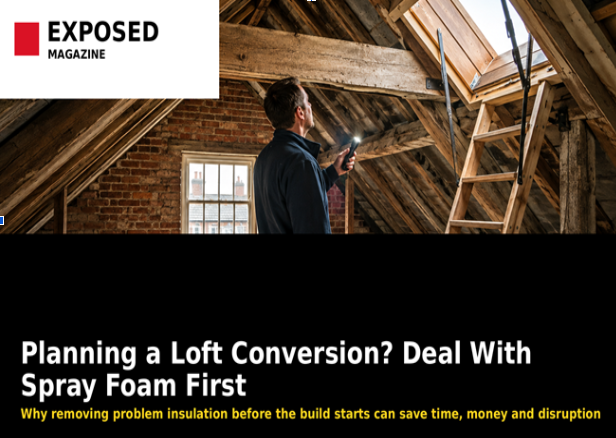
A loft conversion can add valuable space to a home, but there is one roof-space issue worth resolving before new plasterboard, insulation and finishes go anywhere near the rafters: existing spray foam insulation. If foam is already covering the underside of the roof, dealing with it at the beginning of the project is usually far easier than discovering halfway through the build that the roof structure needs to be exposed.
Why spray foam changes the order of a loft conversion
Unlike mineral wool sitting at loft-floor level, spray polyurethane foam is bonded to the roof slope. It can cover rafters, underlay and junctions that a designer, builder or surveyor may want to see before a conversion proceeds. If it needs to come out, doing the work after a new room has been formed can mean undoing finishes that have only just been installed.
For homeowners already planning work upstairs, the sensible starting point is to understand how spray foam removal works before agreeing the conversion sequence. The removal itself is normally undertaken from inside the roof space, timber by timber, so access is at its best before the loft becomes a finished room.
Removal first can prevent double work
Picture the alternative: a loft is boarded, plastered and decorated, then a later survey raises questions about foam hidden behind the new finishes. Access may have to be reopened, dust protection repeated and parts of the room made good twice. That is not only inconvenient; it can turn one construction job into two.
Resolving the foam at the structural stage means the exposed rafters can be inspected while the rest of the roof is still accessible. Any local timber, membrane or ventilation work can then be incorporated into the conversion rather than treated as an unexpected extra afterwards.
What should be checked before the build starts?
- Whether the foam is open-cell or closed-cell.
- What the foam has been sprayed onto – timber, felt, membrane or directly against tiles.
- Whether rafters can be inspected adequately in their current condition.
- Any visible staining, damp, mould or ventilation concerns.
- Whether the conversion design changes the roof ventilation or insulation strategy.
The point is not that every loft with foam requires removal. It is that the decision should be made while the structure is accessible and before new work hides it further.
Budget the removal as part of the conversion, not as a surprise
The amount of labour involved depends on roof area, access, foam type and how tightly the material is bonded. Homeowners can use a current spray foam removal cost guide to get a realistic range before the conversion budget is finalised. A property-specific survey is still more useful than a generic square-metre estimate because awkward roof geometry can make a major difference to labour.
What happens once the foam is gone?
Once the relevant areas are cleared, the exposed roof can be checked and any repairs dealt with before the new insulation system is designed. That creates a much cleaner starting point for the conversion and reduces the risk of building expensive finishes around an unresolved roof question.
The loft can then be insulated in a way that suits its new use, with ventilation and condensation control considered as part of the overall design rather than as an afterthought.
The best time to resolve spray foam is before the loft looks finished
Loft conversions are about turning an awkward roof space into one of the most useful rooms in the house. The easiest way to protect that investment is to sort out hidden structural questions first. If spray foam is present, have it assessed before the build programme is locked in. If it needs to be removed, doing it while the rafters are open and accessible is usually the least disruptive point in the entire project.
For homeowners planning a conversion and unsure whether removal should form part of the work, Spray Foam Helpline provides UK-wide surveys and professional removal with post-work inspection and documentation.