Yasmin Qureshi: A Fearless Voice for Justice and Equality in British Politics
The Inspiring Journey of a Trailblazing Member of Parliament of the United Kingdom

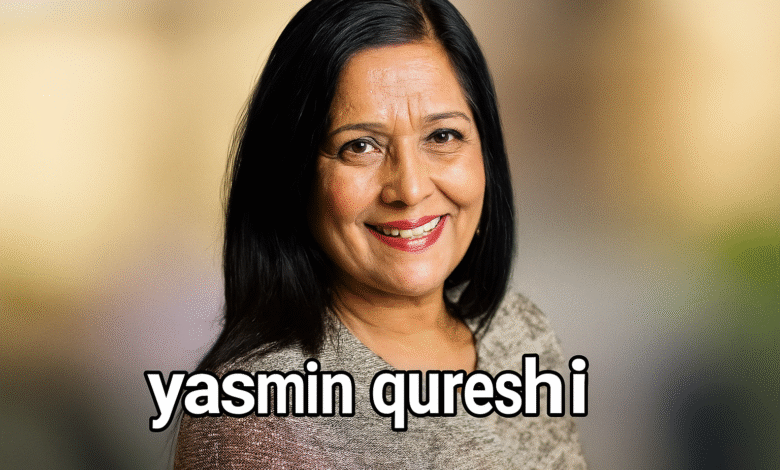
Table of Contents
ToggleIntroduction
Yasmin Qureshi is a dynamic and fearless political leader known for her unwavering commitment to justice, equality, and human rights. As a Member of Parliament of the United Kingdom, she has consistently stood up for fairness and represented the voices of ordinary people with passion and integrity. From her beginnings in Pakistan to her rise as one of the first Muslim women elected to the British Parliament, Yasmin Qureshi’s journey is a story of courage, determination, and perseverance.
Her legal expertise, combined with a strong sense of empathy and service, has shaped her political career and made her one of the most respected figures in modern British politics. Over the years, she has championed critical issues such as access to justice, healthcare, equality, and international human rights, earning recognition as a voice for both her local community and global humanitarian causes.
Quick Bio
| Full Name | Yasmin Qureshi |
|---|---|
| Date of Birth | 5 July 1963 |
| Age (2025) | 62 |
| Birthplace | Gujrat City, Punjab, Pakistan |
| Nationality | British |
| Religion | Islam |
| Education | LLB, London South Bank University; LLM, University College London |
| Profession | Barrister, Politician |
| Political Party | Labour Party (UK) |
| Constituency | Bolton South and Walkden |
| Marital Status | Married to Nadeem Ashraf |
| Current Position | Member of Parliament of the United Kingdom |
Early Life and Education
Yasmin Qureshi was born on 5 July 1963 in Gujrat City, Punjab, Pakistan. Her family moved to the United Kingdom when she was nine years old, settling in Watford, Hertfordshire. Growing up in a new country, she quickly adapted to British life while maintaining a strong connection to her cultural roots. Her early years were shaped by her parents’ emphasis on education, discipline, and community service.
Driven by a passion for justice, Yasmin pursued law at the Polytechnic of the South Bank (now London South Bank University), where she earned her Bachelor of Laws (LLB). She later obtained a Master of Laws (LLM) from University College London (UCL), solidifying her academic foundation and preparing for a career dedicated to justice and human rights.
Legal Career and Professional Achievements
Before entering politics, Yasmin Qureshi built a distinguished career as a barrister. She worked for the Crown Prosecution Service (CPS), handling complex criminal cases and gaining in-depth knowledge of the justice system. Her sharp intellect and commitment to fairness earned her respect across the legal community.
She later joined the United Nations Mission in Kosovo (UNMIK), where she served as Head of the Criminal Legal Section and later became Director of the Department of Judicial Administration. This international experience expanded her understanding of law, governance, and post-conflict justice systems. Yasmin also served as a Human Rights Adviser to Ken Livingstone, then Mayor of London, from 2004 to 2008 — a role that allowed her to advocate for vulnerable communities and shape policies on equality and civil rights.
Political Journey and Rise to Parliament
Yasmin Qureshi’s political journey began early — she joined the Labour Party at just sixteen years old. Her dedication to social justice and community empowerment made her a natural leader within the party. In 2010, she achieved a historic milestone by being elected as the Member of Parliament of the United Kingdom for Bolton South East, becoming one of the first Muslim women to enter the House of Commons.
Since then, she has been re-elected multiple times, reflecting the trust her constituents place in her leadership. Following boundary changes in 2024, Yasmin became the MP for Bolton South and Walkden, continuing her legacy of service. Throughout her tenure, she has been a consistent voice for equality, human rights, and social welfare. Her commitment to representing diverse communities and fighting injustice has made her a respected figure across party lines.
Key Parliamentary Roles and Campaigns
In Parliament, Yasmin Qureshi has served in several Shadow Minister positions, including Justice, International Development, and Women and Equalities. These roles demonstrate her versatility and commitment to improving lives both within the UK and globally.
She has led numerous influential campaigns, including:
-
Advocating for an official inquiry into the Primodos drug scandal, which affected thousands of families.
-
Opposing the closure of local courts that limited access to justice.
-
Highlighting serious issues in the prison system, such as overcrowding and staff shortages.
-
Supporting community pharmacies threatened by funding cuts.
Her parliamentary work reflects a deep understanding of justice, fairness, and compassion — principles that define her entire career.
Achievements and Recognition
Yasmin Qureshi’s dedication has not gone unnoticed. She was honored as Politician of the Year at the British Muslim Awards in 2014, celebrating her contributions to British society and her efforts to promote inclusion and representation.
Beyond politics, she is the Chair of the Board of Governors at the Westminster Foundation for Democracy (WFD), where she works to strengthen democratic institutions and empower women leaders worldwide. Through this position, she continues to make an impact on a global scale, promoting values of democracy and equality that transcend borders.
Recent Developments and Notable Moments
In 2023, Yasmin Qureshi made headlines when she resigned from the Labour Party front bench to vote for a Gaza ceasefire, choosing principle over position. This bold move earned her both praise and criticism, but it showcased her integrity and willingness to stand up for her beliefs.
In 2024, she successfully contested the newly formed Bolton South and Walkden seat, continuing her journey as a strong, independent voice for her constituents. Her work remains focused on justice reform, social welfare, and fair representation for all citizens in the United Kingdom.
Legacy and Influence
Yasmin Qureshi’s legacy lies in her fearless advocacy for equality and her groundbreaking achievements as one of the first Muslim women MPs in the United Kingdom. She represents progress — proof that diversity enriches democracy. Her story inspires countless young people, especially women and minorities, to engage in public service and believe that determination can overcome any barrier.
Her influence goes beyond politics; it embodies hope, resilience, and the belief that moral courage is essential for true leadership. Yasmin continues to inspire through her dedication to justice, fairness, and compassion — values that define her as a transformative leader in modern British politics.
Conclusion
Yasmin Qureshi stands as a beacon of justice and equality in the Parliament of the United Kingdom. Her remarkable journey from a young immigrant to a respected Member of Parliament reflects strength, integrity, and an unbreakable spirit. Through her work in law, human rights, and politics, she has challenged stereotypes, uplifted communities, and fought for fairness at every level.
Her voice remains vital in shaping a more inclusive and just Britain. In an age where leadership often falters under pressure, Yasmin Qureshi continues to prove that integrity and compassion are the true pillars of power.
Frequently Asked Questions (FAQ)
1. Who is Yasmin Qureshi?
Yasmin Qureshi is a British politician, barrister, and Member of Parliament of the United Kingdom representing Bolton South and Walkden.
2. What is Yasmin Qureshi known for?
She is known for her work on justice reform, equality, and human rights, and as one of the first Muslim women elected to the UK Parliament.
3. What political party does she belong to?
She is a senior member of the Labour Party in the United Kingdom.
4. What are her main contributions in Parliament?
Her work includes campaigns on court access, drug safety, prison reforms, and protecting local community services.
5. Why is Yasmin Qureshi influential?
She broke barriers for women and minority representation in British politics and remains a powerful advocate for justice and equality.