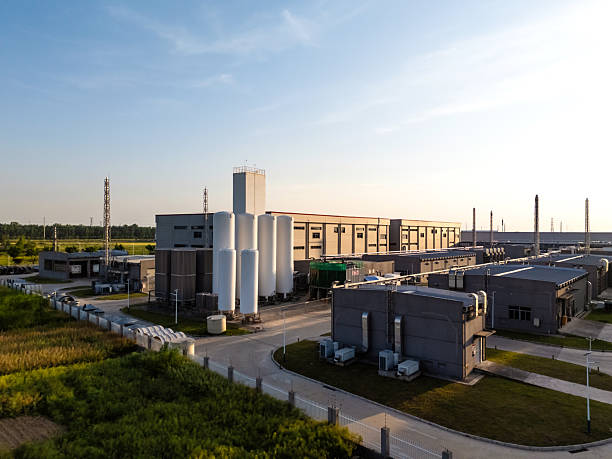
For industrial gas plant managers and medical equipment engineers, output reliability is the absolute baseline of operations. Achieving continuous, high-purity oxygen generation requires more than just robust compressors and valves.
The true bottleneck of any system lies within the chemical engineering at the molecular level. Maximizing the efficiency and lifespan of a system fundamentally depends on the quality of the separation media.
This article explores the critical thermodynamic and kinetic mechanisms governing modern oxygen generation, detailing why specific molecular sieves dictate overall plant efficiency.
The Core Mechanism of PSA Oxygen Generation
The foundation of on-site gas separation is pressure swing adsorption (PSA). This technology leverages the varying binding affinities of different gases under fluctuating atmospheric conditions.
Ambient air is compressed and directed into a vessel containing a packed adsorbent bed. Under high pressure, nitrogen molecules are selectively trapped within the porous crystalline structure of the molecular sieve, allowing purified oxygen to pass through.
Once the bed reaches its adsorption capacity, the system depressurizes. This pressure drop triggers the desorption phase, releasing the trapped nitrogen safely into the atmosphere and regenerating the bed for the next cycle.
The continuous efficiency of a PSA system relies heavily on the kinetic selectivity of this adsorbent bed. Producing high-performance zeolites requires rigorous hydrothermal synthesis and automated quality control.
Today, relying on advanced materials from industry leaders like Jalon can achieve zero batch-to-batch variance. This exceptional consistency is critical for sustaining life-saving medical oxygen and large-scale industrial outputs.
Nitrogen Selectivity in Advanced Zeolites
Not all adsorbents are created equal. The standard separation media historically relied on generic sodium-based molecular sieves.
However, modern engineering demands higher nitrogen selectivity, driving the adoption of specialized variants like 13X-HP (high-performance) and lithium-exchanged zeolites (Li-LSX).
These advanced synthetic zeolites are engineered with highly specific crystal pore sizes to exploit the subtle differences between gas molecules. Key technical parameters include:
- Quadrupole Moment Interaction: Nitrogen possesses a stronger quadrupole moment than oxygen. Lithium cations in Li-LSX create a highly localized electromagnetic field, pulling nitrogen molecules in with exceptional force.
- Working Capacity: Advanced zeolites offer a significantly higher nitrogen working capacity per cycle. This translates to smaller compressor requirements and reduced energy consumption (kWh/Nm³).
- Mass Transfer Zone (MTZ): High-quality adsorbents maintain a narrower MTZ, ensuring that a larger percentage of the bed is actively engaged in separation rather than serving as a buffer.
A primary technical pain point in PSA operations is moisture contamination. Zeolites are highly hydrophilic; if ambient humidity bypasses the pre-filtration stages, water molecules will aggressively occupy the active sites.
This moisture poisoning irreversibly degrades nitrogen selectivity and slashes system efficiency. High-grade zeolites mitigate this through robust structural stability, though stringent pre-drying of the feed air remains an engineering imperative.
Industry Compliance and Standards
As the demand for on-site oxygen generation scales globally, compliance with international purity standards remains non-negotiable.
Whether supplying a local metallurgical facility or a critical care unit, operators must strictly adhere to certified output parameters. Medical applications, in particular, demand zero tolerance for mechanical or chemical failure.
Technical guidelines established by the World Health Organization (WHO) stipulate strict purity and pressure thresholds for medical PSA plants to ensure operational reliability and safety.
By pairing advanced hydrothermal synthesis materials with rigorous preventative maintenance, engineers can secure long-term operational stability and maximize ROI on their PSA infrastructure.