Sathnam Sanghera: The Powerful Voice Redefining British Identity and History
From Struggle to Success — A British Journalist Challenging Narratives and Inspiring Change

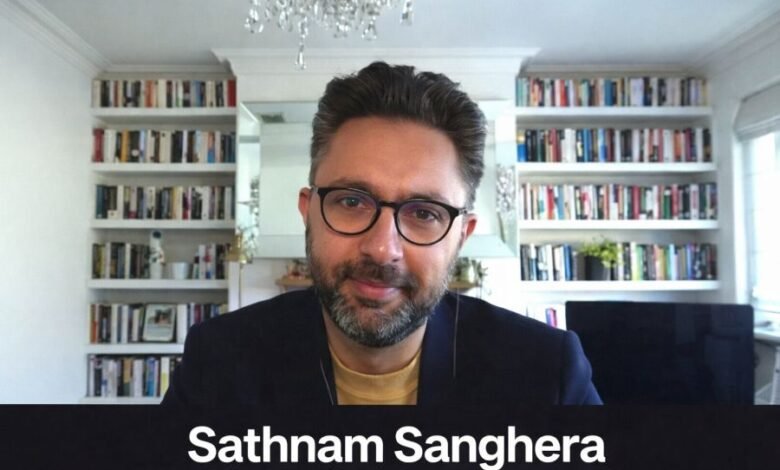
Table of Contents
ToggleIntroduction
Sathnam Sanghera is one of the most influential voices in modern British literature and journalism. As a British journalist, author, and broadcaster, he has built a reputation for addressing complex themes such as identity, migration, and the legacy of the British Empire. His work stands out for its honesty, depth, and ability to connect personal experiences with broader historical issues.
Despite facing early challenges, including language barriers and cultural struggles, Sathnam Sanghera transformed his life through education and storytelling. Today, he is widely respected for his ability to challenge traditional narratives while making history accessible to a wider audience.
Quick Bio
| Field | Details |
|---|---|
| Full Name | Sathnam Sanghera |
| Date of Birth | 12 October 1976 |
| Age | 49 (as of 2026) |
| Birthplace | Wolverhampton, England |
| Nationality | British |
| Ethnicity | Punjabi Sikh |
| Religion | Sikhism |
| Profession | British journalist, author, broadcaster |
| Education | Christ’s College, Cambridge |
| Known For | The Boy with the Topknot, Empireland |
Early Life and Background
Sathnam Sanghera was born in Wolverhampton to Punjabi Sikh parents who had immigrated to the United Kingdom. Growing up in a working-class household, he experienced firsthand the challenges of balancing cultural identity with life in British society. His early years were marked by a strong sense of difference, which later became a central theme in his writing.
One of the most significant challenges he faced was entering school without being able to speak English. This barrier made his early education difficult, but it also shaped his determination to succeed. Over time, he developed a love for reading and learning, which became the foundation of his academic and professional achievements.
Education Journey
Sanghera attended Wolverhampton Grammar School, where he gained access to quality education through academic merit. His time there played a crucial role in shaping his intellectual curiosity and confidence, helping him overcome the limitations of his early struggles.
He later went on to study at Christ’s College, Cambridge, where he earned a first-class degree in English Language and Literature. This achievement marked a turning point in his life, proving that perseverance and dedication could overcome even the toughest beginnings.
Start of Career and Early Work
Before becoming a successful British journalist, Sathnam Sanghera worked in several jobs, including roles in a burger chain, hospital laundry, and sewing factory. These experiences gave him a grounded understanding of working-class life, which later influenced his writing style and themes.
His professional journalism career began at the Financial Times, where he worked as a reporter and feature writer. This role allowed him to develop his voice and establish himself in the competitive world of media.
Rise as a British Journalist
Sanghera later joined The Times, where he became a well-known columnist and feature writer. As a British journalist, he gained recognition for his thoughtful analysis, engaging storytelling, and ability to address sensitive topics with clarity and empathy.
His journalism focuses on issues such as race, identity, and social change. He has consistently used his platform to encourage meaningful conversations, making him a respected figure in both media and public discourse.
Writing Career and Major Works
The Boy with the Topknot
This memoir explores Sanghera’s upbringing in a Sikh family and the challenges he faced growing up in Britain. It offers a deeply personal look at family, identity, and mental health, making it both relatable and impactful.
The book received critical acclaim and was later adapted into a television film, further expanding its reach and influence.
Marriage Material
In this novel, Sanghera examines family dynamics, cultural expectations, and generational conflict. The story reflects the realities of immigrant families navigating life in modern Britain.
The novel was praised for its emotional depth and realistic portrayal of cultural tensions.
Empireland and Historical Writing
With Empireland, Sathnam Sanghera shifted his focus to history, exploring the lasting impact of the British Empire on modern society. The book sparked important discussions and challenged readers to rethink their understanding of history.
His later works continued this exploration, establishing him as a leading voice in conversations about colonial history and its modern implications.
Writing Style and Themes
Sathnam Sanghera’s writing is known for its clarity, honesty, and emotional depth. He has a unique ability to combine personal storytelling with broader historical analysis, making complex topics accessible to a wide audience.
His themes often include identity, migration, race, and the legacy of empire. By addressing these issues, he not only informs readers but also encourages them to think critically about the world around them.
Professional Impact and Achievements
Throughout his career, Sanghera has received multiple awards for his contributions to journalism and literature. These achievements reflect his dedication to excellence and his ability to connect with audiences through meaningful storytelling.
His work as a British journalist has also helped shape public conversations, particularly around topics that are often overlooked or misunderstood.
Recent Work and Influence
Sathnam Sanghera continues to write and speak on important cultural and historical issues. His recent books have gained widespread attention, reinforcing his position as a leading thinker in contemporary Britain.
He remains active in media and public discussions, using his platform to challenge outdated narratives and promote a more inclusive understanding of history.
Legacy and Importance
Sathnam Sanghera’s legacy lies in his ability to bridge personal experience with historical insight. He has opened up conversations about identity and history in ways that are both engaging and thought-provoking.
As a British journalist and author, he has not only informed readers but also inspired a new generation to question, learn, and grow. His work continues to have a lasting impact on literature, journalism, and society.
Conclusion
Sathnam Sanghera’s journey is a powerful example of resilience and intellectual growth. From overcoming early challenges to becoming a respected British journalist and author, his story is both inspiring and impactful.
His work highlights the importance of understanding identity and history, while also encouraging open and honest discussions. In a world where narratives are constantly evolving, Sathnam Sanghera remains a vital voice guiding readers toward greater awareness and understanding.
FAQ
Who is Sathnam Sanghera?
Sathnam Sanghera is a British journalist, author, and broadcaster known for writing about identity, culture, and the British Empire.
What is Sathnam Sanghera famous for?
He is best known for his memoir The Boy with the Topknot and his historical work Empireland.
What themes does Sathnam Sanghera write about?
His work focuses on identity, migration, race, and the impact of the British Empire.
Where did Sathnam Sanghera study?
He studied English Language and Literature at Christ’s College, Cambridge.
Why is Sathnam Sanghera important?
He is important for challenging traditional narratives and bringing attention to overlooked aspects of British history and identity.