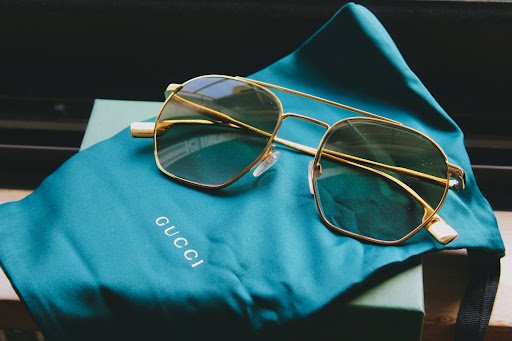
Most people, when they think about glasses frames, picture the usual suspects. Wayfarers, aviators, round frames, cat-eye shapes. These styles dominate optical shops and online retailers for good reason. They are versatile, flattering across a range of face shapes and have enough fashion history behind them to feel reliably safe as choices.
But eyewear has a much broader and stranger history than the mainstream would suggest. There are styles that barely register in modern optical retail, shapes that were genuinely popular in their era and have since been almost entirely forgotten, and design directions that most people have simply never encountered because they exist at the edges of what opticians typically stock.
If you wear prescription glasses and have always felt slightly underwhelmed by the options available to you, or if you are simply curious about where eyewear design has been, these five styles are worth knowing about.
1. Pince-Nez Glasses
Before temples became the standard way to keep glasses on the face, there was the pince-nez. The name comes from French and means literally to pinch the nose, which is exactly how these worked. Rather than hooking over the ears, pince-nez frames sat on the bridge of the nose and were held in place by a spring clip or a small pad system that gripped the sides of the nose.
They were enormously popular from the mid-nineteenth century through to the early twentieth century, worn by everyone from Theodore Roosevelt to Anton Chekhov. The frames came in a variety of shapes including oval, round and rectangular, and they were available with a chain or cord attached to the clothing or tucked into a pocket so they could be retrieved quickly when dropped.
They fell out of favour largely because they were uncomfortable to wear for long periods and had a tendency to slip. Modern versions do exist, usually as theatrical or novelty pieces, but occasionally as genuine fashion statements from independent eyewear designers who appreciate the unusual silhouette.
For anyone who wears varifocal glasses, the pince-nez would present obvious practical difficulties since varifocal lenses depend on a stable, correctly positioned frame to function properly. But as a piece of eyewear history, they are fascinating.
2. Lorgnette Glasses
Even more theatrical than the pince-nez, the lorgnette takes the idea of occasional use eyewear to its logical extreme. Rather than being worn on the face at all, a lorgnette consists of a pair of lenses mounted on a handle, held up to the eyes when needed and lowered again when not in use.
They were a fixture of eighteenth and nineteenth century European high society, associated with opera houses, ballrooms and anywhere that a certain theatricality was appropriate. Raising a lorgnette to scrutinise something or someone across a room carried considerable social weight, which was partly the point.
Modern versions are almost entirely ornamental, occasionally appearing as accessories in theatrical productions or period dramas. But small independent eyewear houses do occasionally produce updated interpretations with quality optics for people who want something genuinely unlike anything else available.
3. Monocle
The monocle is perhaps the most immediately recognisable rare eyewear style, largely because of how thoroughly it has been absorbed into visual shorthand for a certain kind of character. A single circular lens held in a simple metal or tortoiseshell rim, worn in one eye and kept in place by the natural tension of the surrounding facial muscles.
Contrary to modern assumptions, monocles were not exclusively the preserve of aristocrats or pantomime villains. They were a common and practical solution for people who needed correction in only one eye, widely used from the early nineteenth century through to the mid-twentieth century before single vision prescription glasses became both affordable and socially normalised.
Wearing a monocle requires a degree of muscular control that takes practice to develop, which partly explains why they declined as glasses became more comfortable and better fitting. A small number of independent opticians and eyewear designers still produce them for collectors, costume purposes and the occasional person who simply wants to make a very specific statement.
4. Tinted Half-Moon Reading Glasses
Half-moon reading glasses, sometimes called Benjamin Franklin glasses after their most famous proponent, sit low on the nose and allow the wearer to look over the top of the frames for distance vision and through the lower portion for reading. They are still available today, though rarely seen outside of a certain academic or literary aesthetic.
The rarer version of this style involves tinted lenses, typically in amber, rose or pale green, which were popular in the late nineteenth and early twentieth centuries as a way of managing light sensitivity alongside near vision correction. The combination of the distinctive half-moon shape with a coloured lens creates something that looks genuinely unlike anything in mainstream optical retail today.
This style has an interesting relationship with varifocal glasses. In many ways, the half-moon reading glass was an early solution to the same problem that varifocals eventually solved more elegantly. The wearer managed distance and near vision by physically moving their gaze above or through the lens rather than having the lens itself handle the transition. For anyone curious about the design history of multifocal vision correction, half-moon glasses represent an important chapter.
5. Shield or Visor Glasses
Shield glasses use a single continuous lens that wraps across both eyes rather than two separate lenses held in individual frames. The result is something that sits closer to a visor than a conventional pair of glasses, offering wider coverage and a distinctly futuristic appearance.
While wraparound sports sunglasses have brought a version of this concept into the mainstream for outdoor and athletic use, prescription shield glasses remain genuinely unusual. The optical challenges involved in producing a single curved lens with accurate prescription correction across its full width are considerable, which is one reason the style has never moved far from niche territory.
Independent eyewear designers have experimented with shield frames more adventurously in recent years, particularly within the fashion-forward end of the market. As lens manufacturing technology continues to improve, the possibility of prescription shield glasses becoming more accessible is growing, though for now they remain rare enough to turn heads reliably.
It is worth noting that glasses frames in this category require careful fitting. A shield lens that sits incorrectly relative to the pupil will distort vision, which makes professional fitting particularly important for anyone considering them as a genuine prescription option rather than a purely decorative one.
What These Styles Say About Eyewear Design
Looking at these five styles together, a few things become clear about how eyewear design has evolved. Early solutions to vision correction were often ingenious but physically demanding on the wearer, requiring active effort to keep glasses in place or to manage which part of the eye was doing the work at any given moment.
The progression towards frames that sit securely, lenses that handle multiple focal distances within a single surface and materials that are lightweight enough to be worn comfortably all day reflects a consistent drive towards making vision correction as effortless as possible. Varifocal glasses represent one of the more significant steps in that progression, eliminating the need to swap between pairs or physically manage your viewing angle in the way that half-moon glasses required.
The rare styles covered here did not disappear because they failed. They were simply overtaken by solutions that asked less of the person wearing them. That context makes them considerably more interesting as design objects than they might initially appear.
Final Thoughts
Eyewear has a richer and more varied history than most people ever encounter in a standard optical shop. The pince-nez, the lorgnette, the monocle, tinted half-moon frames and shield glasses each represent a genuinely different approach to the same fundamental challenge of getting light to focus correctly on the eye while remaining wearable in daily life.
If you wear prescription glasses and have always chosen from the same handful of mainstream styles, it is worth knowing that the design space for eyewear is considerably wider than retail tends to suggest. Some of these rarer styles are available through independent designers and specialist makers for those willing to look beyond the obvious options.