The Growing Importance and Industrial Benefits of Powder Coating Technology in Modern Surface Finishing

Introduction to Powder Coating and Its Industrial Relevance
In modern manufacturing and industrial finishing processes, surface protection and aesthetic enhancement play a critical role in determining product quality, durability, and long-term performance, and among the many available finishing techniques, powder coating has emerged as one of the most efficient, durable, and environmentally friendly methods used across a wide range of industries including automotive, construction, furniture, appliances, and heavy machinery production where both appearance and protection are essential factors for success. This technology involves the application of a dry powder made from finely ground particles of pigment and resin that is electrostatically charged and sprayed onto a surface, after which it is cured under heat to form a smooth, hard, and highly durable protective layer that bonds strongly with the base material, creating a finish that is resistant to corrosion, scratches, fading, and general wear and tear over time. The increasing demand for high-performance coatings has significantly boosted the use of powder coating as industries seek more reliable and long-lasting solutions compared to traditional liquid paints that often require solvents and multiple layers to achieve similar results.
Working Principle and Application Process of Powder Coating
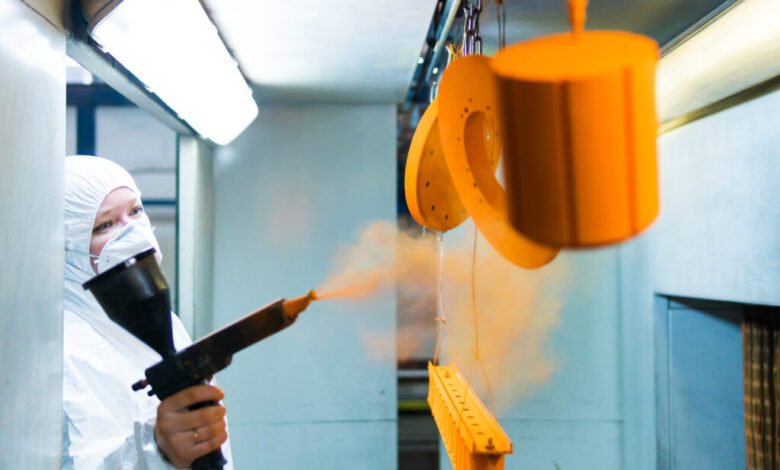
The working principle of powder coating is based on electrostatic attraction and heat curing, where the powder particles are given an electric charge and sprayed onto a grounded metal surface so that they adhere evenly across the entire area, creating a uniform coating layer without drips, runs, or uneven thickness commonly associated with liquid paint applications, and once the powder is applied, the coated object is placed in a curing oven where high temperatures melt the powder particles and allow them to flow together and chemically react to form a continuous, durable film that bonds permanently to the surface. The process begins with thorough surface preparation, which is essential for achieving optimal results, and this typically involves cleaning, degreasing, and sometimes abrasive treatment to remove rust, dirt, or old coatings so that the powder can properly adhere to the substrate. After preparation, the application stage ensures even distribution of powder using specialized spray guns, and finally the curing stage solidifies the coating into a tough protective layer that enhances both appearance and functionality. powder coating is widely valued in industrial environments because it eliminates the need for solvents, reduces waste, and produces a consistent finish that meets high-quality standards.
Importance of Surface Preparation in Powder Coating Performance
Surface preparation is one of the most important steps in ensuring the success of any coating process because even the highest quality powder will fail to perform effectively if applied to a contaminated or improperly prepared surface, and this is why industries invest significant time and resources into cleaning and pre-treatment processes that ensure surfaces are free from oil, grease, rust, oxidation, and other impurities that could compromise adhesion and long-term durability. Methods such as chemical cleaning, abrasive blasting, and phosphating are commonly used to create a clean and slightly roughened surface profile that enhances bonding strength between the substrate and coating layer, ensuring that the final finish remains intact even under harsh environmental conditions. Without proper preparation, powder coating may peel, chip, or lose adhesion over time, leading to increased maintenance costs and reduced product lifespan, which highlights the importance of following strict preparation protocols before applying coating materials.
Industrial Applications of Powder Coating Technology
Powder coating is widely used across multiple industries due to its durability, efficiency, and aesthetic versatility, making it suitable for both functional and decorative applications where long-term protection and visual appeal are required simultaneously. In the automotive industry, it is commonly applied to wheels, frames, engine parts, and accessories to protect against corrosion, heat, and mechanical wear while also providing an attractive finish that enhances the overall appearance of vehicles. In the construction sector, powder coating is used on aluminum frames, steel structures, doors, windows, and railings to ensure resistance against weather conditions such as rain, humidity, and UV exposure, which helps maintain structural integrity and visual appeal over time. The furniture industry also relies heavily on powder coating for metal furniture frames and fittings because it provides a smooth, scratch-resistant surface that enhances product durability and aesthetics, while home appliance manufacturers use it extensively for refrigerators, washing machines, and other household equipment to improve both functionality and appearance. powder coating has become a preferred choice in many industries due to its ability to deliver consistent results across different materials and product types.
Types of Powder Coating Materials and Their Characteristics
Different types of powder coating materials are available depending on the desired performance characteristics and application requirements, and these generally fall into two main categories: thermoset powders and thermoplastic powders, each offering distinct advantages depending on usage conditions. Thermoset powders undergo a chemical cross-linking process during curing that makes them highly resistant to heat, chemicals, and environmental stress, making them ideal for industrial and outdoor applications where durability is essential, while thermoplastic powders melt and flow during curing but do not undergo chemical changes, allowing them to be remelted and reshaped, which makes them suitable for applications requiring flexibility and impact resistance. Additionally, different resin systems such as epoxy, polyester, polyurethane, and hybrid formulations are used to achieve specific properties such as UV resistance, chemical resistance, gloss levels, and mechanical strength, allowing manufacturers to select the most appropriate powder coating solution based on performance needs and environmental conditions.
Advantages of Powder Coating Over Traditional Finishing Methods
One of the major advantages of powder coating is its ability to produce a highly durable and uniform finish without the use of solvents, making it an environmentally friendly alternative to traditional liquid paint systems that release volatile organic compounds into the atmosphere and contribute to pollution, whereas powder coating produces minimal waste and allows unused powder to be recycled and reused, improving material efficiency and reducing overall production costs. It also provides superior resistance to chipping, scratching, fading, and corrosion, which significantly extends the lifespan of coated products and reduces maintenance requirements over time. Another important advantage is the ability to achieve consistent thickness and smooth finishes without drips or runs, which enhances both functional and aesthetic quality. In addition, powder coating is highly cost-effective in large-scale production environments due to its efficiency, reduced waste, and lower operational costs, making it a preferred choice for manufacturers seeking high performance and sustainability.
Technological Advancements in Powder Coating Systems
Modern advancements in powder coating technology have significantly improved application precision, efficiency, and environmental performance, with automated spray systems now widely used in industrial production lines to ensure uniform coating application and reduce human error while increasing production speed and consistency. Advanced curing ovens with precise temperature control systems ensure optimal curing conditions that enhance coating durability and finish quality, while electrostatic spray technology has evolved to improve powder transfer efficiency, reducing waste and improving coverage even on complex surface geometries. Innovations in powder formulation have also led to the development of specialized coatings with enhanced properties such as anti-microbial surfaces, heat resistance, UV stability, and self-cleaning capabilities, making powder coating more versatile and suitable for advanced industrial applications.
Economic and Environmental Impact of Powder Coating
Powder coating offers significant economic benefits by reducing material waste, lowering energy consumption, and minimizing maintenance costs over the product lifecycle, making it a highly cost-efficient finishing solution for industries that require large-scale production and long-term durability. Its environmental advantages are equally important, as it eliminates the use of harmful solvents and reduces air pollution by producing negligible volatile emissions, contributing to safer working environments and compliance with environmental regulations. The ability to recycle unused powder further enhances its sustainability profile, making it one of the most eco-friendly finishing technologies available today while still delivering high-performance results that meet industrial standards.
Future Trends in Powder Coating Technology
The future of powder coating is expected to focus on further improvements in sustainability, automation, and material innovation, with increasing development of bio-based resins, low-temperature curing systems, and smart coatings that respond to environmental changes such as temperature and humidity, allowing for more adaptive and energy-efficient finishing solutions. Automation and digital monitoring systems will continue to improve production efficiency and quality control, enabling manufacturers to achieve higher precision with reduced labor costs, while research into advanced coating materials will expand the range of applications across emerging industries such as renewable energy, electronics, and aerospace where performance requirements are extremely demanding.
Conclusion
In conclusion, powder coating has established itself as a leading surface finishing technology due to its exceptional durability, environmental benefits, and wide range of industrial applications that make it suitable for everything from automotive components to construction materials and household appliances, and its ability to provide long-lasting protection, attractive finishes, and cost-effective production solutions has made it an essential part of modern manufacturing processes. With continuous technological advancements and growing demand for sustainable solutions, powder coating is expected to play an even more important role in the future of industrial finishing, offering improved performance, greater efficiency, and enhanced environmental responsibility while maintaining high-quality standards across all applications.