A water bottle seems like a simple item, but not every bottle works well for every routine. A bottle that feels perfect on a desk may feel awkward during a walk. A bottle that works for the gym may be too large for a small bag. A bottle that is useful for travel may not be the easiest choice for a child’s school day.
People often choose a bottle based on appearance first, but daily habits matter more. The right bottle should match how someone moves, drinks, cleans, stores, and carries things throughout the day. When the bottle fits the routine, it is more likely to be used often instead of being left at home.
Different materials, lids, shapes, and sizes all affect how practical a bottle feels in real life.
Think About Where the Bottle Will Be Used
The first question is simple: where will the bottle spend most of its time? A bottle used mainly at a desk does not need the same features as one used for walking, driving, sports, school, or travel.
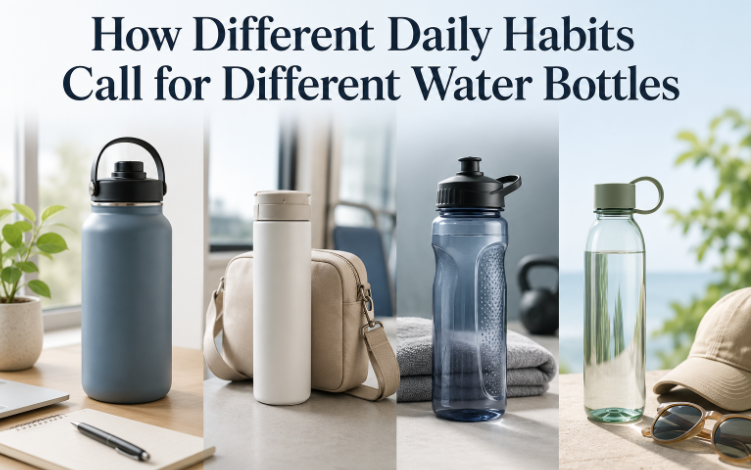
For office or study use, a bottle should be comfortable to keep nearby. It should sit well on a desk, open easily, and be simple to refill. A larger capacity may be helpful if someone does not want to leave the desk often.
For commuting or errands, portability matters more. The bottle should fit into a bag, cup holder, or side pocket without leaking. A slim shape can be useful when space is limited.
For outdoor time, durability and weight both matter. A bottle should be strong enough for movement but not so heavy that people avoid carrying it. For children’s activities, lightweight and easy-to-hold designs are usually more practical.
This is why there is no single best bottle for everyone. The best choice depends on the situation.
Match the Lid and Shape to the Routine
Lid style can change how convenient a bottle feels. A screw top may feel secure for travel or a bag. A straw lid may be easier for quick drinking during study, work, or light activity. A flip lid can be convenient when someone wants to drink with one hand.
The shape matters too. Slim bottles are easier to carry and store. Wide-mouth bottles are easier to clean and fill with ice. Larger bottles are useful for long days, but they may not fit every bag or cup holder. Smaller bottles are easier to carry, but they need more frequent refilling.
People should also think about cleaning. A bottle with many small parts may become annoying over time. If a bottle is difficult to wash, it may stop being used regularly.
For anyone comparing materials, lids, and shapes, this guide to the types of water bottles can help explain the main options in a simple way.
Choose a Bottle People Will Actually Keep Using
A good water bottle should feel easy to use again and again. It should match the person’s normal habits, not require a completely new routine. If someone often carries a small bag, a bulky bottle may not work. If someone spends long hours outside, a tiny bottle may not be enough.
Design can also affect use. People are more likely to carry a bottle that looks clean and feels appropriate for their setting. A simple design can work across school, work, travel, and casual outings.
For organizations, schools, teams, and brands, this matters when choosing custom drinkware. A bottle should not only look good with a logo. It should also be practical for the people receiving it. MeetPrinting helps create custom products that can be selected around real usage, not only appearance.
The more naturally a bottle fits into someone’s day, the more likely it is to stay in use.
Final Thoughts
Different daily habits call for different water bottles. Office routines, school days, gym sessions, commutes, travel plans, and outdoor activities all create different needs. Material, lid style, shape, capacity, and cleaning all matter.
The best bottle is not always the largest, most expensive, or most stylish one. It is the one that feels easy to carry, easy to clean, and useful in the situations where it will actually be used. When a bottle fits real life, it becomes part of the routine.