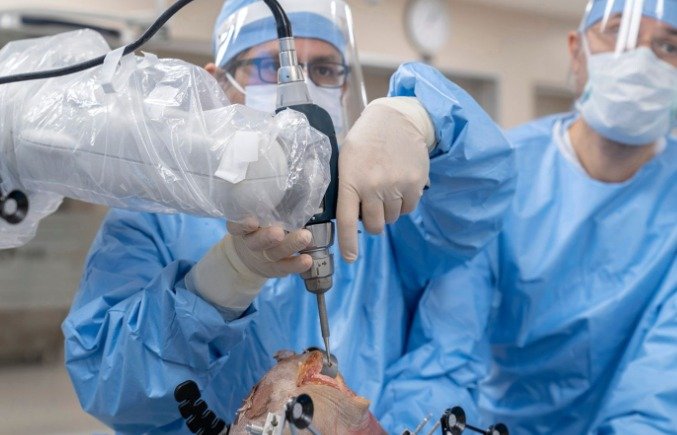
Knee replacement surgery may be recommended when severe arthritis or joint damage causes persistent pain, stiffness, and difficulty performing everyday activities despite appropriate non-surgical treatments. Today, patients may have the option of traditional knee replacement or robotic-assisted surgery.
Both procedures aim to replace damaged joint surfaces, reduce pain, and improve mobility. However, they differ in surgical planning, technology, and how certain steps are performed. Understanding these differences can help patients discuss the most appropriate approach with their orthopaedic surgeon.
What Is Robotic Knee Replacement?
Robotic knee replacement is a surgical approach in which an orthopaedic surgeon uses robotic-assisted technology to help plan and perform specific stages of knee replacement. The robot does not operate independently; the surgeon remains in control throughout the procedure.
How Does Robotic Knee Replacement Work?
Depending on the robotic system, detailed information about the patient’s knee anatomy is obtained before or during surgery. This information helps create an individualized surgical plan for bone preparation, implant positioning, and joint alignment.
During surgery, robotic technology provides guidance that helps the surgeon follow the planned positioning while considering the patient’s unique anatomy and joint mechanics.
What Is Traditional Knee Replacement?
Traditional knee replacement is performed without robotic assistance. The surgeon uses established surgical instruments, anatomical landmarks, measurements, and alignment guides to remove damaged joint surfaces and position artificial knee components.
This approach has been used successfully for many years and remains a widely established treatment for advanced knee arthritis and other conditions causing significant joint damage.
Robotic vs Traditional Knee Replacement: Key Differences
Although both procedures have the same overall objective, the methods used for surgical planning and implant placement differ.
| Factor | Robotic Surgery | Traditional Surgery |
| Planning | Technology-assisted and individualized | Conventional surgical planning |
| Bone preparation | Robotic guidance assists the surgeon | Manual instruments and guides |
| Implant positioning | Computer-assisted guidance | Conventional alignment techniques |
| Surgeon control | Surgeon remains in control | Surgeon remains in control |
| Availability | Requires specialized technology | Widely available |
| Recovery | Varies by individual | Varies by individual |
The presence of robotic technology does not automatically make one approach suitable for every patient. Individual knee anatomy, disease severity, surgeon experience, and overall health remain important considerations.
Benefits of Robotic Knee Replacement
One of the main potential benefits of robotic-assisted surgery is detailed planning based on an individual’s knee anatomy. The technology can assist the surgeon in performing planned bone preparation and positioning the implant.
Potential benefits may include:
- Patient-specific surgical planning
- Guidance during bone preparation
- Assistance with implant positioning
- Real-time information during surgery
- Support for assessing knee alignment and balance
In Ahmedabad, individuals considering surgery for severe knee arthritis may discuss robotic knee replacement in Ahmedabad with an orthopaedic surgeon to understand its potential benefits, limitations, suitability for their condition, and expected recovery before making an informed treatment decision.
However, robotic technology is only one part of successful treatment. Surgeon experience, appropriate patient selection, postoperative care, and rehabilitation also influence overall outcomes.
Limitations of Robotic Knee Replacement
Robotic-assisted knee replacement requires specialized equipment, trained professionals, and appropriate hospital infrastructure. Therefore, it may not be available at every healthcare facility.
Other possible limitations include additional costs, the potential need for specific preoperative imaging with certain systems, and dependence on specialized technology. Robotic assistance also does not guarantee a complication-free procedure or a faster recovery for every patient.
Benefits and Limitations of Traditional Surgery
Traditional knee replacement is a well-established procedure supported by decades of clinical experience. It is widely available and does not require specialized robotic equipment. Experienced orthopaedic surgeons can achieve appropriate implant positioning and alignment using conventional surgical techniques.
However, conventional surgery does not provide the same computer-assisted planning or robotic guidance available with certain robotic systems. Outcomes still depend significantly on surgical expertise, patient health, implant positioning, rehabilitation, and postoperative care.
Recovery: Robotic vs Traditional Knee Replacement
Recovery after either type of knee replacement varies from person to person. Patients generally begin movement and rehabilitation soon after surgery based on their medical condition and surgeon’s recommendations.
What to Expect During Recovery
During the initial recovery period, patients may experience pain, swelling, stiffness, and temporary difficulty walking. Physiotherapy is usually an important part of recovery and focuses on improving:
- Knee movement and flexibility
- Muscle strength
- Walking ability
- Balance and stability
- Daily functional activities
Many patients gradually return to routine activities over several weeks, although complete recovery may continue for several months. Age, overall health, preoperative mobility, surgical factors, and adherence to rehabilitation can influence the recovery timeline.
Which Surgery Is Better for You?
There is no single approach that is best for every patient. Robotic-assisted surgery provides advanced technology for surgical planning and guidance, while traditional knee replacement remains an established and effective treatment.
An orthopaedic surgeon may consider knee anatomy, arthritis severity, deformity, previous surgeries, overall health, implant requirements, and available technology before recommending an appropriate approach.
Patients should understand the expected benefits, limitations, possible risks, and rehabilitation requirements of both options before making a treatment decision.
Conclusion
Robotic and traditional knee replacement aim to reduce pain and restore function in severely damaged knee joints. Robotic surgery uses technology-assisted planning and guidance, while traditional surgery relies on established conventional techniques.
The appropriate choice depends on individual knee anatomy, health, surgical requirements, surgeon expertise, and available facilities. A detailed orthopaedic evaluation can help determine which approach is appropriate for each patient.
Frequently Asked Questions
1. Is robotic knee replacement better than traditional surgery?
Not necessarily. Robotic assistance provides detailed planning and surgical guidance, while traditional surgery is a well-established approach. The appropriate technique depends on the patient’s knee condition, anatomy, overall health, and individual surgical requirements.
2. Does the robot perform knee replacement surgery independently?
No. The orthopaedic surgeon performs and controls the operation. Robotic technology functions as an assisting system that provides information and guidance during specific stages of surgical planning, bone preparation, and implant positioning.
3. Is recovery faster after robotic knee replacement?
Recovery varies between individuals. Robotic assistance may support precise surgical execution, but recovery also depends on age, overall health, knee condition, pain management, surgical factors, muscle strength, and participation in postoperative physiotherapy.
4. How long does knee replacement recovery take?
Many patients gradually resume everyday activities within several weeks, while overall recovery may continue for several months. Recovery time varies according to general health, surgical factors, preoperative mobility, rehabilitation progress, and individual healing.
5. Who may need knee replacement surgery?
Knee replacement may be considered when severe arthritis or joint damage causes persistent pain, stiffness, reduced mobility, and difficulty with daily activities despite appropriate non-surgical treatment. An orthopaedic evaluation helps determine whether surgery is appropriate.