Martin Ádám Powerful Rise Beyond Harsh Online Doubts
A resilient Hungarian footballer with strength, goals, family values, and a memorable public image.

Introduction
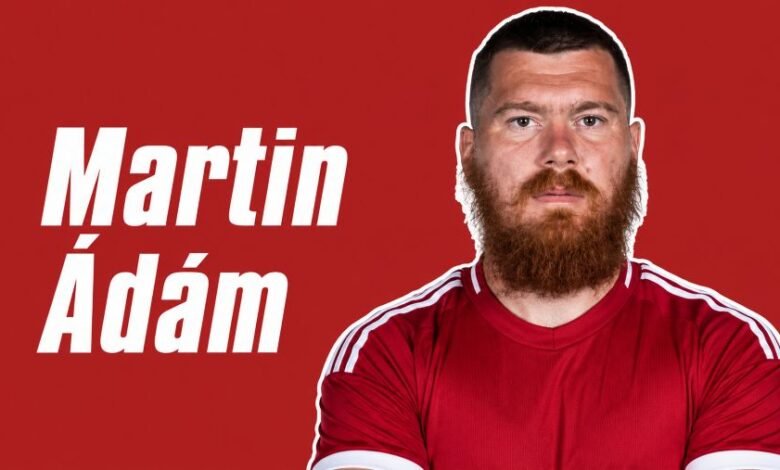
Martin Ádám is a Hungarian footballer known for his powerful physical presence, left-footed finishing, and determined rise through Hungarian football. He became widely recognized after his excellent scoring season with Paksi FC and later gained international attention with the Hungary national team. His story is not only about goals, trophies, and transfers, but also about patience, setbacks, family support, and personal resilience.
He is often remembered by fans as the “Hungarian Viking,” a nickname connected with his strong appearance, shaved head, and beard. While some online attention during Euro 2024 was negative, he handled it with calmness and confidence. His career shows both sides of professional football: the positive side of achievement and the difficult side of public pressure.
Quick Bio
| Detail | Information |
|---|---|
| Real Name | Ádám Martin, internationally written as Martin Ádám |
| Nickname | Hungarian Viking |
| Date of Birth | 6 November 1994 |
| Age | 31 years old |
| Birthplace | Szeged, Hungary |
| Nationality | Hungarian |
| Profession | Professional footballer |
| Main Position | Centre-forward |
| Other Position | Second striker |
| Preferred Foot | Left |
| Height | 1.91 m |
| Known For | Powerful forward play and 31-goal Paks season |
| National Team | Hungary |
| Hungary Record | 28 caps, 3 goals |
| Wife | Gitta |
| Child | Son named Konor |
| Social Media | Instagram: @adam.martin66 |
Martin Ádám Early Life
Martin Ádám was born in Szeged, Hungary, and grew up in Forráskút. His early football life began in a simple environment, not in a large academy or famous city club. Because Forráskút did not have the right children’s team for him, his father took him to nearby Bordány so he could start organized football.
This early step became important because it gave him a foundation before he moved into stronger football systems. He later joined Tisza Volán in 2008 and then Vasas in 2009, where he continued his football development in Budapest. He also completed secondary school while developing as a young player.
Martin Ádám Education and Youth Development
His education was connected with his move to Budapest. While many footballers focus only on sport from a young age, he balanced school life with football training after joining Vasas. This period helped him grow not only as a player but also as a disciplined young person.
As a youth player, he passed through Bordány, Tisza Volán, and Vasas. These clubs shaped his early technical ability, match understanding, and confidence. His development was not instant, but it gave him enough experience to move into senior football with a serious mindset.
Martin Ádám Family and Personal Life
Martin Ádám is married to Gitta. Public reports say they knew each other from primary school, which makes his family story more personal and grounded. Their relationship is connected with his life in Forráskút, a place he has described as home and an important part of his identity.
He has a son named Konor. His public image may look tough on the football field, but his personal life presents a quieter side. He is often described as someone who values home, family, and a simple lifestyle away from the noise of professional football.
Martin Ádám Career Start
Martin Ádám started his senior career with Vasas, a historic Hungarian club. His time there gave him a real introduction to professional football. He learned how to compete physically, how to deal with pressure, and how to fight for regular minutes in senior matches.
This stage was important because he was not immediately a major star. He had to grow step by step. That slow rise later became part of his strength, because he understood the value of patience and hard work before becoming a widely known Hungarian footballer.
Club Career Overview
Vasas Career
At Vasas, he moved from youth football into the senior setup. He played several seasons with the club and gained valuable experience in Hungarian football. This period helped him understand the demands of professional matches and gave him the base for future growth.
Although his biggest fame came later, Vasas was still a key part of his story. It was the place where he learned senior-level discipline and began building the career that eventually took him to Paks, South Korea, Greece, and the Hungary national team.
Kaposvári Rákóczi Career
After Vasas, he played for Kaposvári Rákóczi. This move helped him continue his development and gain more senior responsibility. Every forward needs regular minutes to improve, and this stage gave him another chance to prove himself.
His time at Kaposvár came before his major rise at Paks. It was not the most famous chapter of his career, but it was useful because it prepared him for the breakthrough that would soon make him one of the most talked-about forwards in Hungary.
Paksi FC Breakthrough
The breakthrough of Martin Ádám came at Paksi FC. He joined the club and quickly became an important attacking player. His first period at Paks showed that he could score, but the 2021/22 season changed his career completely.
In that season, he scored 31 league goals in 32 appearances, becoming the top scorer in Hungary’s top division. This performance made him one of the standout players in the league and opened the door to the national team. It also proved that his strength, finishing, and positioning could dominate domestic football.
Ulsan HD Career
After his outstanding Paks season, he moved abroad to Ulsan Hyundai, later known as Ulsan HD, in South Korea. This was a major step because it took him away from Hungarian football and placed him in a different football culture.
With Ulsan, he won K League 1 titles in 2022 and 2023. Winning league titles abroad added an important achievement to his career. It showed that he could contribute beyond Hungary and be part of a successful team in Asian football.
Asteras Tripolis Career
In 2024, he joined Greek club Asteras Tripolis. The move looked like another European opportunity after his time in South Korea. However, this spell did not become a long-term success.
His time in Greece was short, and he later returned to Paks. This part of his career shows that not every move in football brings the expected result. Even strong players can face difficult transitions when they change leagues, teams, and playing styles.
Return to Paksi FC
After leaving Asteras Tripolis, Martin Ádám returned to Paksi FC. Returning to a familiar club gave him another chance to reconnect with a place where he had already achieved great success.
Paksi FC later announced that he would leave after the 2025/26 season. The club highlighted his contribution, including his goals, awards, cup success, and national-team recognition. His return may not have matched the impact of his first spell, but his name remains important in the club’s modern story.
International Career With Hungary
Martin Ádám became part of the Hungary senior national team in 2022. He earned attention after his strong scoring record at Paks, and his physical style gave Hungary another option in attack. He has been listed with 28 caps and 3 goals for the national team.
He was also selected for Hungary’s Euro 2024 squad. During the tournament, he became a public talking point because of his appearance and strong build. Some attention was positive, while some online comments were negative. He responded with maturity, showing that mental strength is also part of his identity as a professional footballer.
Career Stats
| Category | Record |
|---|---|
| Hungary Senior Team | 28 caps, 3 goals |
| Best League Season | 31 goals in 32 league games for Paks |
| Main Position | Centre-forward |
| Paks Across Two Spells | 92 matches, 44 goals reported by the club |
| Major Overseas Club | Ulsan HD |
| K League Titles | 2022 and 2023 |
| Euro Appearance | Hungary Euro 2024 squad |
These numbers explain why Martin Ádám is respected as a serious forward. His best season was not a small achievement; scoring 31 league goals made him a rare domestic standout and helped him move into a higher level of attention.
Martin Ádám Career Timeline
| Year or Period | Team or Event | Career Note |
|---|---|---|
| Youth | Bordány | Started organized football |
| 2008 | Tisza Volán | Continued youth development |
| 2009 | Vasas | Moved to Budapest football system |
| 2012–2019 | Vasas | Senior career development |
| 2019–2020 | Kaposvári Rákóczi | Continued professional growth |
| 2020–2022 | Paksi FC | Major breakthrough period |
| 2021/22 | Paksi FC | Scored 31 league goals |
| 2022–2024 | Ulsan HD | Won two K League titles |
| 2024 | Asteras Tripolis | Short Greek spell |
| 2025–2026 | Paksi FC | Returned before announced departure |
Playing Style
Martin Ádám is a strong centre-forward who is known for physical power, penalty-area presence, and left-footed finishing. He is not mainly recognized as a fast winger or flashy dribbler. His value comes from his ability to hold the ball, challenge defenders, and finish chances inside the box.
As a Hungarian footballer, he gives teams a direct attacking option. Coaches can use him when they need strength, height, and pressure on defenders. His style is especially useful in tight matches where crosses, set pieces, and physical battles become important.
Health and Injury
Publicly available information shows that he had breathing-related difficulty earlier in his development, but he continued his football journey after overcoming that challenge. This detail adds depth to his biography because his path was not completely smooth.
He also faced injury issues during his later return to Paks, including a knee problem mentioned in Hungarian football coverage. These setbacks affected his rhythm, but his career still shows resilience and a willingness to continue competing.
Public Image and Social Media
Martin Ádám became internationally visible during Euro 2024 because of his strong frame and “Hungarian Viking” image. The attention was mixed. Some fans enjoyed his different look and powerful style, while some online comments became personal and unfair.
His public response was calm. He did not allow the negative side of internet attention to define him. That attitude made many people respect him more, because he showed confidence in who he is rather than changing himself for public opinion.
Business and Commercial Activity
Martin Ádám has been connected with a Hungarian Viking lager project with Horizont Brewing. This commercial activity matches his public nickname and personality, making it a brand idea connected to his football image.
This is not the main part of his career, but it shows how a footballer’s identity can move beyond the pitch. His nickname became more than a fan label; it also became part of a public brand story linked with Hungarian culture and sport.
Legacy
The legacy of Martin Ádám is built on determination, goals, and authenticity. His 31-goal season with Paks remains the strongest sporting highlight of his career. It changed his reputation and made him a national-team player.
His story also matters because he did not follow the perfect superstar path. He came from smaller football roots, worked through setbacks, moved abroad, represented Hungary, faced online criticism, and stayed true to himself. That makes his biography both powerful and human.
Conclusion
Martin Ádám is more than a footballer with a memorable nickname. He is a Hungarian footballer who built his career through hard work, patience, and physical strength. From Szeged and Forráskút to Paks, Ulsan, Greece, and the Hungary national team, his journey shows both success and struggle.
His career includes a historic scoring season, international recognition, league titles abroad, and a strong family-centered personal life. The positive side of his story is his rise and resilience; the negative side is the pressure and criticism that comes with public attention. Together, they make his biography real, inspiring, and easy to understand.
FAQs
Who is he?
He is a professional Hungarian footballer known as a strong centre-forward.
Where was he born?
He was born in Szeged, Hungary.
How old is he?
He is 31 years old.
Is he married?
He is married to Gitta.
Does he have children?
He has a son named Konor.
What is his nickname?
He is known as the Hungarian Viking.
What position does he play?
He plays mainly as a centre-forward.
What is his biggest career highlight?
His biggest highlight is scoring 31 league goals for Paks in the 2021/22 season.