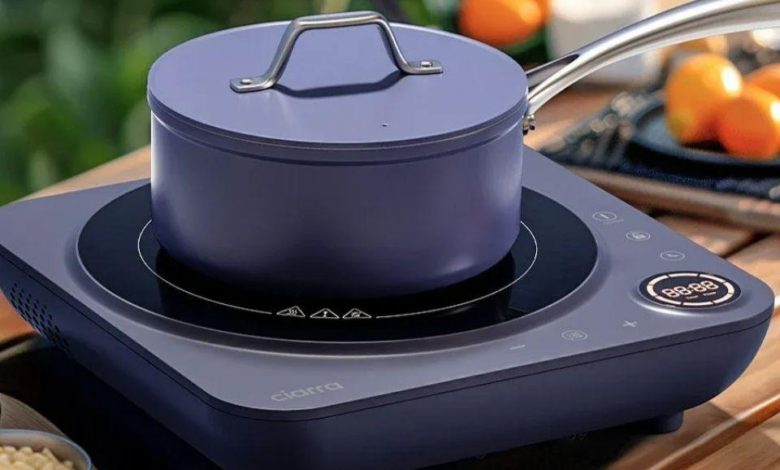
A portable induction cooktop that suddenly shuts off can interrupt cooking and make you wonder whether the appliance has failed. In many cases, automatic shutdown is a response to a condition the cooktop has detected rather than proof of a serious defect. Heat buildup, unsuitable cookware, pan positioning, power problems, timer settings, and restricted airflow can all play a role.
Several causes are easy to check. Before assuming the appliance needs repair or replacement, work through the basic troubleshooting steps in a sensible order. This guide explains seven things to check first and when continued troubleshooting is no longer appropriate.
Why Does a Portable Induction Cooktop Keep Shutting Off?
An induction cooktop may shut itself off when its safety system detects excessive heat, cannot detect suitable cookware, encounters a power problem, or reaches a programmed timer limit. The exact behavior varies by model, so the owner’s manual remains the best source for model-specific error codes and operating limits.
Start with conditions you can safely inspect: temperature and airflow, then cookware, pan position, power, settings, and error messages. If the appliance still shuts down, a sensor, cooling fan, or internal component may need attention.
1. Check Whether the Cooktop Is Overheating
Overheating is one of the first things to check when a cooktop stops during cooking. Portable units have temperature-monitoring and protective systems that can limit operation when internal components or cooking surfaces become too hot. Long cooking sessions, high power settings, hot cookware, or poor airflow can contribute to heat buildup.
Pay attention to timing. If the cooktop works normally for a while and then stops, especially during demanding cooking, heat protection becomes more plausible. Some models may display an error message or require a cooling period before operating again.
Try these basic steps:
- Turn the cooktop off and allow it to cool completely.
- Check that nothing is covering its ventilation openings.
- Move nearby heat sources or objects away from the appliance.
- Restart it only after it has cooled and the surrounding area is clear.
If normal operation returns after cooling, overheating may have been the trigger. Repeated shutdowns deserve further investigation rather than repeated restarting.
2. Make Sure the Cookware Is Induction-Compatible
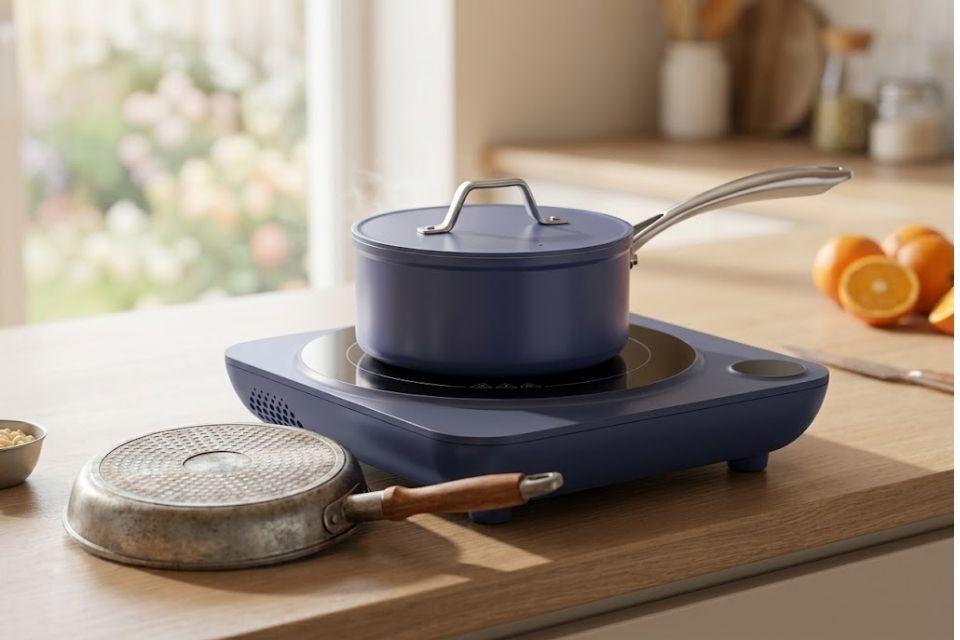
Induction cooking depends on a magnetic connection between the cookware base and the appliance. If the cooktop cannot detect a suitable pan, it may refuse to heat, stop heating, or shut down after a short period. This is common with non-magnetic cookware.
Cast iron and many magnetic stainless-steel pans are generally suitable. Ordinary aluminum, copper, and glass may not work unless they have a compatible magnetic base. The material name alone is not always enough to determine compatibility.
Try a simple magnet test on the underside. If the magnet attracts firmly, the cookware may be suitable, although the manual should still be checked for size and construction requirements. Also inspect the base for severe warping or damage.
3. Check the Pan’s Position and Size
Even compatible cookware can cause problems if it is positioned incorrectly or falls outside the cooktop’s recommended size range. Induction systems use the relationship between the pan and cooking zone to detect cookware. A pan that is too small, badly centered, or significantly uneven may not be detected consistently.
Place the pan in the center of the cooking area and make sure its base is flat. Avoid moving it excessively while operating. If one pan repeatedly causes shutdowns while another suitable pan works normally, the cookware becomes a useful clue. Compare its base diameter and condition with the manufacturer’s requirements.
4. Inspect the Power Supply and Outlet
A portable induction cooktop needs a stable electrical supply, and power problems can sometimes look like appliance faults. A loose plug, overloaded outlet, unsuitable extension setup, or tripped breaker may interrupt operation. High-power cooking can make these issues more noticeable.
Make sure the plug is fully seated and check whether the outlet or plug feels unusually warm. If a breaker trips when the cooktop operates, avoid repeatedly resetting it just to continue cooking. The cause may be an overloaded circuit or another electrical problem.
Avoid damaged cords, cracked plugs, or outlets showing signs of burning or overheating. Follow the manufacturer’s instructions about extension cords and power connections. Do not open the cooktop or attempt internal electrical repairs. If the electrical supply appears unsafe, stop using the appliance and seek qualified assistance.
5. Check the Timer, Controls, and Error Codes
Not every shutdown is caused by heat or an electrical fault. A timer or automatic shutoff function may have reached its programmed limit. Touch controls can also be affected by accidental settings or a control lock.
Check the display and control panel before assuming something has failed. If an error code appears, record it rather than repeatedly restarting the appliance. Codes are model-specific, so the same number can mean different things on different cooktops.
Manufacturer documentation is especially useful here. For example, Ciarra Gadgets users can refer to documentation supplied for their particular appliance rather than a generic code list. The same principle applies to any brand: use the manual for error meanings and recommended troubleshooting.
If correcting a setting restores normal operation, there may not be a hardware problem. If the same error returns, follow the manufacturer’s troubleshooting procedure.
6. Look for Blocked Ventilation or Restricted Airflow
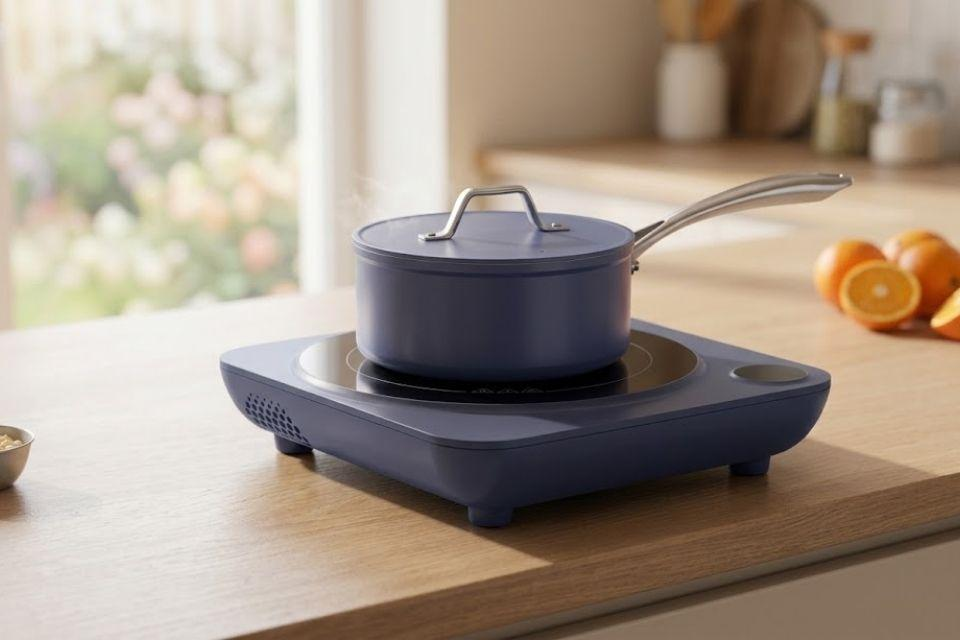
Ventilation deserves a separate check because a cooktop can be placed where it cannot shed heat effectively. A countertop may look open while an intake or exhaust opening is partially blocked by a wall, towel, appliance, or other object.
Inspect the area around the unit and keep ventilation openings clear. Follow the manufacturer’s clearance recommendations because requirements vary by model. Avoid operating the Portable Induction Cooktop in an enclosed space or where hot air cannot escape.
Dust and debris can also affect airflow. If the manual provides cleaning instructions, follow them and ensure the appliance is unplugged and cool before cleaning around ventilation openings. Restricted ventilation can increase heat buildup and make protective shutdowns more likely.
7. Consider a Sensor, Fan, or Internal Fault
If the basic checks do not explain the shutdown, the appliance may have a problem that cannot be safely diagnosed from outside. Temperature sensors, cookware-detection components, cooling fans, control electronics, or other internal parts can cause repeated shutdowns when they do not operate correctly.
Look for a pattern. A cooktop that shuts down only with one pan may have a cookware-detection issue. One that becomes unreliable after reaching operating temperature may point toward heat management or a sensor. A unit that shuts down immediately while cool and correctly set up may need assessment.
Avoid opening the housing or bypassing safety features. If the appliance repeatedly shuts off despite suitable cookware, clear airflow, correct settings, and an appropriate power connection, contact the manufacturer or a qualified service professional.
What You Should Not Do When the Cooktop Keeps Shutting Off
Troubleshooting should never involve defeating a safety feature or continuing to operate an appliance that shows signs of damage. Repeatedly restarting a hot unit can make an overheating problem worse, while ignoring electrical warning signs can create unnecessary risk.
Avoid these actions:
- Blocking ventilation openings to make room on the counter.
- Continuing to use a damaged cord or plug.
- Repeatedly resetting a breaker without identifying the cause.
- Ignoring smoke, burning smells, or unusual sparking.
- Opening the appliance or modifying internal safety components.
When there is visible damage or an obvious electrical hazard, stop troubleshooting and prioritize safety.
What to Do If Your Induction Cooktop Still Keeps Shutting Off
If the problem continues, use a simple process rather than changing several things at once. This makes it easier to identify the likely cause.
- Turn the cooktop off and let it cool.
- Check that the ventilation area is clear.
- Confirm that the cookware is induction-compatible.
- Center the pan and check its size and condition.
- Inspect the plug and outlet for obvious problems.
- Review timer, control-lock, and power settings.
- Record and look up any displayed error code.
- Consult the model’s manual if the shutdown continues.
- Contact the manufacturer or qualified service support when basic checks do not solve it.
When Should You Stop Using the Cooktop?
Some situations call for more than routine troubleshooting. Stop using the appliance if you notice smoke, a burning smell, unusual sparking, a damaged plug or cord, visible physical damage, or repeated breaker trips.
Also avoid testing a cooktop that becomes abnormally hot or repeatedly shuts down without an identifiable cause. If the appliance is under warranty, follow the manufacturer’s support process rather than attempting a repair. Keep the model number and any error code available for support.
Final Thoughts
A portable induction cooktop that keeps shutting off does not automatically need replacement. Start with overheating, cookware compatibility, pan position, power supply, timer settings, error codes, and ventilation. If those checks do not resolve the issue, a sensor, fan, or internal component may be involved.
Troubleshoot systematically and stop when there are signs of an electrical or physical hazard. For additional practical guidance on kitchen appliances and related topics, Ciarra Gadgets can be a useful place to explore helpful information.
Frequently Asked Questions
Why does my portable induction cooktop keep shutting off?
Common causes include overheating, unsuitable cookware, incorrect pan positioning, power problems, timer settings, restricted ventilation, and internal faults. Start with cooling, airflow, and cookware compatibility.
Can an induction cooktop shut off because it is overheating?
Yes. Many induction cooktops have protective systems that can stop operation when temperatures become too high. Allow the unit to cool, check ventilation, and follow the manufacturer’s instructions.
Why does my induction cooktop turn off when I put a pan on it?
The pan may not be induction-compatible, may be too small, or may be positioned incorrectly. Test it with a magnet, center it on the cooking zone, and check the manual for size requirements.
How do I know if my cookware is compatible with induction cooking?
A magnet can provide a quick indication. If it sticks firmly to the base, the pan may be induction-compatible. Confirm compatibility and size requirements in the manufacturer’s instructions.
When should I stop using an induction cooktop that keeps shutting off?
Stop using it if you notice smoke, burning odors, sparking, damaged electrical components, abnormal overheating, or repeated breaker trips. If troubleshooting fails, contact the manufacturer or a qualified professional.